How Many Rolls Do You Need?
Peel-and-stick wallpaper is a great renter-friendly way to change a room, but it is sold in narrow rolls, so you need to count strips, not just square feet. Enter your wall and roll size to see how many rolls to buy.
- Measure the width and height of the wall you want to cover, in feet.
- Check the roll label for its width and length. Many peel-and-stick rolls are about 20.5 inches by 16.5 feet.
- If your pattern repeats, enter the repeat in inches. Use 0 for plain or random patterns.
- Tap Calculate rolls and buy one extra if you can.
- Add about 4 inches to every strip so you can trim at the ceiling and baseboard.
- Clean and dry the wall first, and test a small piece in a hidden spot before you commit.
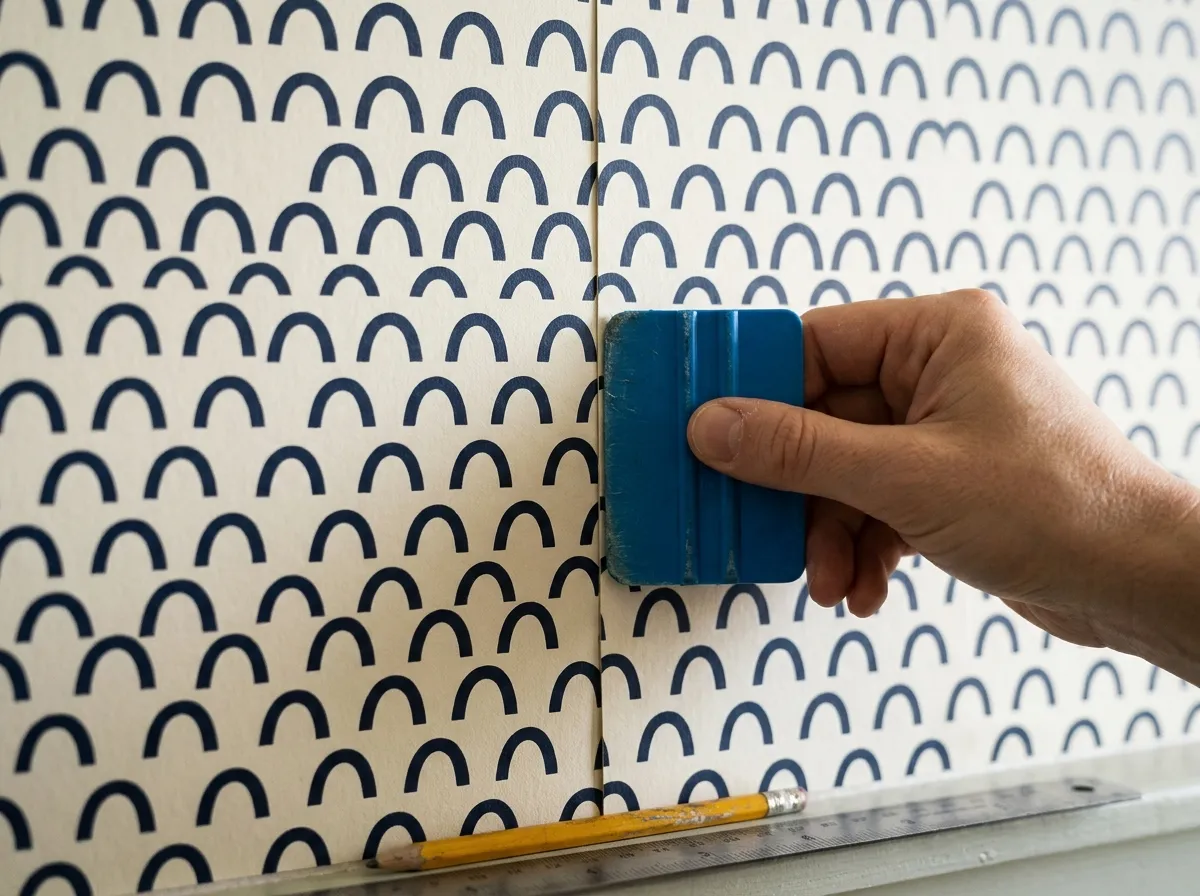
- Smooth each strip from the center outward with a squeegee or credit card to avoid bubbles.
- Buy all rolls from the same batch, because shades can differ slightly between production runs.
Do I subtract doors and windows?
For an accent wall, cover the full wall and trim around openings. That keeps the pattern lined up.
What is a pattern repeat?
The vertical distance before a pattern starts again. Matching it wastes some paper, so the calculator adds it to each strip.
Will it damage my rental walls?
It is designed to peel off, but results depend on your paint and the wall surface. Test a small piece and check your lease.
Can I use this for regular wallpaper?
Yes, if you enter the roll width and length from the label, but pasted wallpaper needs more allowance for trimming.
Read the full peel-and-stick wallpaper guide ↓
How Many Rolls of Peel-and-Stick Wallpaper Do You Really Need?
Peel-and-stick wallpaper looks simple until you try to order it. A wall that is 80 square feet can easily need 169 square feet of paper. The reason is not waste or bad math. It is the way the paper is sold.
The calculator above counts strips, because that is how you actually hang it. This guide explains the numbers behind the result, so you can see why one inch of wall height can change your order, how a pattern repeat adds to it, and how to plan a wall that wastes as little as possible.

How the calculator works
- Enter your wall width and height in feet. Measure the wall you want to cover.
- Enter the roll width in inches and the roll length in feet. The defaults are 20.5 inches and 16.5 feet, which is a common size. Check the label on your own roll.
- Enter the pattern repeat in inches. Use 0 for a plain or random pattern.
- Tap Calculate rolls. You get the number of strips, the length of each strip, how many strips fit on one roll and how many rolls to buy.
- Read the warning, if there is one. If a single strip is longer than your roll, the calculator tells you to choose a longer roll.
Behind the scenes it does four things. It divides your wall width by the roll width and rounds up to get the strips. It adds 4 inches plus any pattern repeat to your wall height to get the strip length. It divides the roll length by the strip length and rounds down to get the strips per roll. Finally it divides the strips by the strips per roll and rounds up to get the rolls.
If you leave the roll width at 0, the calculator uses 20.5 inches. If you leave the roll length at 0, it uses 16.5 feet. Always type the real numbers from your product.
What to measure first
- Wall width. Measure from corner to corner at a few heights, since walls are not always perfectly square. Use the widest number. Our Room Size Calculator helps if you are measuring a whole room.
- Wall height. Measure from the baseboard to the ceiling. Measure in a few places, because floors and ceilings can slope, and use the tallest number.
- The roll label. Write down the width, the length and the pattern repeat. If the product page does not list a repeat, look at the pattern itself, or enter 0 for a random or plain design.
- Anything on the wall. Note outlets, switches, vents and openings. They do not change the count, but they change how you cut.
- Your budget. Wallpaper sells by the roll, so the roll count is your real cost. The Decorating Budget Planner shows how to fit it into a room budget.
Why you count strips, not square feet
The usual shortcut for paint is to multiply width by height and divide by what a can covers. That does not work for wallpaper. Each strip is a full-height piece cut from one roll, and what is left on the roll is often too short to be a second full strip.
Take the default wall: 10 feet wide and 8 feet high, which is 80 square feet. One standard roll (20.5 inches by 16.5 feet) holds about 28 square feet. By area you might expect 3 rolls. The calculator says 6, and it is right, because six strips are needed and each roll yields only one full-height strip of 100 inches. Six rolls is about 169 square feet of paper for an 80 square foot wall.
Here is that wall drawn to scale. Six strips of 20.5 inches add up to 123 inches, so the last strip hangs 3 inches past the edge of the wall and gets trimmed. Every strip is also 2 inches taller than the wall at the top and at the bottom, which is the 4 inch allowance for trimming.
- Strips: 10 ft is 120 in, and 120 ÷ 20.5 is 5.85, which rounds up to 6.
- Strip length: 8 ft is 96 in, plus 4 in, gives 100 in.
How wall width sets the strip count
The strip count only depends on the wall width and the roll width. Because the number is always rounded up, a wall that is just a little wider than a whole number of strips needs an extra full strip. The table shows the strips needed for common wall widths, with the default 20.5 inch roll and with a 24 inch roll for comparison.
| Wall width | In inches | ÷ 20.5 in | Strips (20.5 in roll) | Strips (24 in roll) |
|---|---|---|---|---|
| 6 ft | 72 | 3.51 | 4 | 3 |
| 8 ft | 96 | 4.68 | 5 | 4 |
| 10 ft | 120 | 5.85 | 6 | 5 |
| 12 ft | 144 | 7.02 | 8 | 6 |
| 14 ft | 168 | 8.20 | 9 | 7 |
| 16 ft | 192 | 9.37 | 10 | 8 |
Strips = wall width in inches ÷ roll width, rounded up. The 24 inch column is only a comparison, so check the width on your own roll.
Look at the 12 foot row. The wall needs 7.02 strips, so the calculator rounds up to 8. That extra 0.02 of a strip costs you a whole strip. If your wall is within a hair of a whole number, measure again carefully, because a quarter inch can decide whether you buy one more roll.
How wall height sets strips per roll
Wall height decides how many strips you can cut from one roll. A 16.5 foot roll is 198 inches long. The calculator adds 4 inches to your wall height and divides, rounding down, because a partial strip is no use.
| Wall height | Strip length | Strips per roll | Left on each roll | Rolls for a 10 ft wide wall |
|---|---|---|---|---|
| 7 ft | 88 in | 2 | 22 in | 3 |
| 8 ft | 100 in | 1 | 98 in | 6 |
| 9 ft | 112 in | 1 | 86 in | 6 |
| 10 ft | 124 in | 1 | 74 in | 6 |
| 12 ft | 148 in | 1 | 50 in | 6 |
20.5 in × 16.5 ft roll, no pattern repeat, a 10 ft wide wall (6 strips). “Left on each roll” is the paper that remains after the strips you cut.
The jump between 7 feet and 8 feet is dramatic: the same 10 foot wide wall needs 3 rolls at 7 feet and 6 rolls at 8 feet. Here is why. A second 8 foot strip needs 200 inches (2 × 100), and the roll only holds 198. It misses by 2 inches.
These are the wall heights where the number of strips per roll changes on a 16.5 foot roll with no pattern repeat:
- Up to 45 inches high: 4 strips per roll.
- 46 to 62 inches: 3 strips per roll.
- 63 to 95 inches (up to 7 ft 11 in): 2 strips per roll.
- 96 inches and up to 194 inches: 1 strip per roll.
- Over 194 inches (16 ft 2 in): a strip no longer fits, and the calculator asks for a longer roll.
So if your wall is an inch or two over a threshold, it is worth checking your measurement and your roll length. A longer roll can change the answer a lot. With a hypothetical 32 foot roll, the same 8 foot wall fits 3 strips per roll instead of 1. Check what lengths your product comes in before you decide.
Pattern repeats
If your wallpaper has a pattern that must line up from strip to strip, each strip has to start at the same point in the design. That means cutting extra paper, up to one full repeat per strip. The calculator takes the safe route and adds the whole repeat to every strip, which makes the strips longer and can cut the strips per roll.
Here is a 10 foot wide, 7 foot high wall on a standard roll, with different pattern repeats.
| Pattern repeat | Strip length | Strips per roll | Rolls to buy |
|---|---|---|---|
| None (0 in) | 88 in | 2 | 3 |
| 6 in | 94 in | 2 | 3 |
| 10 in | 98 in | 2 | 3 |
| 11 in | 99 in | 2 | 3 |
| 12 in | 100 in | 1 | 6 |
| 24 in | 112 in | 1 | 6 |
20.5 in × 16.5 ft roll, 6 strips. The order doubles between a repeat of 11 inches and 12 inches.
The same wall needs 3 rolls with a repeat of 11 inches and 6 rolls with a repeat of 12 inches. A one inch difference in the pattern doubled the order. That is why the repeat matters so much on short walls, and why a plain or random pattern is the cheapest way to cover a wall.
Because the calculator adds the full repeat, the result may be slightly more than you strictly need for some patterns. It is a cautious estimate, and the extra helps when you misalign a strip. If you are close to a threshold, ask the seller how the pattern matches, since some designs match straight across and others are offset.
Worked examples
These are all calculated with the same logic as the calculator. Try them in the tool above.
| Wall | Roll and repeat | Strips | Strip length | Per roll | Rolls |
|---|---|---|---|---|---|
| 10 × 8 ft (default) | 20.5 in × 16.5 ft, none | 6 | 100 in | 1 | 6 |
| 10 × 7 ft | 20.5 in × 16.5 ft, none | 6 | 88 in | 2 | 3 |
| 12 × 9 ft | 20.5 in × 16.5 ft, 16 in repeat | 8 | 128 in | 1 | 8 |
| 4 × 8 ft (accent panel) | 20.5 in × 16.5 ft, none | 3 | 100 in | 1 | 3 |
| 10 × 8 ft | 24 in × 16.5 ft, none | 5 | 100 in | 1 | 5 |
| 10 × 8 ft | 20.5 in × 32 ft, none | 6 | 100 in | 3 | 2 |
Each result is before the suggested extra roll. The last two rows use example roll sizes, so check what is actually sold.
Notice the narrow 4 foot accent panel. It needs only 3 strips, but it still uses 3 rolls, because each roll gives only one 100 inch strip. In a case like that, the leftover pieces are the best thing about the order: each is about 98 inches long, which is plenty for a small project such as the back of a bookshelf or a drawer front. Think about this before you buy.
Cost and leftover calculator
Use this to see the rolls, the paper left on each roll and the cost. It uses the same logic as the main calculator. Enter the price per roll from the product page.
The $30 price is only an example, so replace it with the real price. Prices vary by brand and pattern.
A note on money and rentals. This guide gives general planning estimates, not professional or financial advice. Prices, roll sizes and return policies differ by seller. Whether a product is safe for your walls depends on the paint and surface, so follow the manufacturer’s instructions and check your lease before you start.
Want to try your own wall? Back to the calculator ↑
Doors, windows and several walls
Doors and windows
The calculator does not subtract openings. For an accent wall, the advice is to cover the full wall and trim around doors and windows afterward. That keeps the pattern lined up across the whole wall, and you avoid having to cut and match small pieces above and below a window. The extra paper is also your safety margin.
If you are covering a lot of wall with large openings, such as a wall of windows, you can work out the strips for each section separately, but keep the pattern alignment in mind first.
More than one wall
The calculator handles one wall at a time. If you are covering several walls of the same height, you can save a roll or two by combining them. Add up the strips from every wall, then divide by the strips per roll and round up, instead of rounding each wall up on its own.
Here is an example with two walls, each 8 feet wide and 7 feet high, on a standard roll. Each wall needs 5 strips, and 2 strips fit on a roll. Calculated separately, each wall needs 3 rolls, so 6 in total. Combined, you have 10 strips and 2 per roll, which is 5 rolls. That is one roll saved.
This only works if the pieces can be shared across walls. With a pattern repeat you also need to think about how the pattern runs from one wall to the next. If you are unsure, the separate numbers are the safe choice.
Prep and hanging tips
A perfect order does not help if the paper does not stick, so a few minutes of prep go a long way. These tips come from the calculator and from common practice.
- Clean and dry the wall. Dust and grease are the main reasons paper lifts. Let the wall dry fully before you hang anything.
- Test a small piece first. Stick a small piece in a hidden spot, leave it for a while and peel it off, to see how your paint reacts. This matters most in a rental. Our Paint Calculator is handy if you decide to paint the wall first or later.
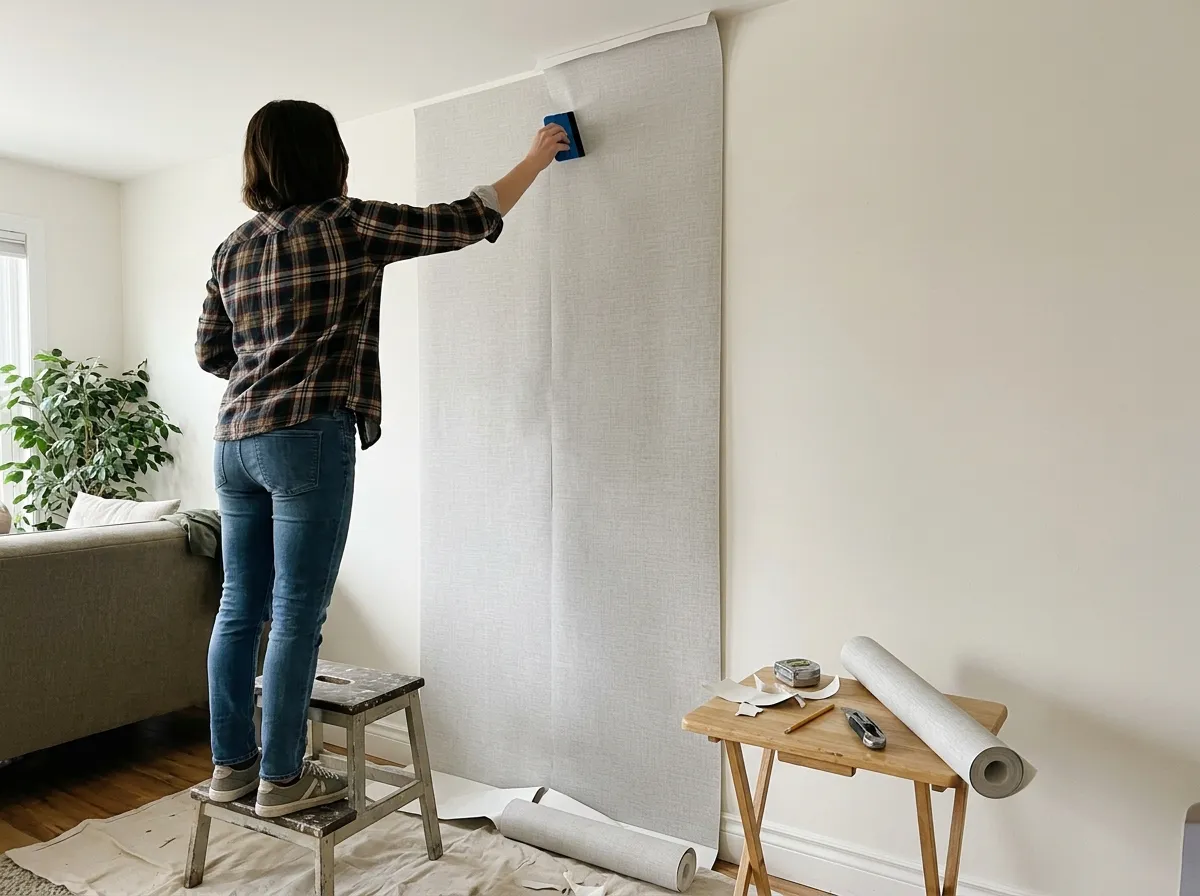
- Leave the 4 inch allowance. Hang each strip so about 2 inches extend past the ceiling and the baseboard, then trim with a sharp blade.
- Work from the center outward. Smooth each strip from the middle toward the edges with a squeegee or a credit card to push out bubbles.
- Use a stable step stool. Do not stretch from the top of a ladder, and have someone hold the roll if the wall is tall.
- Keep your offcuts. Save the leftover pieces for repairs and small projects.
Buying tips
- Buy one extra roll. The calculator suggests one extra roll for mistakes and future repairs. Cutting is permanent, and a repair years later is hard if the pattern is discontinued.
- Buy every roll from the same batch. Shades can differ slightly between production runs, and a visible change in color is easy to spot on a wall.
- Compare roll sizes. A different width or length can change the strip count or the strips per roll. Use the calculator with each option before you decide.
- Choose the pattern to fit the wall. A plain, textured or random pattern avoids the repeat allowance, which helps on short walls.
- Think about the whole room. Pick the pattern colors with our Color Palette Generator, and check the light with the Lighting Calculator, since bold patterns look different in bright and dim rooms. Decide where the furniture goes with the Furniture Layout Planner before you cover the wall.
- Planning art on top? Plan the frames with the Gallery Wall Planner. A calm pattern makes a better backdrop than a busy one.
Common mistakes
- Ordering by square footage. The paper is cut in full-height strips, so area alone underestimates the order.
- Forgetting the 4 inch allowance. Without it, you cannot trim at the ceiling and baseboard.
- Ignoring the pattern repeat. A repeat can double the order on a short wall.
- Rounding the wall width down. A wall that is 7.02 strips wide needs 8, not 7.
- Using the wrong roll size. The defaults are common, but your roll may differ. Always check the label.
- Skipping the test patch. Peeling it off a rental wall later is the worst time to find out.
- Mixing batches. Slight differences in shade become obvious once the strips are side by side.
- Not buying a spare. One extra roll is cheaper than a second shipment that may not match.
Before you order: checklist
Tick these off before you click buy.
More questions
The most common questions are answered in the calculator above. Here are a few more.
How much extra wallpaper should I buy?
The calculator suggests one extra roll for mistakes and future repairs. That is a sensible margin for most walls, and a busy pattern with a large repeat is a good reason to keep a spare.
Should I calculate each wall separately or all together?
The calculator works on one wall at a time. If your walls are the same height, you can add up the strips from all of them and divide by the strips per roll, which can save a roll. Keep the pattern alignment in mind, and use the separate totals if you are unsure.
What if my wall is taller than one roll?
The calculator tells you that one strip is longer than your roll. On a 16.5 foot roll, that happens when the wall height plus the 4 inch allowance is more than 198 inches. Choose a longer roll, or look for a design sold in a taller format.
Can I use centimeters?
The calculator uses feet and inches. To convert, one inch is 2.54 centimeters and one foot is 30.48 centimeters. A 20.5 inch roll is about 52 centimeters wide, and a 16.5 foot roll is about 5 meters long.
Ready to plan your wall? Scroll back up, enter your measurements and see how many rolls you need. Once the wall is sorted, check that your furniture will fit the space with the Will It Fit? Checker.