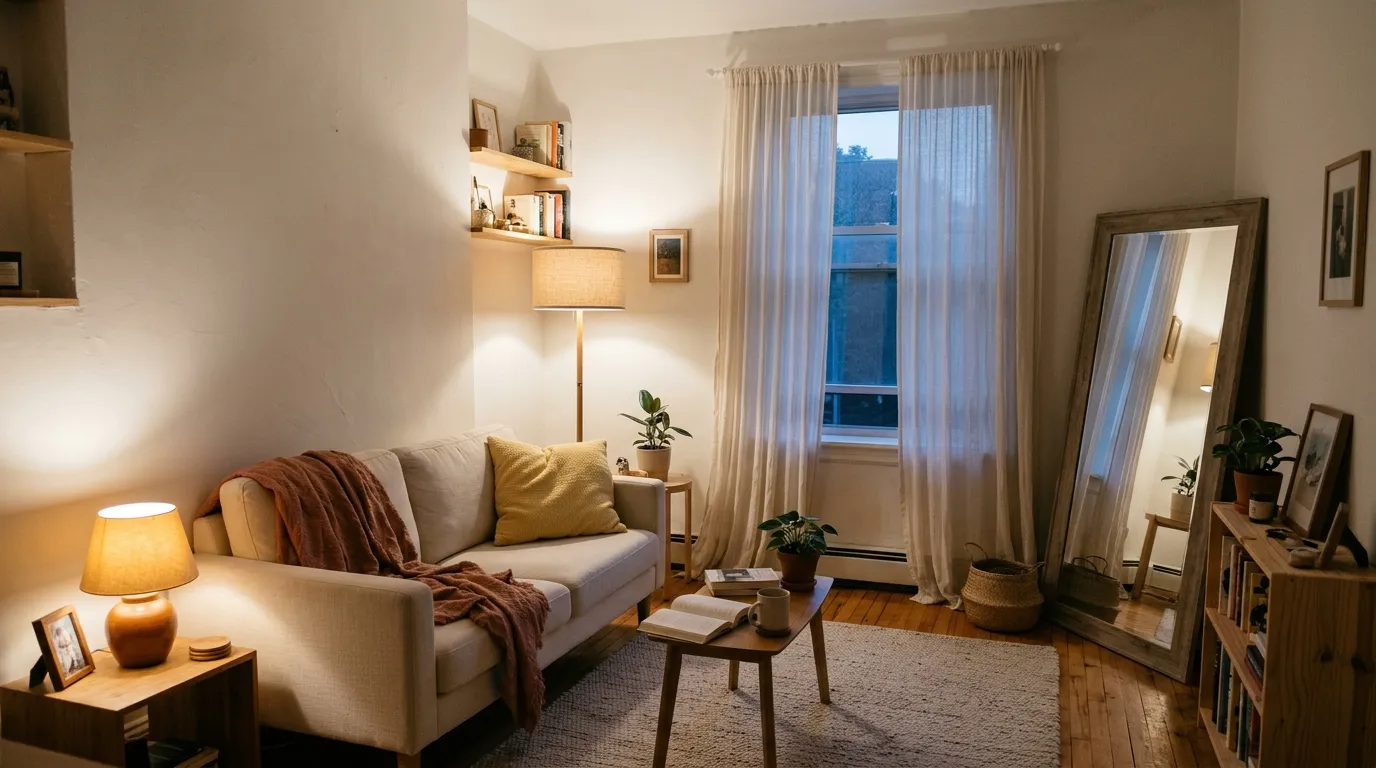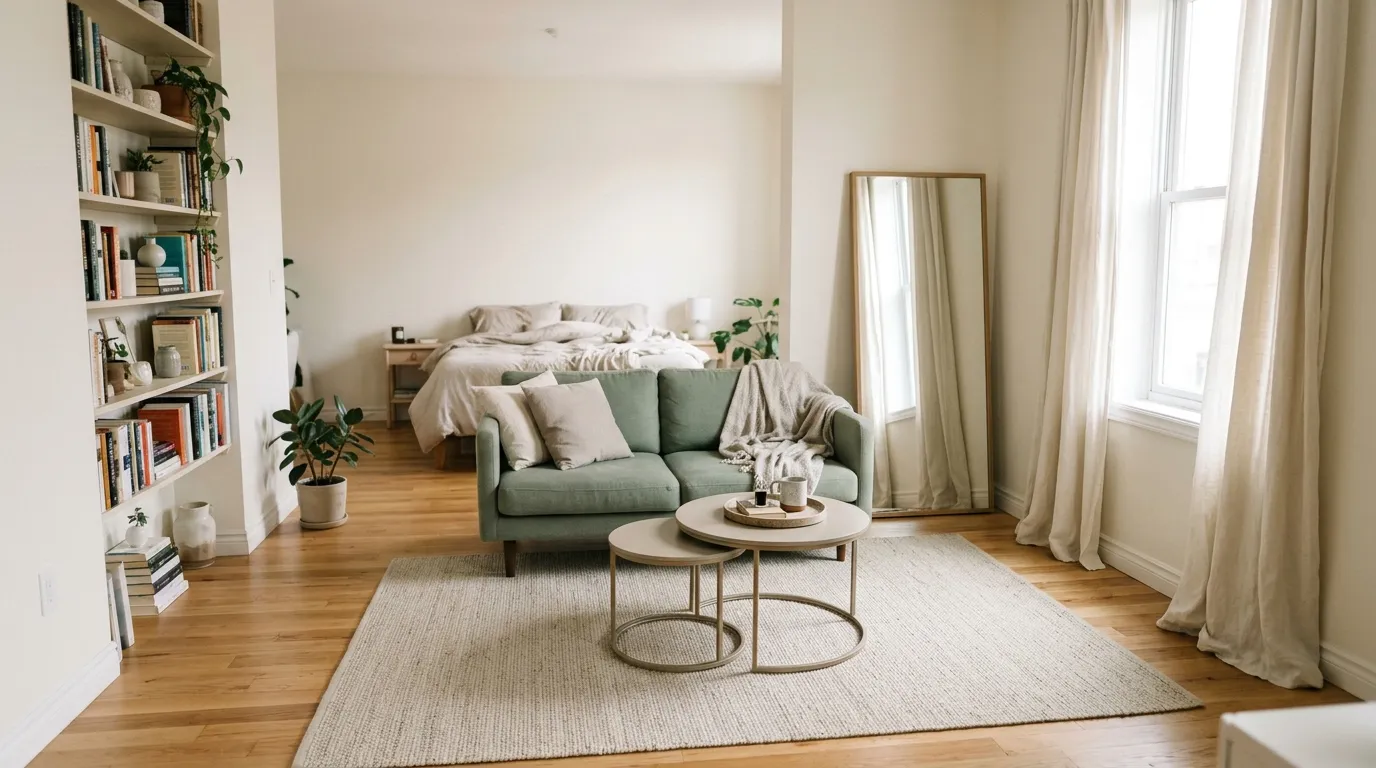

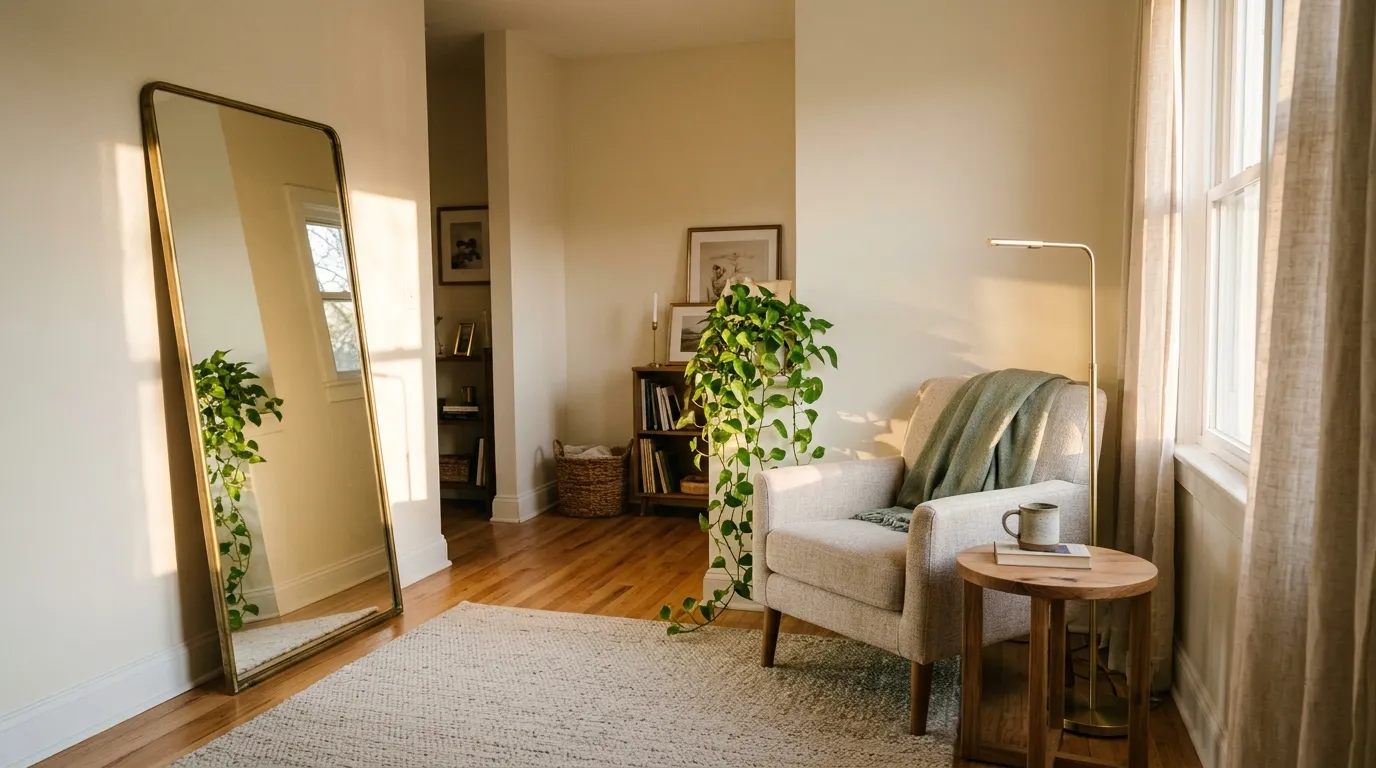
It’s 4 p.m., the lamps are already on, and your one window looks out at a brick wall or a neighbor’s balcony. If you’re wondering how to use mirrors in decor to make a dark room feel brighter, the answer is less about buying one big mirror and more about where it goes.
You don’t need to change fixtures or repaint. You need a clear read on where your light comes from, a mirror sized for the wall, and a safe way to hang or lean it.
I’d walk through it in six steps, starting with the light you already have and ending with what the mirror shows back to you.
Before You Start: Materials and Time
- Time: about 1 to 2 hours, plus one day of watching your light
- Difficulty: moderate, because larger mirrors are heavy
- Budget level: budget-friendly
- Renter-friendly: check your lease, and lean the mirror if you can’t drill
What You’ll Need
- A mirror in the size you choose in step 2
- Painter’s tape
- A tape measure
- A level
- Wall anchors rated for the mirror’s weight, if you hang it
- Felt pads or a rubber stopper for the bottom edge, if you lean it
- One or two lamps
- A soft cloth for the glass
1. Study Your Light First
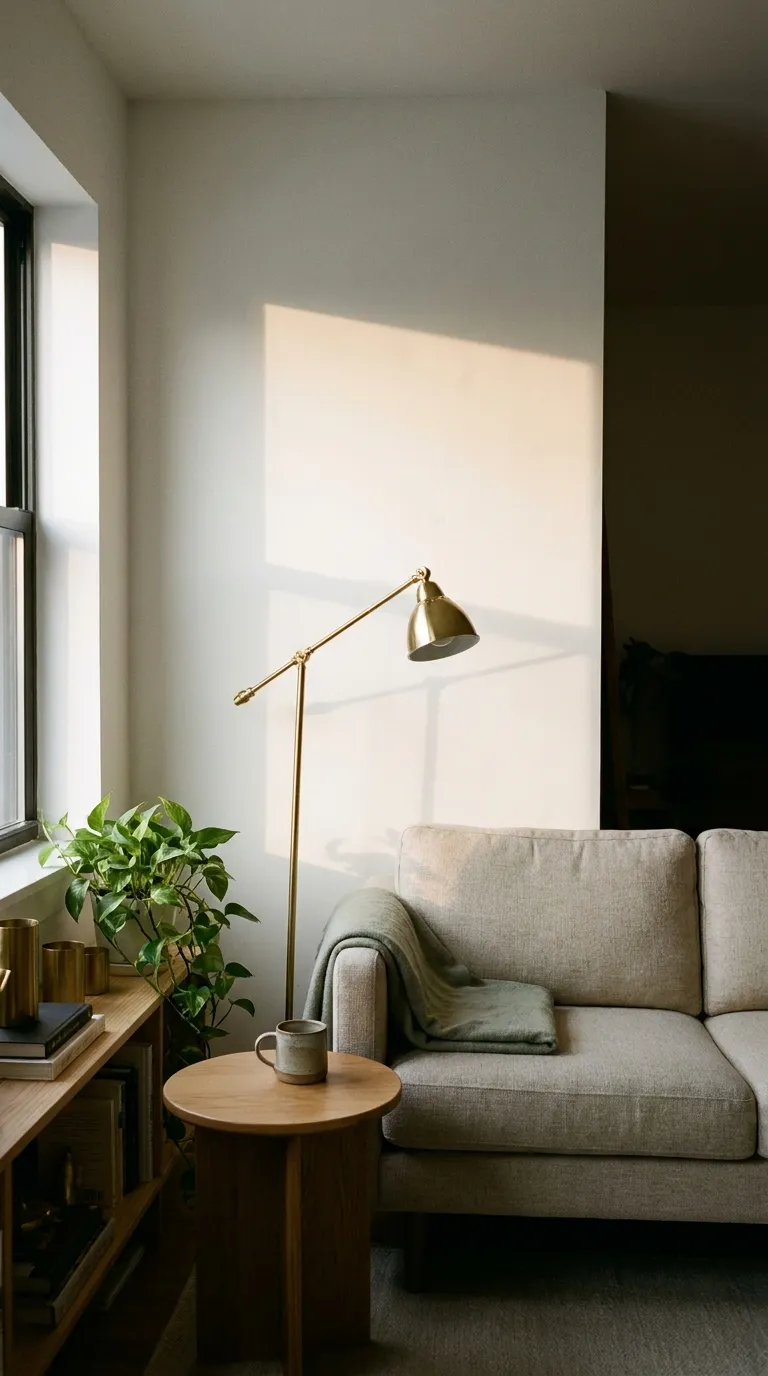
A mirror can only bounce the light that reaches it, so the first job is finding out where daylight actually lands in your apartment. Skip this and you may hang a mirror that reflects a dim corner right back at you. It costs nothing, and it shapes every other step.
Spend one day watching before you buy or drill anything. Check the room three times: morning, midday, and late afternoon. The bright patch moves, and a spot that looks sunny at 10 a.m. can be in shade by 4 p.m., especially when buildings sit close together.
How to Do It
- Stand in the room in the morning, at midday, and in the late afternoon
- Note which walls catch direct light and which stay in shade
- Mark the brightest patch of light with a piece of painter’s tape
- Note where you sit or stand most, such as the sofa, desk, or bed
- Check whether light also comes in from a door, hallway, or second window
Why It Works
A mirror sends light back at the angle it arrives, so it can only brighten a room with light it can catch. If your room gets almost no daylight, a mirror helps less, and the lamps in step 5 do more of the work.
Common Mistakes to Avoid
- Judging the room at only one time of day
- Ignoring light that comes from a door or hallway
- Marking the wall without noting where you actually sit
A Simple Rule to Remember
Mirror the light you have, not the light you wish you had.
2. Choose Size and Shape
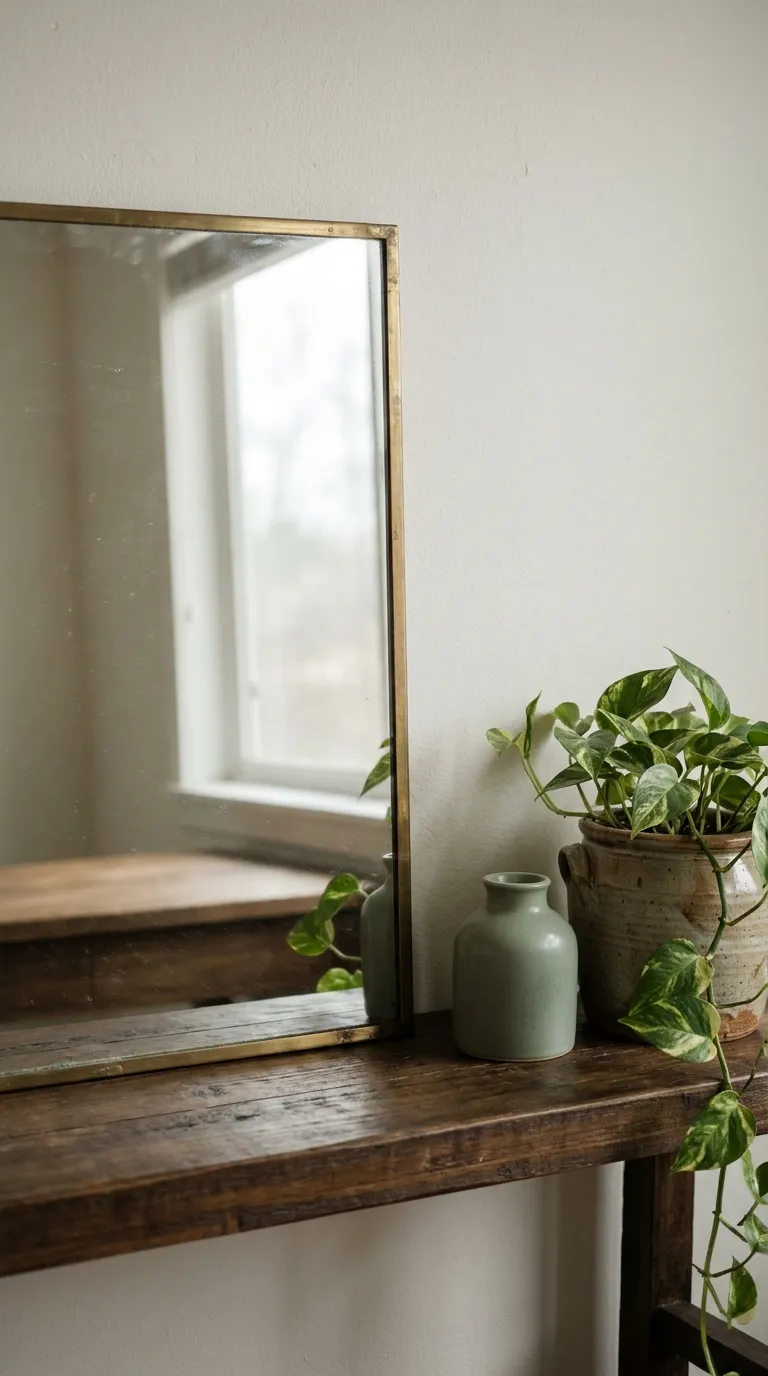
A tiny mirror adds a sparkle, not light. To brighten a dark apartment you need enough glass to catch a wide slice of the window’s light and send it across the room. Size matters more than the frame, so start there and let the shape follow your wall.
Bigger asks more of you: more weight, more wall, and a more careful hang. If your wall is narrow, one well-sized mirror beats three small ones scattered around.
How to Do It
- Measure the width of the wall and of any furniture below the mirror
- For a mirror above furniture, aim for ⅔ to ¾ of the furniture’s width
- For a floor mirror, choose the tallest one your wall allows, then check the door swing and baseboards
- Tape the mirror’s outline on the wall and step back to see how it feels
- Pick a shape using the table below
Each shape solves a slightly different problem:
| Shape | Best For | Trade-Off |
|---|---|---|
| Full-length rectangle | Dark halls and narrow walls | Heavy, needs anchors or a stable lean |
| Round | Softening a boxy room | Reflects a smaller area |
| Wide horizontal | Above a sofa or bed | Takes up a lot of wall width |
Why It Works
A larger mirror catches more of the window’s light and returns it across a wider part of the room. The shape only decides how that bigger surface fits your wall.
Common Mistakes to Avoid
- Buying small and planning to add more later
- Choosing a thick, dark frame that makes the glass look smaller
- Forgetting the door swing, outlets, and baseboards
3. Place It Across From the Window
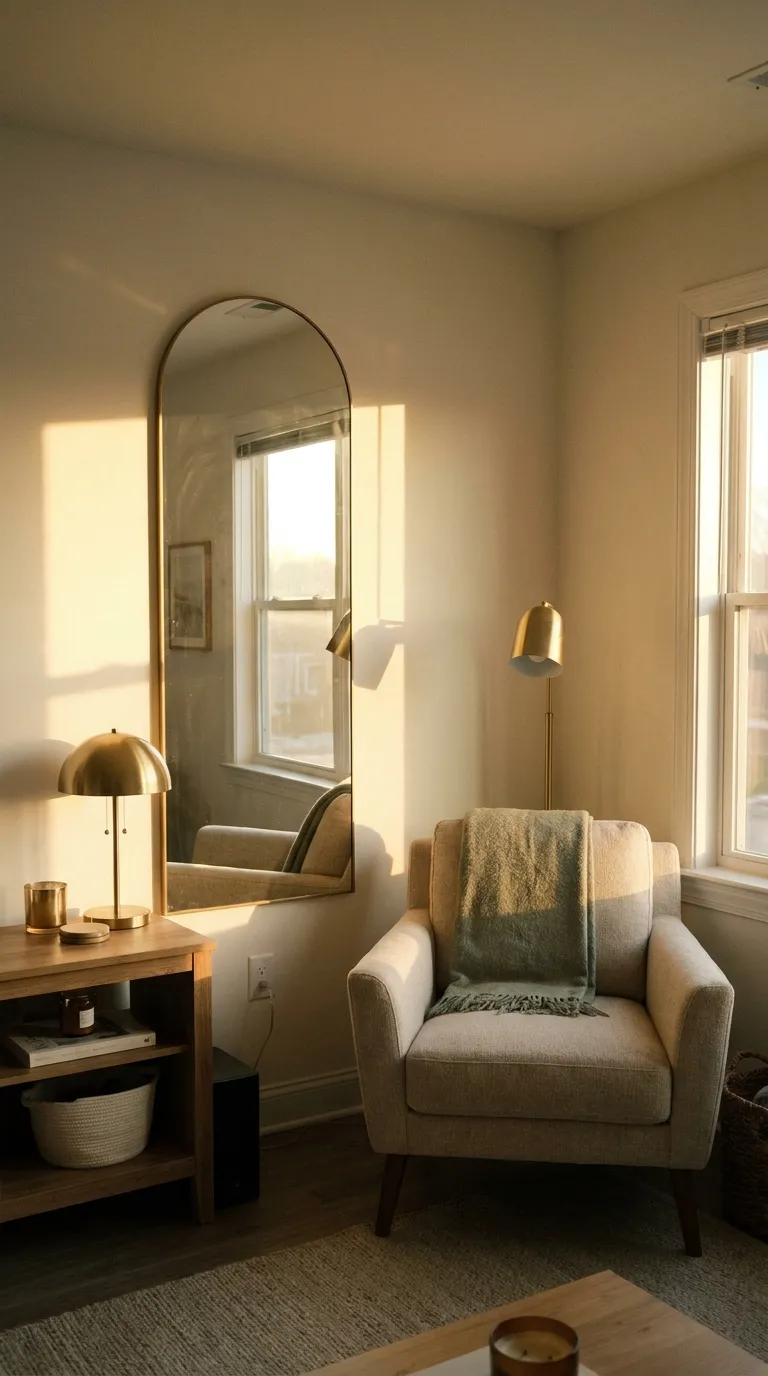
Placement is where a mirror earns its keep. On the right wall it carries daylight deeper into the room, and on the wrong wall it just shows you a dark corner.
Start with the bright patch you taped in step 1. The best spot is usually the wall opposite the window, with the side wall next to the window a close second. The weakest spot is the same wall as the window, where the glass mostly reflects the dim wall across from it.
How to Do It
- Tape the mirror’s outline on the wall opposite the window
- Tape a second outline on the side wall next to the window
- Sit where you spend the most time and look at each spot
- Note which outline would show the window, the sky, or a bright patch
- Skip any spot that bounces afternoon sun straight at your seat or shows a cluttered corner
Try it: pick the best wall for the mirror.
Why It Works
Daylight bounces off glass at the same angle it arrives. A mirror facing the window sends that light deeper into the room, where walls, ceiling, and furniture can pick it up and spread it around.
Common Mistakes to Avoid
- Reflecting a cluttered corner, which doubles the mess
- Aiming afternoon sun straight at your sofa, desk, or bed
- Hanging it on the same wall as the window instead of across from it
A Simple Rule to Remember
Face the light, not the dark corner.
4. Hang or Lean It Safely
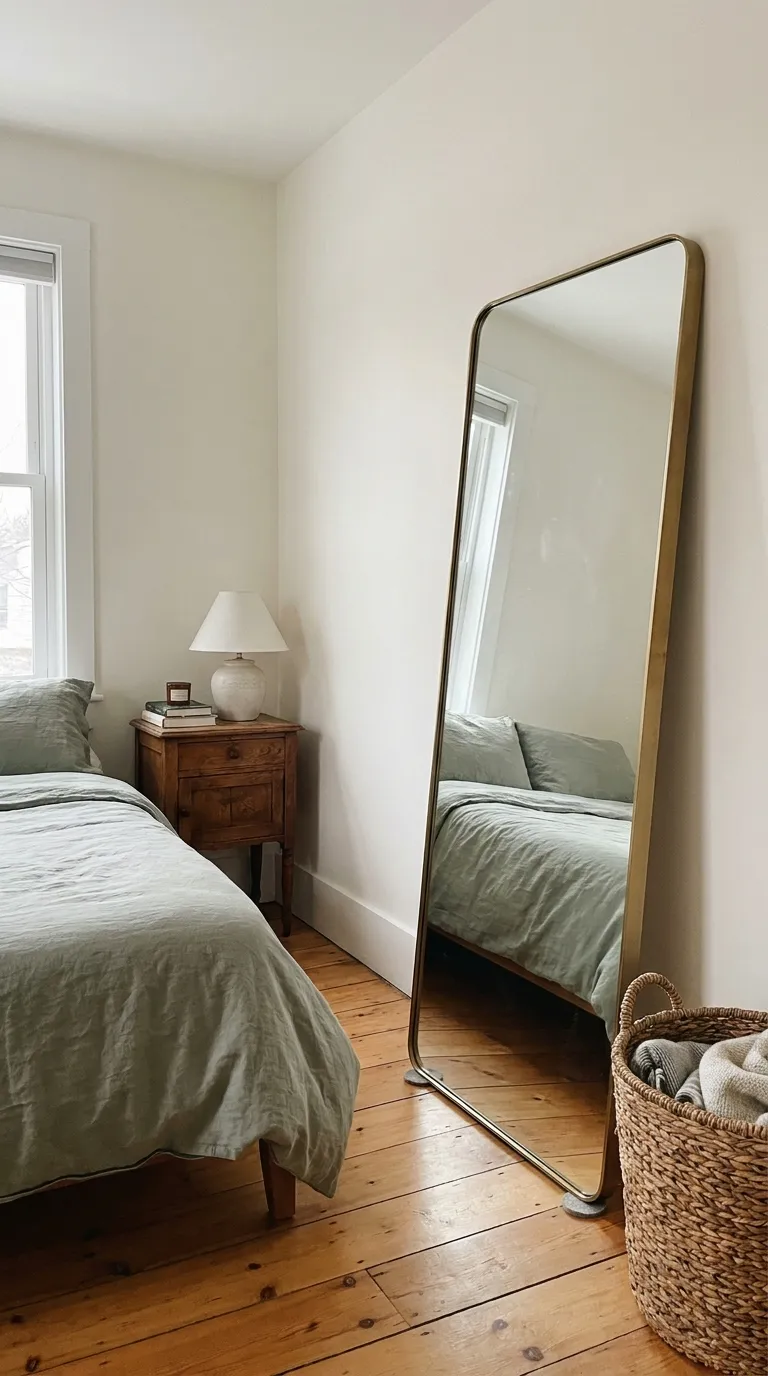
A mirror is only useful if it stays put. Glass is heavy, and a wall mirror that comes loose is a real hazard, so this step is worth doing slowly. If you’re not sure your wall can hold the weight, lean the mirror instead.
Leaning is the easiest route for renters and for large mirrors. Hanging gives you a cleaner look and frees the floor, but it asks for the right hardware, and the usual hanging height is about 57 inches to the center of the mirror, which puts it near eye level. Whichever you pick, follow the product’s instructions and use anchors rated for the mirror’s weight.
How to Do It
- Choose to hang or lean, based on the mirror’s weight and your lease
- If hanging, mark the center of the mirror at about 57 inches from the floor
- Check the mark with a level, then install anchors rated for the mirror’s weight
- If leaning, set the bottom edge on felt pads or a rubber stopper and tilt it slightly back against the wall
- Add the safety strap or anti-tip hardware the product recommends
- Give the mirror a gentle nudge to confirm it feels stable
Why It Works
A secure, level mirror stays exactly where you aimed it. A center at eye level also makes the reflection feel natural as you walk past.
Common Mistakes to Avoid
- Trusting drywall alone to hold a heavy mirror
- Leaning a tall mirror with no felt pads or anti-tip strap
- Skipping the level, which makes the reflection look crooked
Renter Note
Check your lease before drilling. If drilling isn’t allowed, a leaning mirror on felt pads is the safest reversible option. Adhesive hooks only suit light mirrors, and only within their stated weight limit.
5. Add a Lamp Beside It
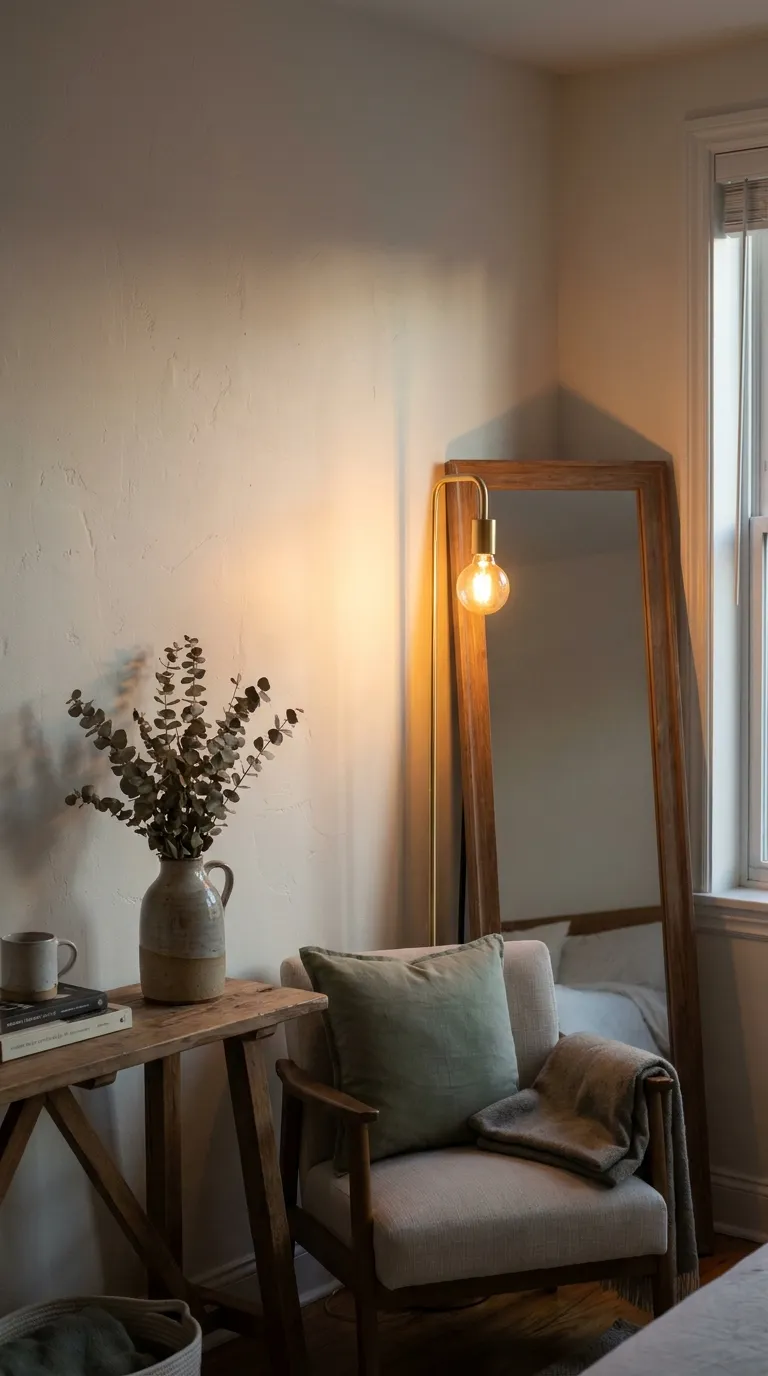
A mirror multiplies light, but a dim room still needs a light source to multiply. On gray days and after sunset, the window can’t do the job alone, so a lamp placed near the glass picks up the slack. It also brightens the room at the hours you’re actually home.
Before you shop for bulbs, it helps to know how many lumens the room needs overall, because dark walls absorb more light than pale ones. Once you have that total, you can split it across a couple of lamps instead of leaning on one harsh overhead fixture. The trade-off is that lamps need an outlet nearby and a little cord management, so plan the spot before you buy.
How to Do It
- Place a lamp beside the mirror so its glow lands in the glass
- Use a shade, so the bare bulb isn’t reflected straight back at you
- Pick warm-toned bulbs and check the box for the brightness rating and the lamp’s maximum bulb rating
- Add a second lamp on the opposite side of the room to spread the glow
- Stick to plug-in lamps, and hire a licensed electrician for any new wiring or fixtures
Enter your room size, ceiling height, room type, and wall color to see the total light you need.
Why It Works
A lamp beside the mirror gives the glass a second light source to carry across the room after the sun goes down. Warm bulbs and a shade keep that glow soft instead of harsh.
Common Mistakes to Avoid
- Letting a bare bulb show in the reflection
- Relying on one overhead fixture alone
- Choosing a bulb stronger than the lamp’s rating allows
6. Style What the Mirror Reflects
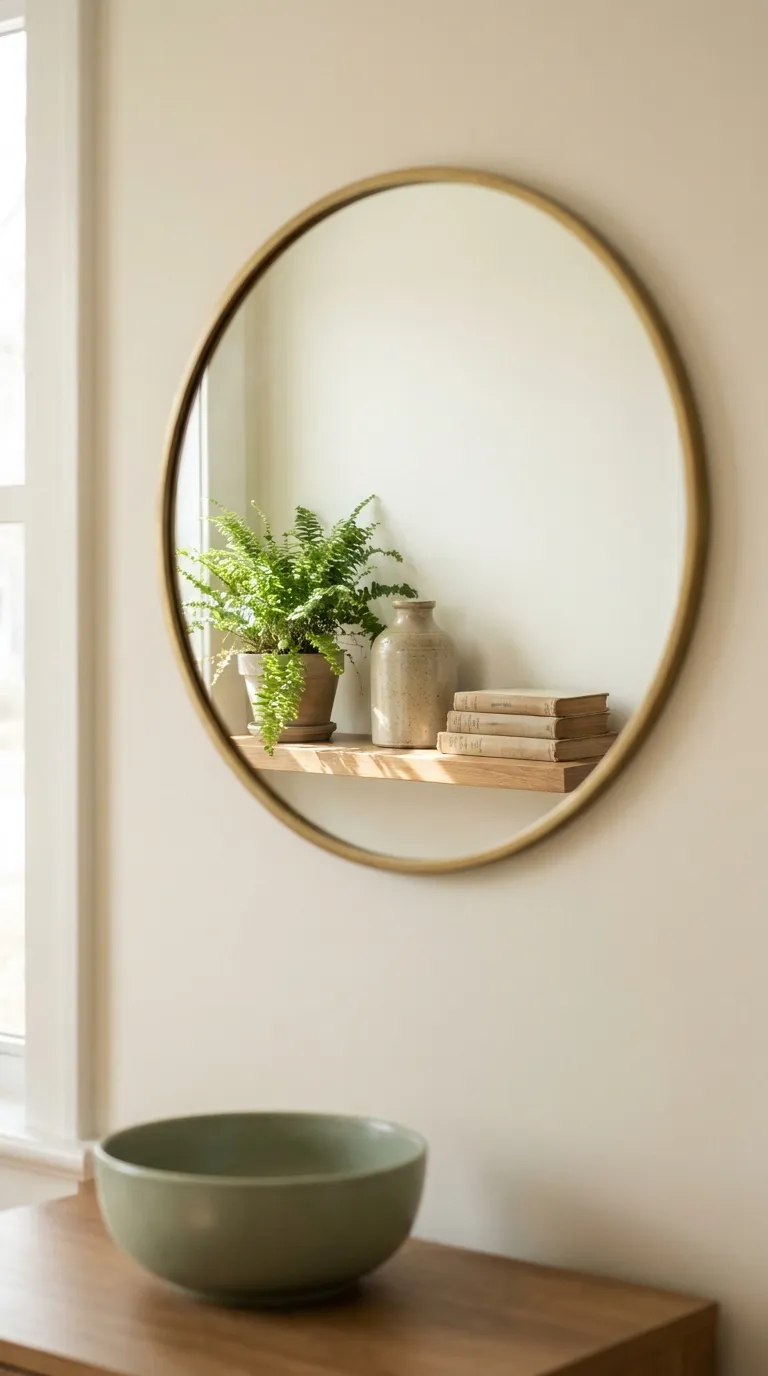
A mirror doubles whatever sits in front of it, so the last step is deciding what you want to see twice. A tidy shelf, a plant, or a piece of art looks good doubled, while a pile of laundry or a tangle of cords does not.
This is also the quickest step to adjust. You can change what the mirror shows in a few minutes without touching the mirror, and it asks for a little tidying, not a redecorate. If the only thing a spot can reflect is a bare wall, move the mirror or add one piece of art across from it.
How to Do It
- Stand where you usually see the mirror and note everything it reflects
- Clear or hide clutter that shows up in the glass, such as cords and piles
- Add one soft focal point in the reflection, such as a plant, a vase, or a framed print
- If a pet lives with you, check that a plant is safe for pets before buying
- Wipe the glass with a soft cloth, because smudges dull the reflection
Why It Works
The reflection becomes part of your room’s design, so a calm view reads as extra space and extra light. A clear focal point gives the eye somewhere pleasant to land.
Common Mistakes to Avoid
- Reflecting a TV screen or a stack of laundry
- Filling the reflected area with too many small items
- Skipping the glass cleaning
A Simple Rule to Remember
Hang it to reflect something you’d be happy to see twice.
Quick Step Cheat Sheet
Use this table as a quick refresher once the mirror is up.
| Step | Why It Works | Quick Fix |
|---|---|---|
| 1. Study Your Light First | Mirrors need light to reflect | Tape the brightest patch |
| 2. Choose Size and Shape | More glass catches more light | Tape the outline first |
| 3. Place It Across From the Window | Sends light deeper into the room | Move it to the opposite wall |
| 4. Hang or Lean It Safely | A stable mirror stays put | Lean it on felt pads |
| 5. Add a Lamp Beside It | Gives the glass evening light | Shade the bare bulb |
| 6. Style What the Mirror Reflects | A calm view feels bigger | Clear the clutter |
The Principles Behind These Steps
Reflect Light, Don’t Hide It
The goal is to catch daylight and aim it into the room. A mirror tucked behind a door or a bookshelf is decorative, but it won’t brighten much.
Go Bigger Before Going More
One large mirror in the right spot usually beats several small ones. Add a second mirror only after the first one is placed well.
How to Use Mirrors in Decor Without Overdoing It
In a small apartment, one or two mirrors is plenty. Past that, the walls can start to feel busy, and the room reads as shiny instead of bright.
Leave Breathing Room Around the Frame
Give the mirror some clear wall around it, so it reads as a calm surface instead of one more thing in the clutter. A few inches of bare wall on each side is a good starting point.
Common Mirror Placement Mistakes Worth Skipping
Choosing a Mirror That Is Too Small
It happens to almost everyone, because a small mirror feels safer. Tape the outline of a bigger one on the wall first and see how it feels.
Hanging It Without Checking the Weight
Glass is heavier than it looks. Read the product’s instructions, and use anchors rated for the mirror’s weight or lean it instead.
Forgetting About Glare
A mirror can bounce afternoon sun straight at your seat. Move it a little to the side, or tilt a leaning mirror until the glare softens.
Final Tips for Success
Test Before You Commit
Tape the outline on the wall, or lean the mirror in place for a few days before you drill. Live with it through morning and evening light.
Keep the Glass Clean
Check the mirror’s care label for cleaning advice, then wipe the glass with a soft cloth. Smudges and dust dull the reflection you’re trying to get.
Basics Worth Owning
- Painter’s tape
- A tape measure
- A level
- Anchors rated for the weight you hang
- Felt pads for leaning mirrors
- A soft cloth
Revisit as the Seasons Change
The sun’s angle shifts through the year, so check your bright patch again from time to time. A small move can bring back the light you had.
Conclusion
Knowing how to use mirrors in decor comes down to a few small choices: where your light lands, how big the glass is, and what it reflects.
You don’t need a big budget or a big renovation. One well-placed mirror, a lamp beside it, and a tidy view can make a dark apartment feel easier to be in.
Start with the tape, trust what you see in your own room, and adjust as the light changes through the day.
Save this guide for the next time you rearrange the room.