How Many Gallons Do You Need?
Buying too little paint means a second trip to the store and a risk of mismatched batches. Buying too much wastes money you could spend on decor. This calculator measures your wall area, subtracts doors and windows, multiplies by the number of coats and rounds up to the nearest half gallon, so you know exactly what to put in your cart.
- Measure the length and width of your room in feet.
- Enter your ceiling height. Standard ceilings are 8 feet, but many apartments are 9 feet or more.
- Add the number of doors and windows. The calculator subtracts about 20 sq ft per door and 15 sq ft per window.
- Choose how many coats you plan to paint. Two coats is the standard.
- Tap Calculate, then buy the suggested number of gallons and add a quart for touch-ups.
- One gallon usually covers about 350 sq ft per coat. Check the label on the can, because some paints cover 250 to 400 sq ft.
- Dark or bold colors often need a third coat, or a tinted primer first, to look even.
- Textured or unpainted walls soak up more paint, so round up.
- Buy all your paint at once so every can comes from the same batch, or mix the cans together in a large bucket before painting.
- Label leftover paint with the room, color name, brand and finish for easy touch-ups later.
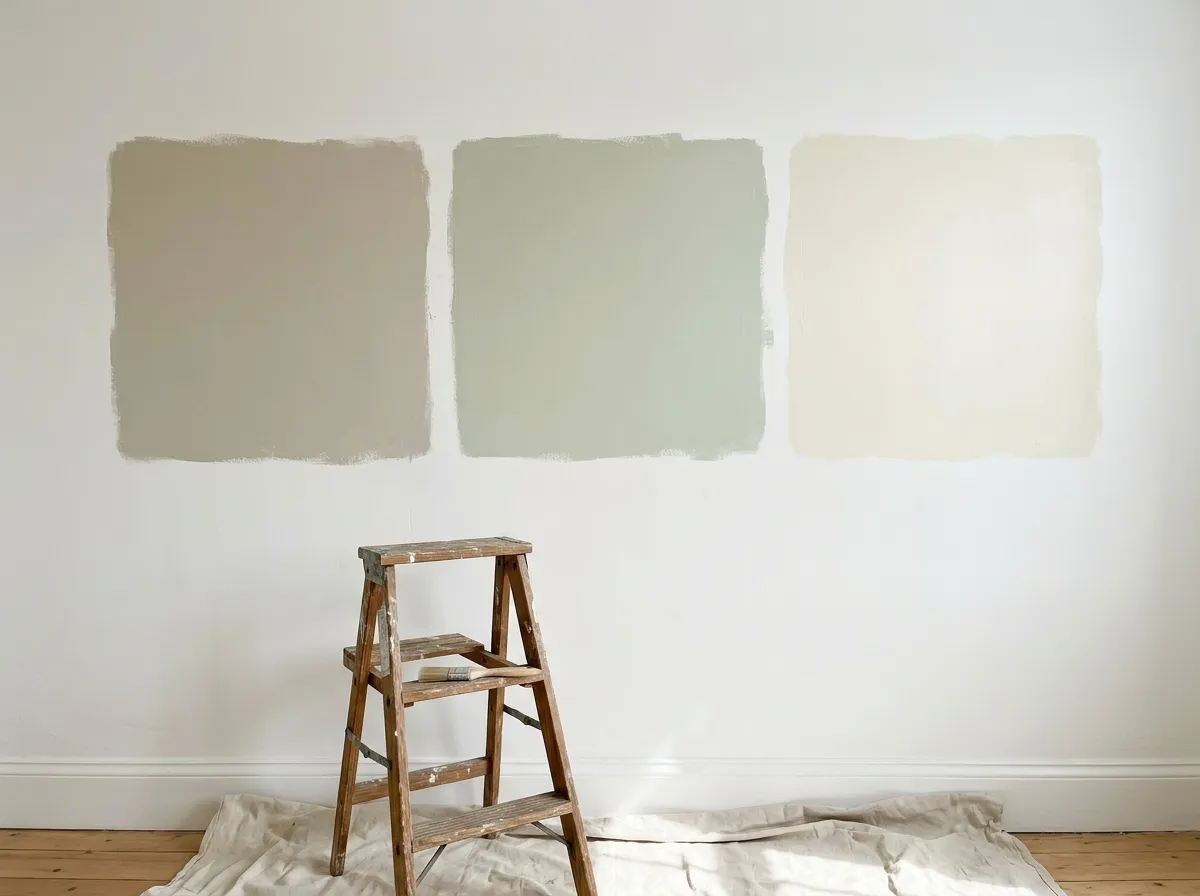
- Always test a sample on the wall and look at it in morning, afternoon and evening light.
How much paint do I need for a 12 × 10 ft bedroom?
With 8 ft ceilings, one door and two windows, you have about 300 sq ft of wall. Two coats is roughly 600 sq ft, which means about 2 gallons.
Does this include the ceiling and trim?
Walls only by default. Set Paint the ceiling too? to Yes to include the ceiling. Trim usually needs about a quart.
Do I need primer?
Use primer over new drywall, stains, glossy surfaces or when going from a dark color to a light one. Paint-and-primer products can save time but may need an extra coat.
What paint finish should I choose?
Matte or eggshell works well for bedrooms and living rooms. Satin or semi-gloss is better for kitchens, bathrooms and trim because it wipes clean.
Can I paint a rental apartment?
Check your lease first and ask your landlord for permission in writing. Many landlords require you to repaint before you move out. Peel-and-stick wallpaper is a good alternative.
How Much Paint Do You Really Need? A Practical Guide to Gallons, Coats and Coverage
Paint is one of the cheapest ways to change a room, and one of the easiest to buy wrong. Too little and you are back at the store with a can that may not match. Too much and you are storing half-full cans for years.
The calculator above works out your wall area, subtracts doors and windows, multiplies by the number of coats and rounds up to the nearest half gallon. This guide explains each step, shows the numbers for common room sizes, and helps you adjust the result for your own paint and your own walls.
How the calculator works
- Enter the room length and width in feet.
- Enter the ceiling height in feet. Standard ceilings are 8 feet, but many apartments are 9 feet or more.
- Choose the number of coats: 1, 2 or 3. Two coats is the standard.
- Enter the number of doors and windows. The calculator subtracts about 20 sq ft per door and 15 sq ft per window.
- Choose whether to paint the ceiling too. The default is walls only.
- Tap Calculate. You get the paintable area, the gallons needed and the number of gallons to buy, rounded up to the nearest half gallon.
The calculator always assumes that one gallon covers about 350 sq ft. The paintable area it shows is for one coat, and the gallons already include the number of coats you chose.
What to measure first
- Length and width of the room. Measure wall to wall in feet. If the room is not a simple rectangle, our Room Size Calculator helps you break it into parts.
- Ceiling height. Measure from the floor to the ceiling. Do not guess: a 9 ft ceiling adds 44 sq ft of wall to a 12 × 10 ft room.
- Doors and windows. Count them. The calculator uses average sizes, so a very large window or a wall of glass will need a manual adjustment.
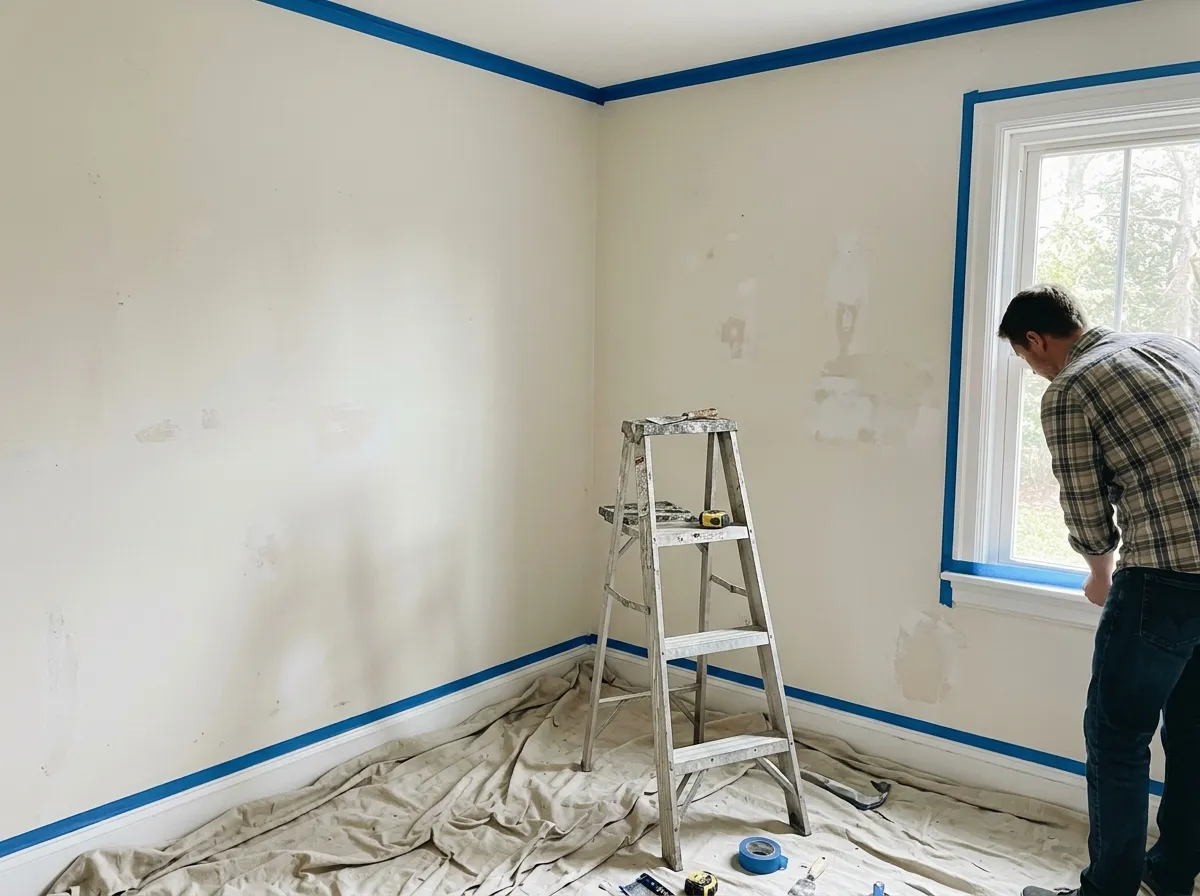
- Wall condition. Textured, new or patched walls soak up more paint, so round up.
- The color change. Going from dark to light, or covering a bold color, may need a primer or a third coat.
How the number is calculated
There are four steps:
- Wall area = 2 × (length + width) × ceiling height, minus 20 sq ft for each door and 15 sq ft for each window.
- Paintable area = wall area, plus length × width if you include the ceiling.
- Total to cover = paintable area × number of coats.
- Gallons = total ÷ 350, rounded up to the nearest half gallon.
Worked example
Take a 12 × 10 ft bedroom with 8 ft ceilings, one door, two windows and two coats.
- Perimeter: 2 × (12 + 10) = 44 ft. Gross wall area: 44 × 8 = 352 sq ft.
- Doors and windows: 20 + 2 × 15 = 50 sq ft, so the paintable wall area is 302 sq ft.
- Two coats: 302 × 2 = 604 sq ft to cover.
- Gallons: 604 ÷ 350 = 1.73, which rounds up to 2 gallons.
If you also paint the ceiling, add 12 × 10 = 120 sq ft. The paintable area becomes 422 sq ft, two coats make 844 sq ft, and 844 ÷ 350 = 2.41 gallons, so you buy 2.5 gallons.
- The narrow slices on the right are the door (20 sq ft) and the two windows (30 sq ft).
- Rounding always goes up to the next half gallon, never down.
Gallons by room size
This table shows common room sizes with 8 ft ceilings, one door, two windows and two coats. Use it to sense-check your own result.
| Room (ft) | Wall area | Gallons | Buy (walls) | Area with ceiling | Gallons | Buy (with ceiling) |
|---|---|---|---|---|---|---|
| 10 × 10 | 270 | 1.54 | 2 | 370 | 2.11 | 2.5 |
| 12 × 10 | 302 | 1.73 | 2 | 422 | 2.41 | 2.5 |
| 12 × 12 | 334 | 1.91 | 2 | 478 | 2.73 | 3 |
| 14 × 12 | 366 | 2.09 | 2.5 | 534 | 3.05 | 3.5 |
| 15 × 12 | 382 | 2.18 | 2.5 | 562 | 3.21 | 3.5 |
| 16 × 14 | 430 | 2.46 | 2.5 | 654 | 3.74 | 4 |
| 20 × 15 | 510 | 2.91 | 3 | 810 | 4.63 | 5 |
Areas in sq ft, for one coat. Gallons are for two coats at 350 sq ft per gallon.
In the table, painting the ceiling adds anywhere from half a gallon (10 × 10 and 12 × 10 ft) to two gallons (20 × 15 ft), depending on the room. It is worth planning for it up front, because a ceiling is quick to paint while the walls are already taped and covered.
Ceiling height and coats
Ceiling height and the number of coats are the two biggest levers on the final number. The table below keeps the 12 × 10 ft room, with one door and two windows, and changes only the height and the coats. Each cell shows the gallons needed, then what you buy.
| Ceiling height | Wall area | 1 coat | 2 coats | 3 coats |
|---|---|---|---|---|
| 8 ft | 302 | 0.86 → 1 | 1.73 → 2 | 2.59 → 3 |
| 9 ft | 346 | 0.99 → 1 | 1.98 → 2 | 2.97 → 3 |
| 10 ft | 390 | 1.11 → 1.5 | 2.23 → 2.5 | 3.34 → 3.5 |
Gallons needed → gallons to buy. Walls only, 350 sq ft per gallon.
A bold color that needs a third coat adds about a gallon to the 8 ft room. If you are not sure whether your color needs a third coat, buy for two and keep the receipt for the extra can. If you are choosing the color now, try the Color Palette Generator first.
Want to try your own room? Back to the calculator ↑
Doors and windows
The calculator subtracts 20 sq ft per door and 15 sq ft per window. That is a good average, but the effect on the result can be large. This table uses the same 12 × 10 ft room with 8 ft ceilings and two coats.
| Doors / windows | Subtracted | Wall area | Gallons | Buy |
|---|---|---|---|---|
| 0 / 0 | 0 | 352 | 2.01 | 2.5 |
| 1 / 2 | 50 | 302 | 1.73 | 2 |
| 2 / 4 | 100 | 252 | 1.44 | 1.5 |
| 1 / 6 | 110 | 242 | 1.38 | 1.5 |
| 3 / 6 | 150 | 202 | 1.15 | 1.5 |
Areas in sq ft, for one coat. Gallons are for two coats.
The first row shows how rounding works: 2.01 gallons is only a hair over 2, but it moves the purchase to 2.5. If your result sits right on the edge, think about what you are painting. Rough or dark walls will use more, so buy the higher amount. Smooth, primed walls may be fine with the lower one.
Coverage and the can label
The calculator uses 350 sq ft per gallon because that is a common average. But the label on your can is the real source of truth, and it can read anywhere from about 250 to 400 sq ft. Thick, premium or paint-and-primer products often cover differently from budget paint.
Here is how the same 12 × 10 ft room (302 sq ft of wall, two coats, 604 sq ft in total) changes with the coverage on the label. The rounding is the same as the calculator uses.
| Coverage on the label | Gallons needed | Buy |
|---|---|---|
| 250 sq ft per gallon | 2.42 | 2.5 |
| 300 sq ft per gallon | 2.01 | 2.5 |
| 350 sq ft per gallon (the calculator) | 1.73 | 2 |
| 400 sq ft per gallon | 1.51 | 2 |
The label figure assumes smooth, primed walls. Textured or unpainted walls absorb more, so expect to be at the lower end of the range.
Check your own coverage
If your can says something other than 350, use this small checker. Enter the paintable area from the calculator, the number of coats and the coverage printed on the label.
The defaults are the 12 × 10 ft bedroom from the worked example. Rounding is up to the nearest half gallon, like the calculator.
Turning gallons into cans
The calculator rounds to the nearest half gallon, but paint is sold in set sizes. In the US, the usual choices are a quart (a quarter gallon), a gallon and a 5-gallon pail. Sizes and availability vary by brand and by color, so check what your store offers.
| Calculator says | One way to buy it |
|---|---|
| 0.5 gallon | Two quarts |
| 1 gallon | One gallon |
| 1.5 gallons | One gallon and two quarts |
| 2 gallons | Two gallons |
| 2.5 gallons | Two gallons and two quarts |
| 3 gallons | Three gallons |
Then add a quart for touch-ups, as the calculator suggests. Buy everything in one go so every can comes from the same batch. If you end up with more than one can, mix them together in a large bucket before you start so the color stays even from wall to wall. Trim usually needs about a quart on its own.
A note on safety: This calculator is a planning guide, not professional advice. Coverage depends on the paint, the surface and how you apply it. Keep the room ventilated while you paint. In the US, homes built before 1978 may contain lead-based paint, so test before you sand or scrape, and ask a qualified professional if you are unsure.
Primer, color and finish
- Primer. Use it over new drywall, stains, glossy surfaces, or when you go from a dark color to a light one. Paint-and-primer products can save time but may need an extra coat.
- Dark or bold colors. They often need a third coat, or a tinted primer first, to look even. Plan the gallons for three coats in the calculator.
- Finish. Matte or eggshell works well for bedrooms and living rooms. Satin or semi-gloss is better for kitchens, bathrooms and trim because it wipes clean.
- Samples. Always test a sample on the wall and look at it in morning, afternoon and evening light. If you are also planning your lamps, our Lighting Calculator shows how darker walls change how much light a room needs.
Painting a rental
Check your lease first and ask your landlord for permission in writing. Many landlords require you to repaint before you move out, so budget for the paint twice. If you cannot paint, our Peel-and-Stick Wallpaper Calculator works out how many rolls you need for a removable accent wall.
Planning the whole room? Set aside a share of your decorating budget for paint, brushes, tape and drop cloths using the Decorating Budget Planner, and move the furniture out of the way, or plan where it goes afterwards with the Furniture Layout Planner.
Common mistakes
- Guessing the room size. Measure every wall. A few feet either way can change the can count.
- Forgetting the second coat. One coat rarely looks even. Two is the standard.
- Ignoring the can label. The calculator uses 350 sq ft per gallon. Your paint may cover more or less.
- Skipping primer. Dark-to-light changes and stained walls show through without it.
- Buying at different times. Cans from different batches can have slight color differences. Buy once, or mix the cans.
- Not buying touch-up paint. Add a quart, and label it with the room, color name, brand and finish.
- Skipping the test sample. A color on a chip looks different on a full wall. Check it in several kinds of light.
- Painting a rental without permission. Get approval in writing.
Before you buy: checklist
Tick these off before you head to the store.
More questions
The most common questions are answered in the calculator above. Here are a few more.
How many gallons do I need for a 14 × 12 ft living room?
With 8 ft ceilings, one door, two windows and two coats, the walls come to 366 sq ft, so you need about 2.09 gallons and the calculator says to buy 2.5. With two doors and three windows, the walls are 331 sq ft, which is 1.89 gallons, so you would buy 2.
Why does the calculator say 2.5 gallons when I only need a little over 2?
It always rounds up to the next half gallon, so it never leaves you short. For example, a 12 × 10 ft room with no doors or windows needs 2.01 gallons, and the result is 2.5. Buy two gallons and two quarts, or a third gallon if you want spare paint.
What if my paint covers a different area per gallon?
The calculator assumes 350 sq ft per gallon. If your label says something different, use the checker above with the paintable area from the calculator and the coverage printed on your can.
Do I need to worry about lead paint in an older home?
In the US, homes built before 1978 may have lead-based paint. Test before you sand or scrape, and ask a qualified professional if you are unsure. This is general information, not professional advice.
Ready to paint? Scroll back up, enter your room and see how many gallons to buy. Once the walls are done, it is time to think about what goes on the floor.