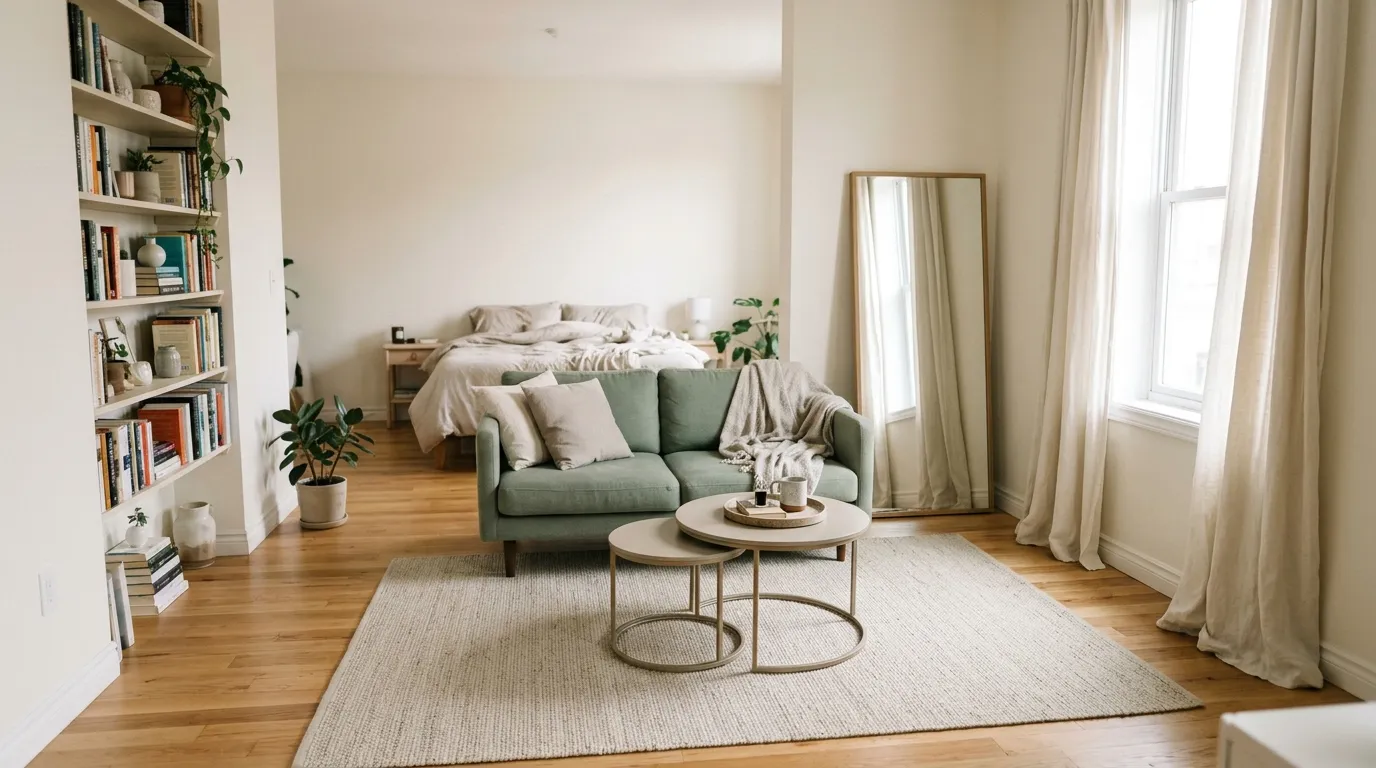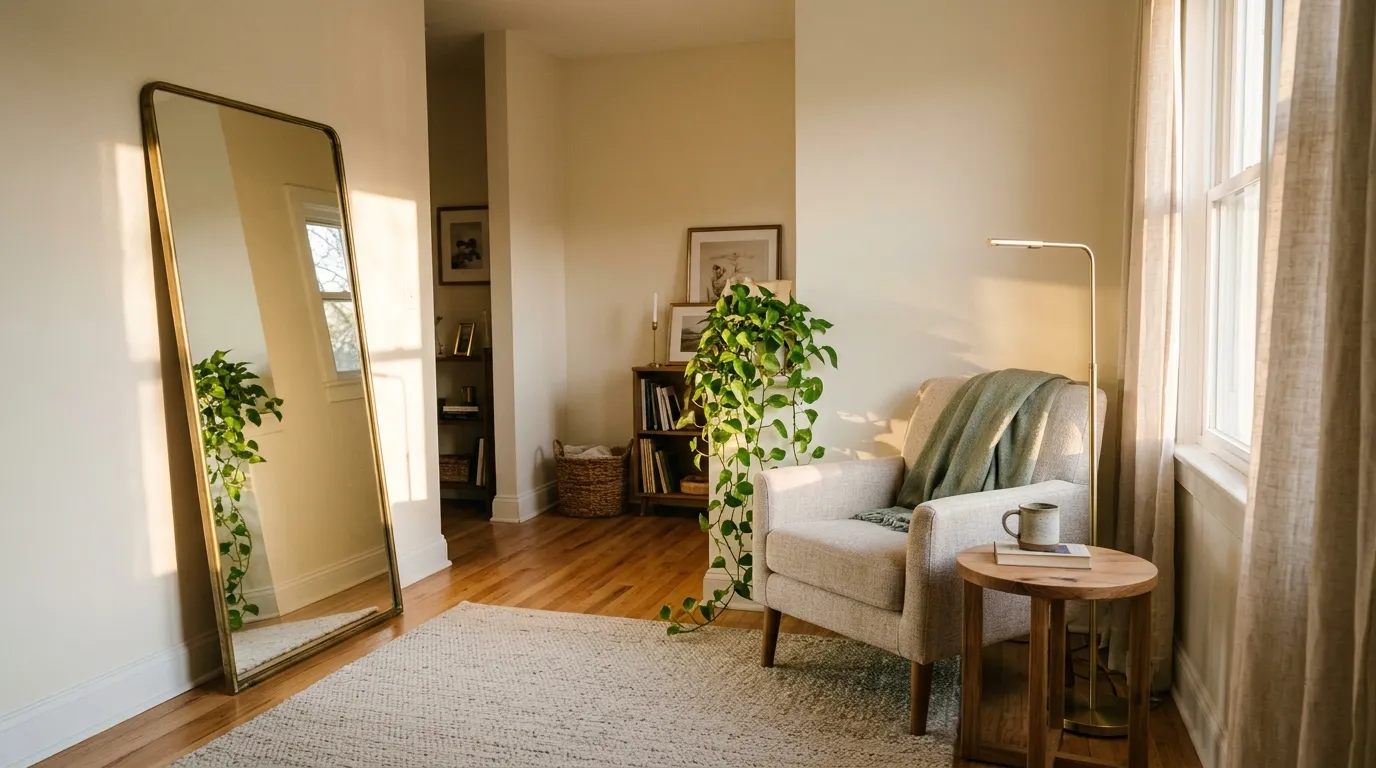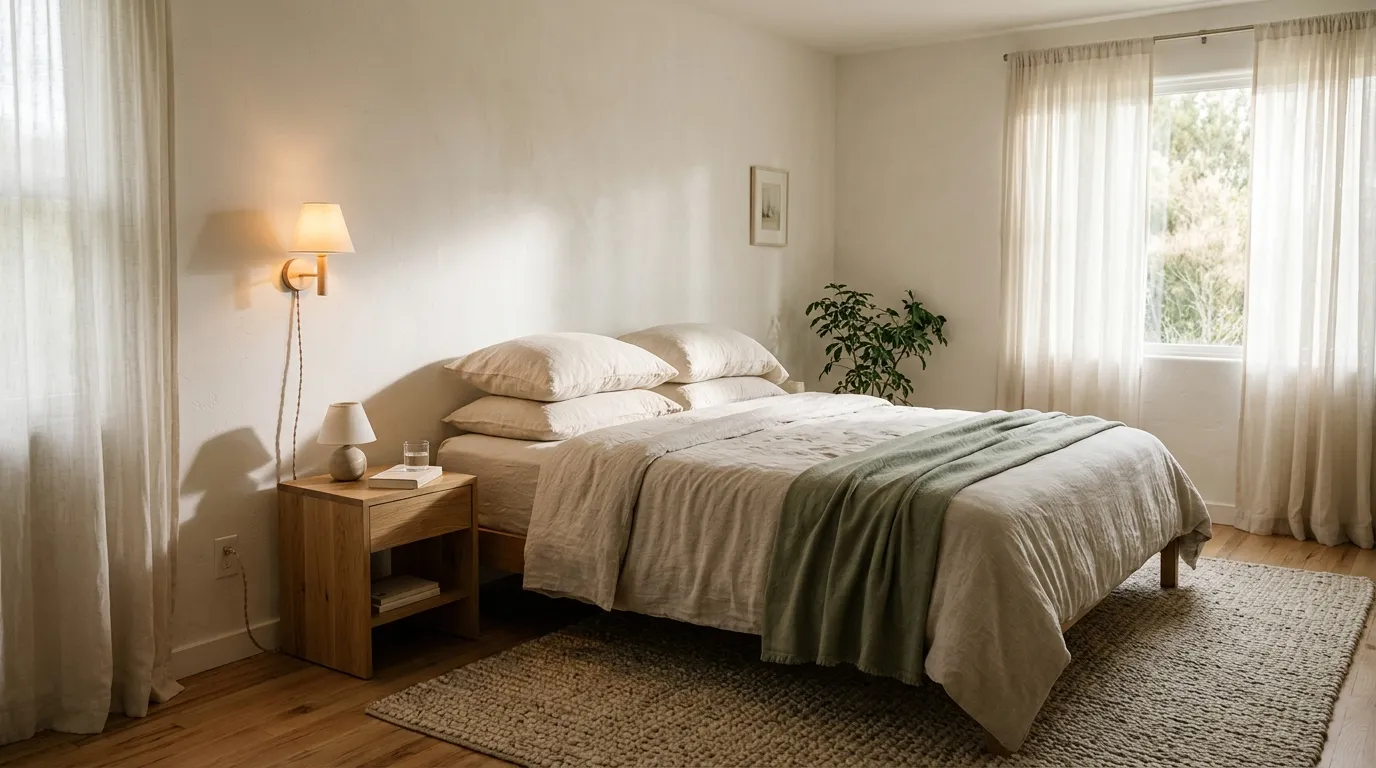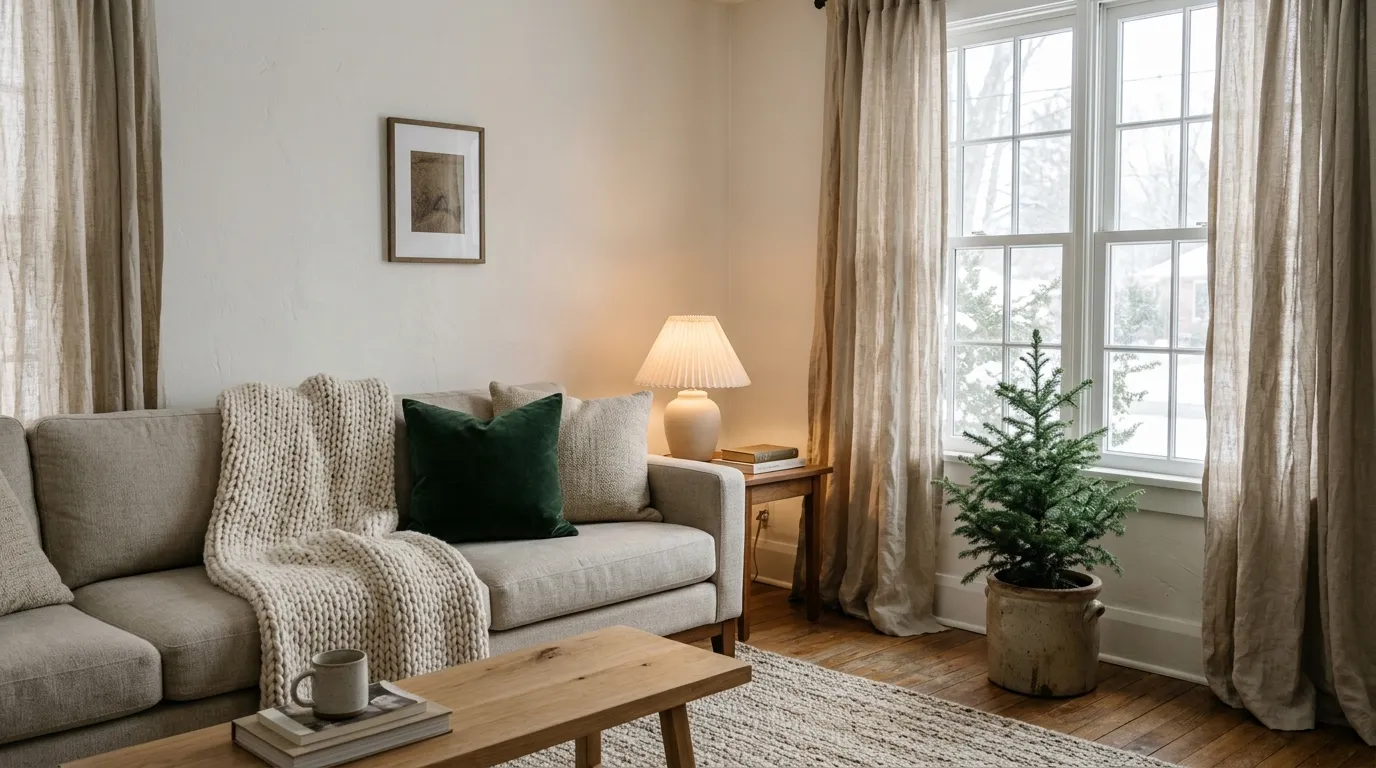

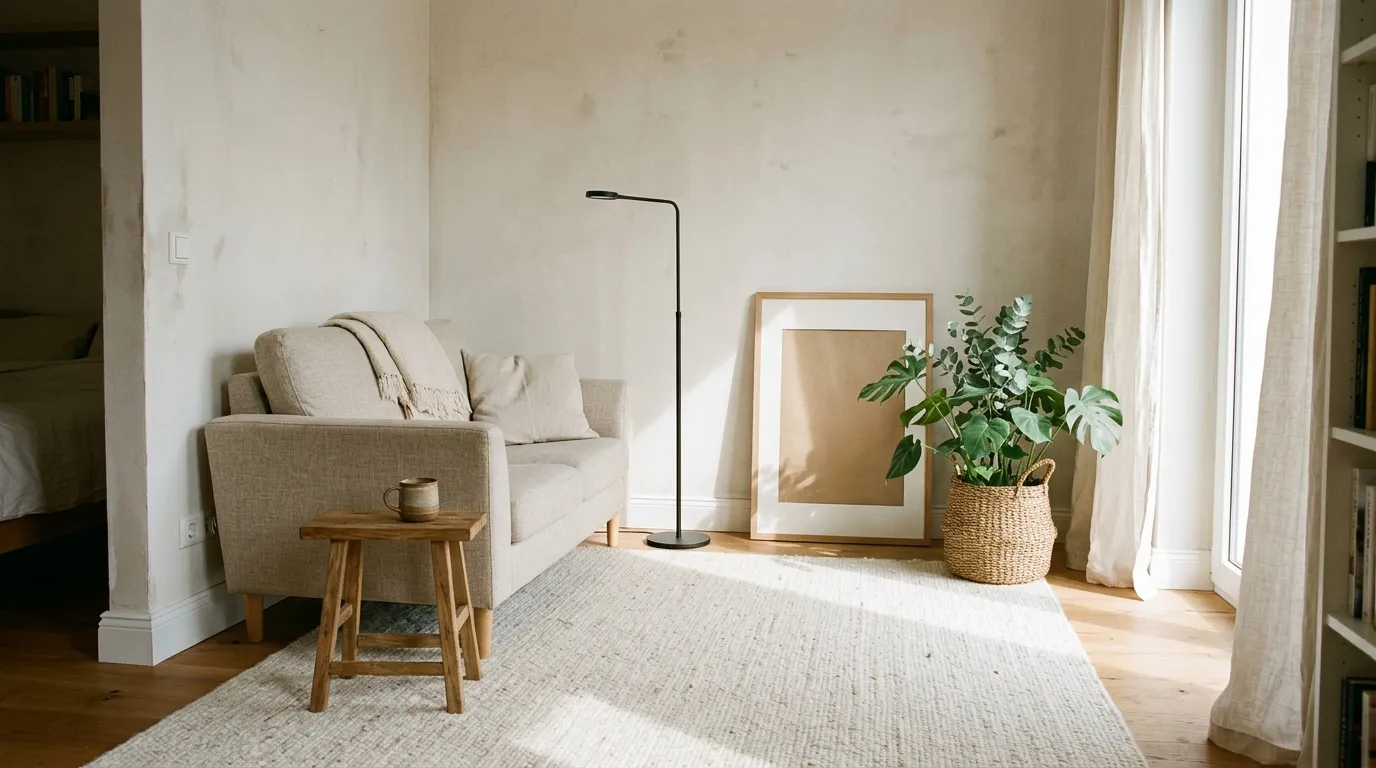
The first night in a new apartment, the walls are bare, the floor echoes, and the shopping list in your head already feels bigger than your bank account. If you’ve typed “decorate first apartment on a budget” into a search bar, the good news is that the order you do things in matters more than how much you spend.
What you need is a clear sequence: what to measure, what to buy first, and what can wait. This checklist walks you through six stages so your money goes to the right things at the right time.
I like to treat a first apartment as a slow build, not a one-weekend project. Here’s the order I’d follow.
1. Measure Your Space First
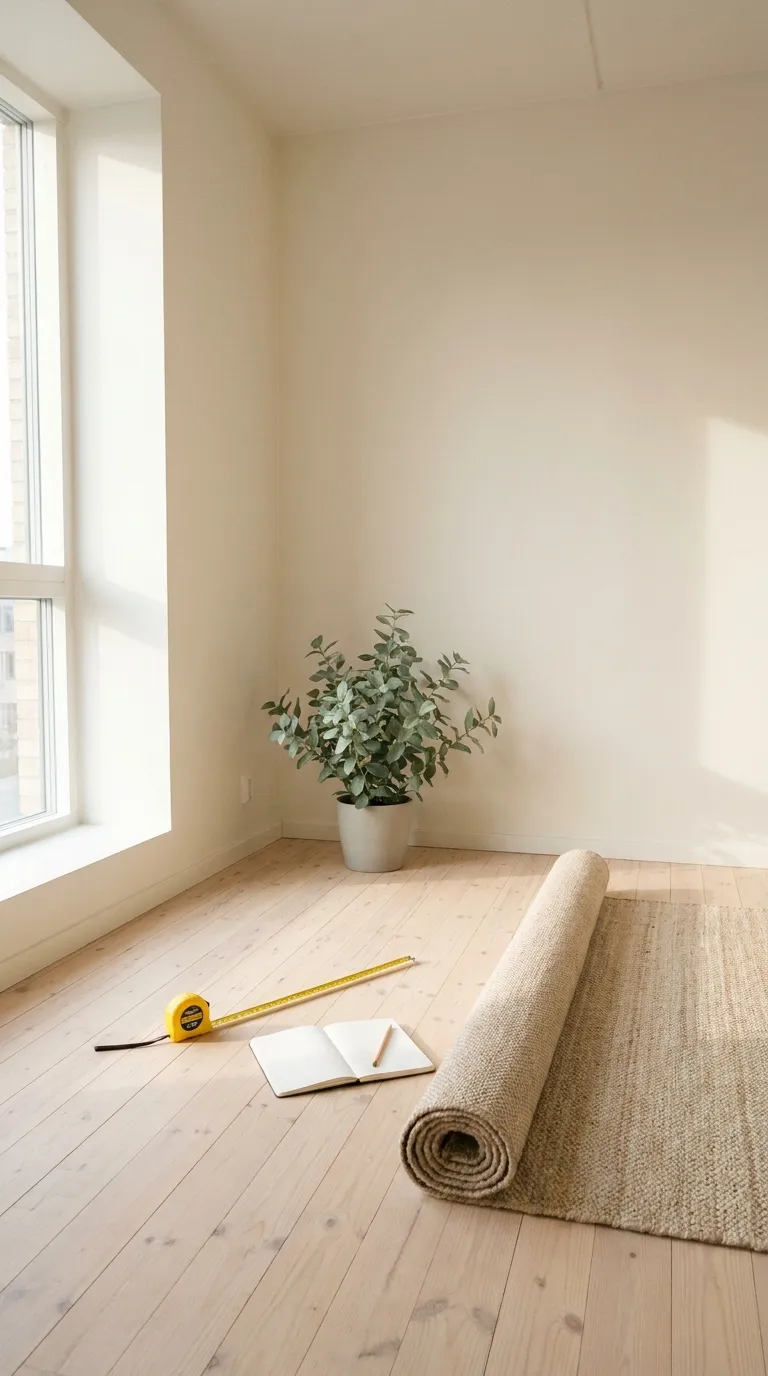
Measuring comes first because every later choice depends on it. A sofa that fits the wall on paper may not fit the stairwell, and a rug that looks right online can swallow a small floor. Ten minutes with a tape measure prevents most of the returns first-time decorators run into.
Do This First
- Sketch a rough floor plan on paper or in a notes app
- Measure each wall, window, and doorway
- Note where outlets, radiators, and vents sit
- Measure hallways, stairwells, and elevator doors for deliveries
- Mark the area where the front door swings open
Why It Matters
Numbers keep you from buying the wrong size, and sending furniture back costs time and energy you’d rather spend on the fun part. Leave at least 30 inches for main walkways so the room stays easy to move through, even when it’s full.
What to Look For
Use these quick checks as you walk through each room.
| Spot | Check | Write Down |
|---|---|---|
| Doorways | Delivery clearance | Width and height |
| Walls | Furniture and art placement | Length and open space |
| Windows | Curtain and light planning | Width and sill height |
| Outlets | Lamp and cord reach | Distance from the nearest corner |
Skip for Now
- Exact paint colors, since you can choose them once furniture is in place
- A perfect scale drawing, because a rough sketch with real numbers is enough
A Simple Rule to Remember
Measure twice, then buy once.
2. Split Your Budget by Room
Once you know the size of each room, you can decide where the money goes. Splitting funds by room instead of by wish list stops one pricey piece from eating everything else.
Do This First
- Pick a total you can spend without stress
- List the rooms you use every day
- Rank each room by how often you use it
- Set aside a small cushion for surprises
- Write down every purchase as you make it
Why It Matters
A simple decorating budget works best when it follows how you live, not how a showroom looks. Give the biggest share to the pieces you use every day, like the bed and the seat you relax in, and keep smaller shares for accents.
It also makes saying no easier. When each category already has a limit, an impulse buy has to compete with something you actually need.
If you rent and can’t paint or drill, shift more of the split toward rugs, lamps, and textiles, since those change a room without touching the walls.
Type in your total and pick a starting point to see how it splits across eight categories.
What to Look For
- Categories that match your daily routine
- Room-by-room limits rather than item-by-item guesses
- Room for delivery, hardware, and small extras
- Secondhand, sale, and borrowed options for big pieces
Skip for Now
- Splurges on accessories, which are easy to add later
- Replacing anything that still works well enough
3. Buy the Big Pieces First
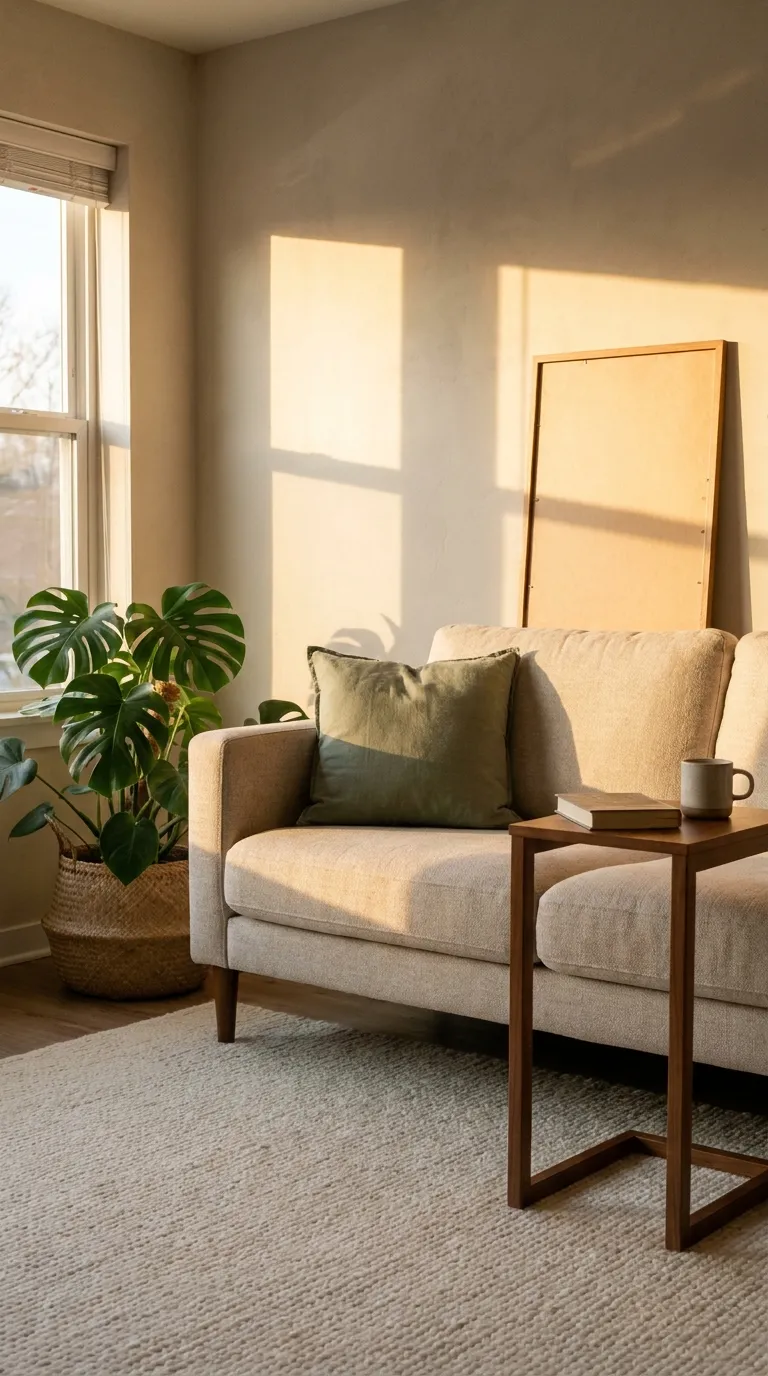
Big pieces set the layout, the colors, and the mood of the room. Buy them first and let smaller items fill in around them. That usually costs less than guessing in the other direction.
Do This First
- Choose a bed setup you can use comfortably every night
- Pick one seat to relax in
- Add a surface for meals, laptops, or both
- Check each piece against your floor plan
- Look at secondhand and floor-model options for sturdy basics
Why It Matters
Most first apartments only need a few anchor pieces to feel livable. Starting there gives your first apartment checklist a clear top priority and keeps small purchases from piling up before the room has a plan.
What to Look For
- Scale for one person, like a loveseat or small sofa instead of a sectional
- Sturdy frames, solid joints, and removable covers where possible
- Neutral base colors such as oatmeal, warm white, or soft gray
- Visible legs, which let the floor show and keep the room feeling lighter
Skip for Now
- Matching sets, since pieces collected over time look more personal
- Extra seating, until you know how often you host
- Wall art and small accessories, which are easy to add once the layout is set
Try it: sort each item into Buy now or Wait.
A Simple Rule to Remember
Buy the piece you use every day before the piece you only look at.
Renter Note
Check your lease before drilling into walls. If you can’t anchor a tall bookcase, choose a low one, and for anything heavy use anchors rated for the weight and follow the product’s instructions.
4. Set Up Your Lighting Layers
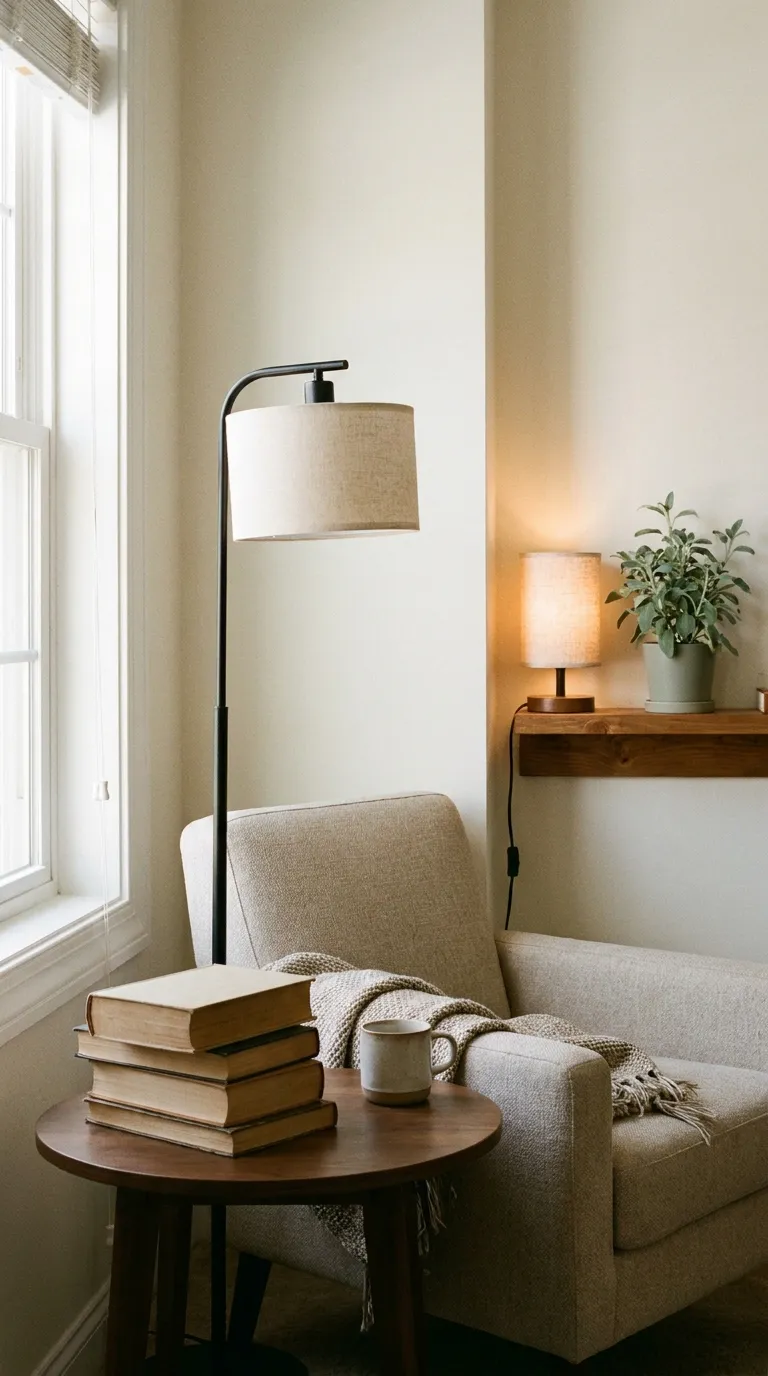
A single ceiling light makes most rooms feel flat, and in many rentals it’s the only light you get. Adding a few lamps at different heights is one of the cheapest ways to make a first apartment feel finished, and it doesn’t require touching a wall.
Do This First
- Notice where daylight enters each room
- Add one floor lamp for general light
- Place a task light where you read or work
- Add a small accent lamp on a shelf or dresser
- Choose warm-toned bulbs for evening rooms
Why It Matters
Lamps at different heights spread light across the room instead of dropping it from above. The result feels softer and more inviting, and you can switch off the harsh overhead light when you don’t need it.
What to Look For
- Plug-in lamps, so nothing gets installed
- Fabric or frosted shades that soften the glow
- Cords long enough to reach an outlet without crossing a walkway
- Bulbs with matching warmth across the room, so the light looks consistent
Skip for Now
- Smart lighting systems, since basic lamps do the job
- Replacing the ceiling fixture, which you can revisit once you’ve settled in
Renter Note
Stick with plug-in lighting. Swapping a ceiling fixture or wiring anything is electrical work, so check your lease and hire a licensed electrician if you ever want that change.
5. Add Textiles and Soft Layers
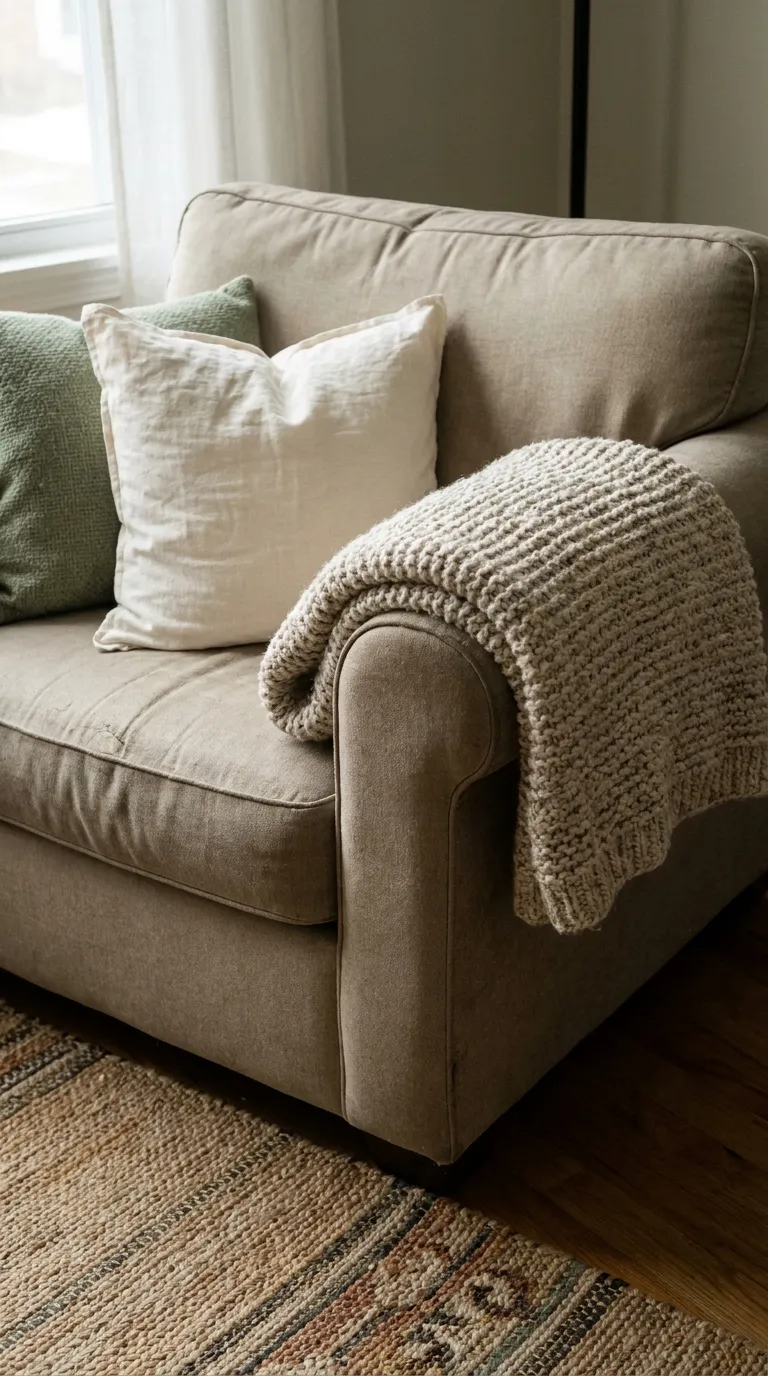
Fabric is where an apartment starts to feel lived in. Rugs, curtains, and a throw absorb echo, add texture, and cover a lot of visual ground for the money.
Do This First
- Choose a rug that fits the main seating area
- Hang curtains on a rod set close to the ceiling
- Add one throw blanket you’ll actually use
- Pick two pillow covers in colors that match your palette
- Check the care label on every textile before buying
Why It Matters
Soft layers hide a lot of rental flaws, from worn floors to plain windows. A rug also anchors the furniture so the room looks planned rather than scattered. Aim for a rug large enough that the front legs of your seating sit on it.
What to Look For
Match each textile to the job it does in the room.
| Piece | Job | Look For |
|---|---|---|
| Rug | Anchors the seating area | Front furniture legs resting on it |
| Curtains | Frames and softens windows | Rod hung high, fabric to the floor |
| Throw | Adds texture and warmth | Easy-care fabric |
| Pillow covers | Adds color cheaply | Removable, washable covers |
Skip for Now
- Full bedding collections, since one good set is enough to start
- Piles of pillows, which are easy to add once you know your colors
6. Style the Walls Last
Walls are the easiest place to overspend and the easiest place to change your mind. Wait until the furniture and lighting are in place, then decorate the walls to fit what the room has become.
Do This First
- Live with bare walls for a few weeks
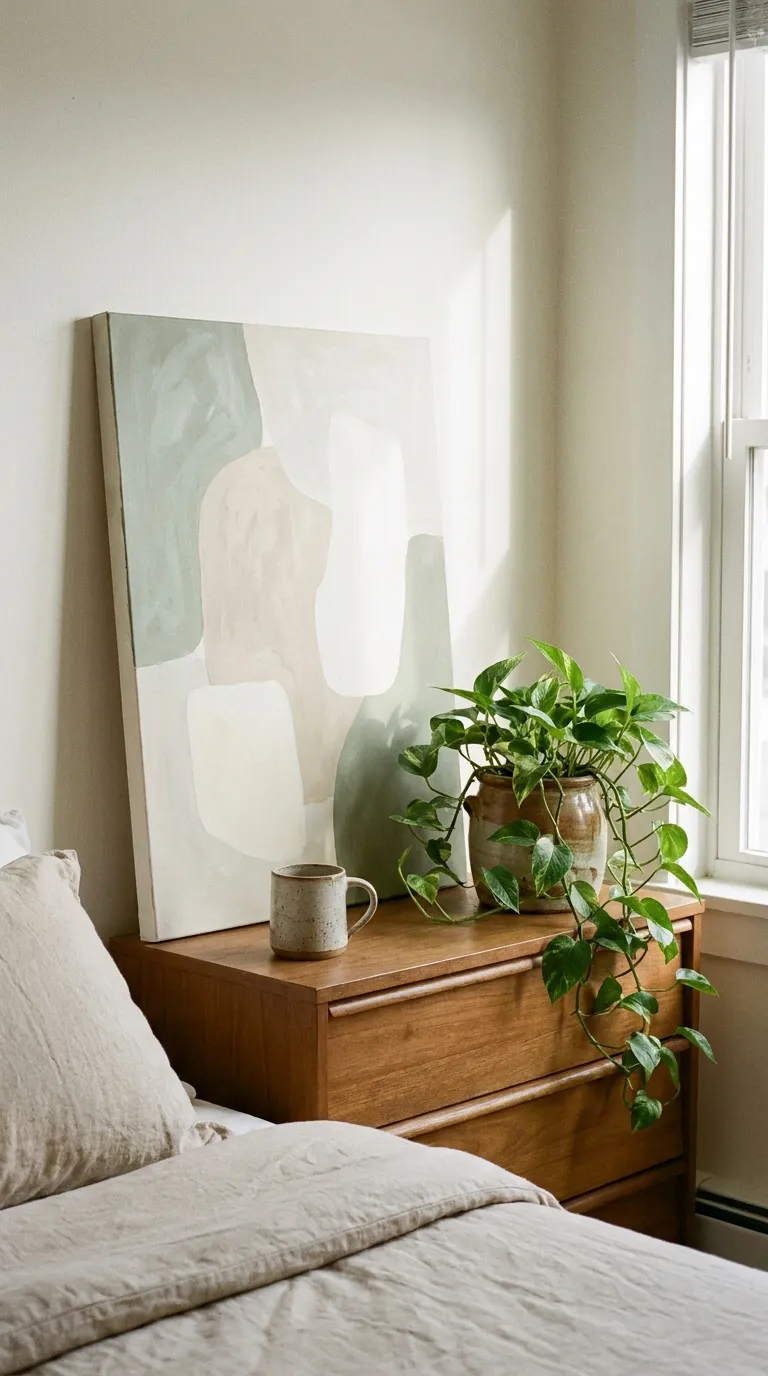
- Lean art on a dresser or shelf before hanging anything
- Choose a few larger pieces over many small ones
- Trace each frame on paper and tape it up to test the spot
- Use adhesive hooks only within their stated weight limit
Why It Matters
Leaning art in place shows you what the room needs before you make holes or spend money. Hang art so its center sits about 57 inches from the floor, which keeps it near eye level and makes the room feel connected.
What to Look For
- Large frames or one bold piece that fills an empty wall
- Frames in a similar finish, so the wall looks calm
- Plenty of space around each piece
- Blank frames you can fill later with art you love
Skip for Now
- Gallery walls with many small frames, which take planning and patience
- Paint and wallpaper, until you’ve checked what your lease allows
Renter Note
Check your lease before painting or drilling. For heavy items like mirrors, use anchors rated for the weight and follow the product’s instructions.
Quick Checklist Cheat Sheet
Keep this table handy when you shop so you always know the next step.
| Stage | Do This | Skip for Now |
|---|---|---|
| Measure | Sketch plan, measure doors | Exact paint colors |
| Budget | Set limits by room | Accessory splurges |
| Big pieces | Bed, one seat, a table | Matching sets |
| Lighting | Floor lamp plus task light | Hardwired fixtures |
| Textiles | Rug, curtains, one throw | Piles of pillows |
| Walls | Lean art, then hang a few | Gallery walls and paint |
The Principles Behind This Checklist
Start With Measurements
Numbers protect you from the most common first-apartment mistake: buying something that doesn’t fit. Every other decision gets easier once you know how much room you actually have.
Buy in Layers
Furniture first, lighting second, textiles third, walls last. Each layer shows you what the next one needs, so you buy less and regret less.
Live in the Space Before Filling It
A few weeks of daily life will show you where you drop your keys, where you want a lamp, and which corner stays empty. Let those habits guide the next purchase.
Spend on What You Use Daily
Put your money into the bed, the seat you relax in, and the light you read by. Accessories matter, but they matter least on day one.
Beginner Mistakes Worth Skipping
Buying Everything in One Weekend
It feels productive, but it locks in guesses. Fix it by buying one layer at a time and living with it first.
Skipping the Tape Measure
Even a sofa you love becomes a problem if it won’t fit through the door. Fix it by measuring doorways and walkways before you order.
Hanging Art Before Choosing Furniture
Walls look different once furniture is in place. Fix it by leaning art in position first and hanging it last.
Final Tips for Success
How to Decorate First Apartment on a Budget, One Layer at a Time
Small, steady steps beat a big shopping trip. Finish one layer, enjoy it, then decide what the room needs next.
Keep a Running Wish List
When you spot something you love, write it down instead of buying it. If you still want it after a few weeks, it’s a better purchase.
Check Your Lease Before You Change Anything
Painting, drilling, and swapping fixtures all have rules in many rentals. A quick read of your lease saves you from fixing something later.
Basics Worth Owning
- Tape measure
- Small level
- Step stool
- Basic screwdriver set
- Adhesive hooks with clear weight limits
Conclusion
A first apartment doesn’t need to look finished on day one. It needs to work for the way you live, and that starts with a clear order of steps.
Measure first, set limits by room, buy the big pieces, then add light, soft layers, and wall art. Each stage builds on the last, so you spend where it counts.
The best way to decorate first apartment on a budget is patience, plus a clear order of steps. The things worth buying will still be there after you’ve lived in the space for a while.
Save this guide for the next time you rearrange the room.