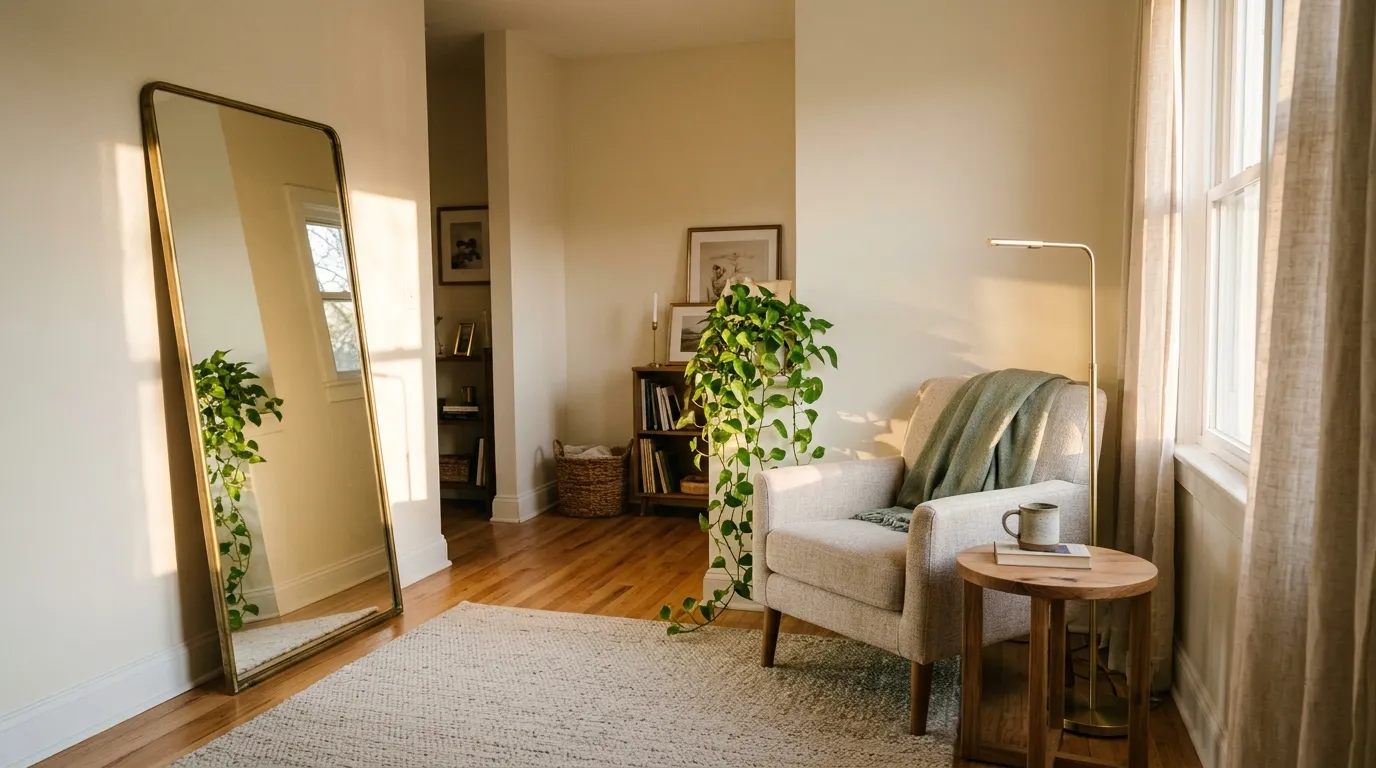
Decor and Home Essentials
Moving into your first place is exciting, and a little overwhelming. This interactive checklist covers the essentials for every room, from bedding and a rug to smoke detector checks, so nothing important gets forgotten. Tick items as you go and watch the progress bar fill up.
- Scroll through the categories: bedroom, living room, kitchen and dining, bathroom, cozy touches, and safety and basics.
- Tick items you already own or have bought.
- Check the progress bar to see how close you are to move-in ready.
- Add your own items, print the list, or tap Start over to clear it. Your progress is saved in this browser.
- Buy the basics first: a bed, lighting, kitchen essentials and towels.
- Add decor slowly. Live in the space for a few weeks before buying art and accessories.
- Ask friends and family for spare dishes, throws and small furniture before you buy new.
- Thrift stores and marketplace listings are great for side tables, mirrors and frames.
- Measure doors, hallways and elevators before you order large furniture.
What should I buy first for my first apartment?
A mattress and bedding, towels, basic cookware, shower curtain and good lighting.
Is my progress saved?
Yes, in the browser you’re using. If you clear your browser data or switch devices, the checklist will start over.
What are good renter-friendly decor ideas?
Rugs, plants, lamps, removable wallpaper, adhesive hooks, curtains and framed prints all make a rental feel personal without damage.
How do I decorate on a tight budget?
Use the Budget Planner to set a total, buy the essentials first and fill in with second-hand finds.
Do I need renter’s insurance?
Many landlords require it and it’s usually affordable. Check your lease and ask your insurer.
Read the full first apartment guide ↓
Your First Apartment, Sorted: What to Buy, What to Skip and What Can Wait
Nobody tells you that the hardest part of a first apartment is not the move. It is the first week, when you realize you own a bed but no sheets, a kettle but no mug, and a front door but no idea where the water shut-off is.
The checklist above covers 35 essentials across six categories, so you can stop keeping a list in your head. This guide goes a step further. It explains what to buy first, what can wait, how to avoid costly mistakes and how to make a rental feel like yours without losing your deposit.
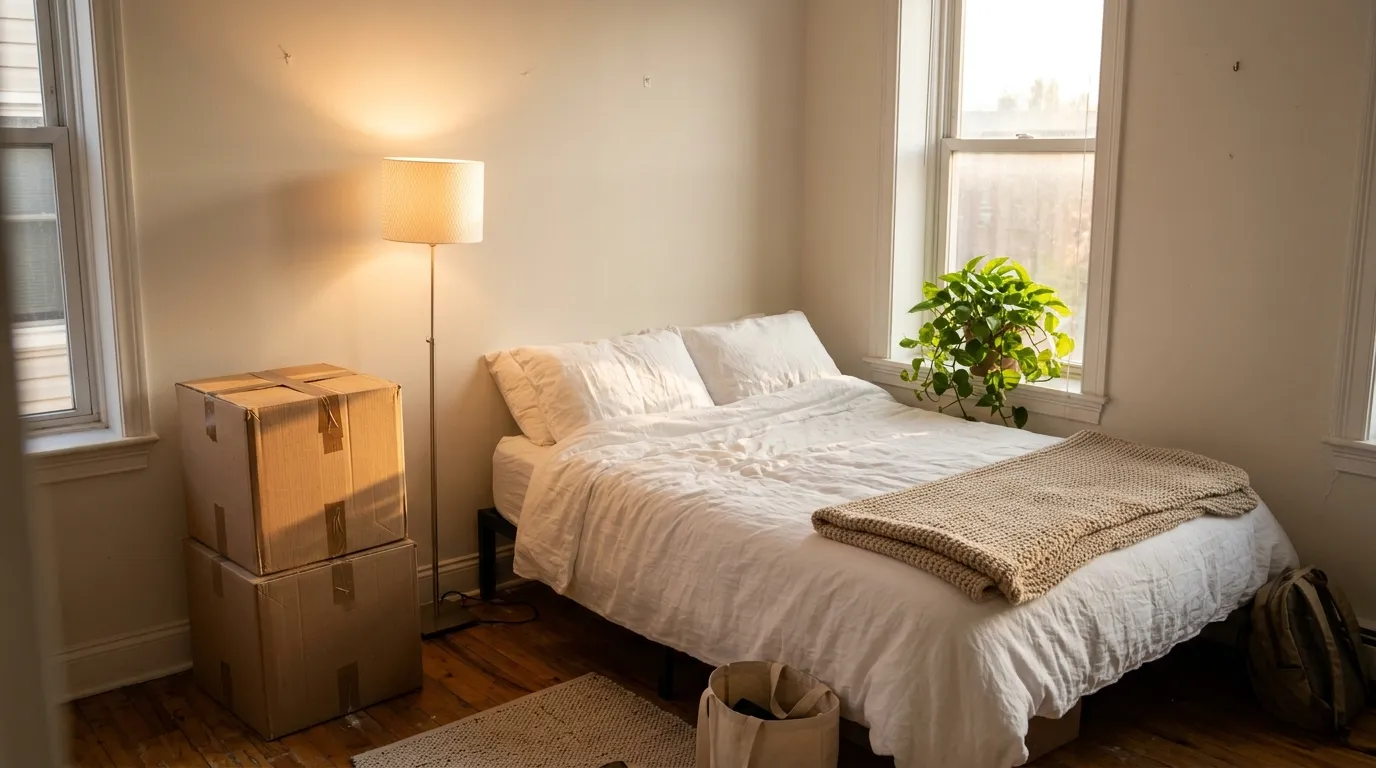
How the checklist works
The checklist is built to be used on your phone while you shop and at home while you unpack.
- Browse the six categories: bedroom, living room, kitchen and dining, bathroom, cozy touches, and safety and basics.
- Tick what you already own or have bought. The progress bar shows how close you are to move-in ready.
- Add your own items in the box at the top. They appear in their own “My items” group at the bottom.
- Print it or start over with the buttons below the list.
Your ticks and your own items are saved in the browser you are using. If you clear your browser data or switch devices, the checklist starts over, so print it if you want a permanent copy.
Before you buy anything
The most expensive mistakes happen before you open a shopping app. Spend an hour on these steps first.
- Read your lease. Look for rules about nails, paint, wallpaper, candles and guests, and ask your landlord about anything unclear.
- Take stock of what is included. Some apartments come with appliances, window blinds or built-in storage. Do not buy what you already have.
- Measure the rooms. Our Room Size Calculator turns your measurements into floor area, which helps when you shop for rugs and furniture.
- Set a total budget. Decide how much you are comfortable spending, then divide it with our Decorating Budget Planner.
- Ask around. Friends and family often have spare dishes, throws, lamps and small furniture they would happily give away.
Buy in three waves
You do not need to buy all 35 items at once, and you will make better choices if you do not. Sorting the checklist into three waves keeps the first week simple and the first month affordable.
| Wave | Items from the checklist | Why this timing |
|---|---|---|
| 1. Move-in day | Bed frame & mattress, 2 sets of sheets, duvet or comforter, pillows, towels, shower curtain, toilet brush, dishes & glasses, cookware, cutlery, floor lamp, warm light bulbs, power strips, cleaning supplies, smoke detector check | These cover sleep, hygiene, food and light. Without them the first night is hard. |
| 2. First two weeks | Blackout curtains, nightstand & lamp, sofa or loveseat, kitchen towels, bath mats, storage caddy, entry hooks or tray, first aid kit, basic tool kit | You will quickly learn where light, clutter and daily routines need support. |
| 3. Later | Full-length mirror, area rug, throw blanket & pillows, coffee table, TV stand, living room curtains, wall art, small table & chairs, plants, candles, frames or prints | These shape the style of the room, and they are easier to choose once you have lived there for a while. |
You can reorder these to suit your life. If you work from home, a table and chair may belong in wave 1.
Ready to tick things off? Back to the checklist ↑
Room by room
Bedroom
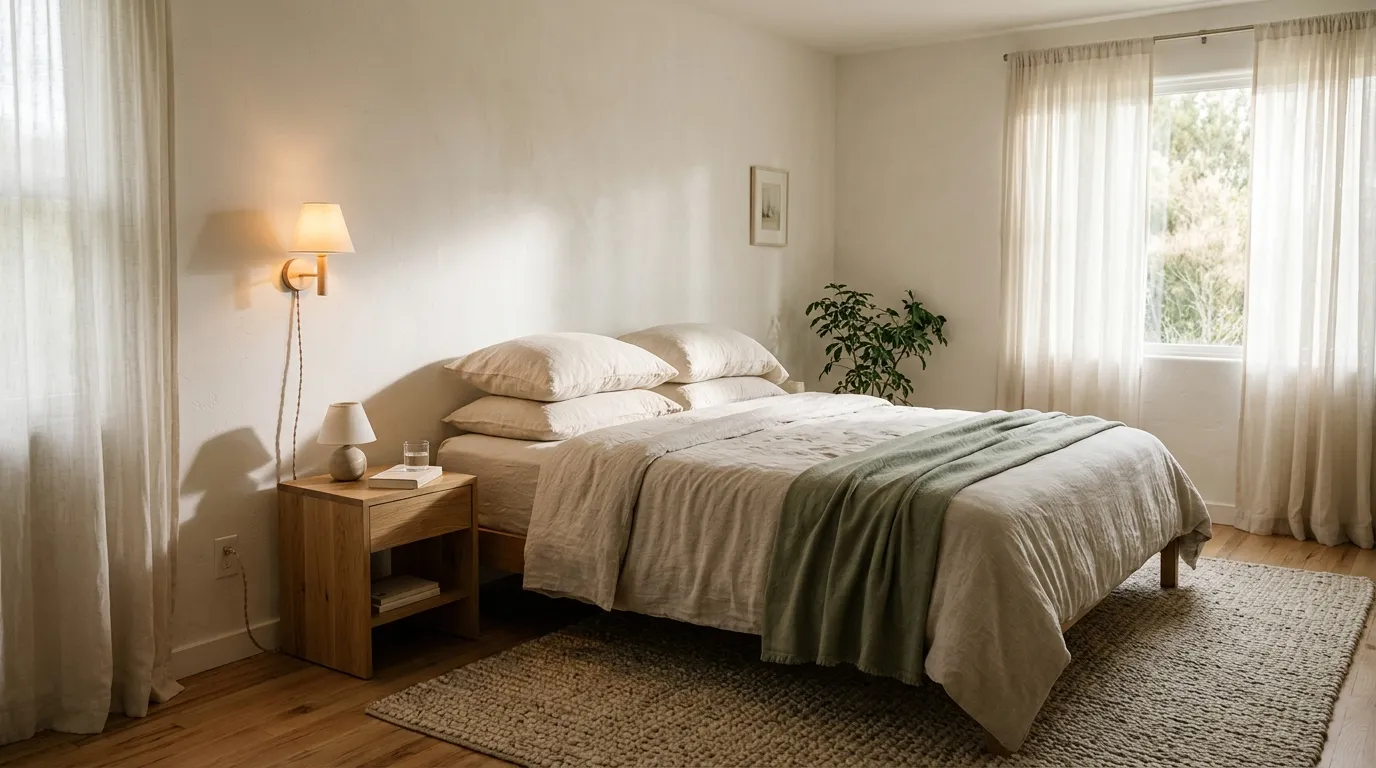
The bedroom needs to be right from night one. Spend on the mattress and keep the rest simple. Buy two sets of sheets so one is always clean, and add a pillow and duvet that suit your climate. Blackout curtains help you sleep if streetlights or morning sun are an issue, and a nightstand and lamp can be any small surface with a warm light. A full-length mirror leaned against the wall doubles as decor. If you are unsure about curtain sizes, try our Curtain Size Calculator.
Living room
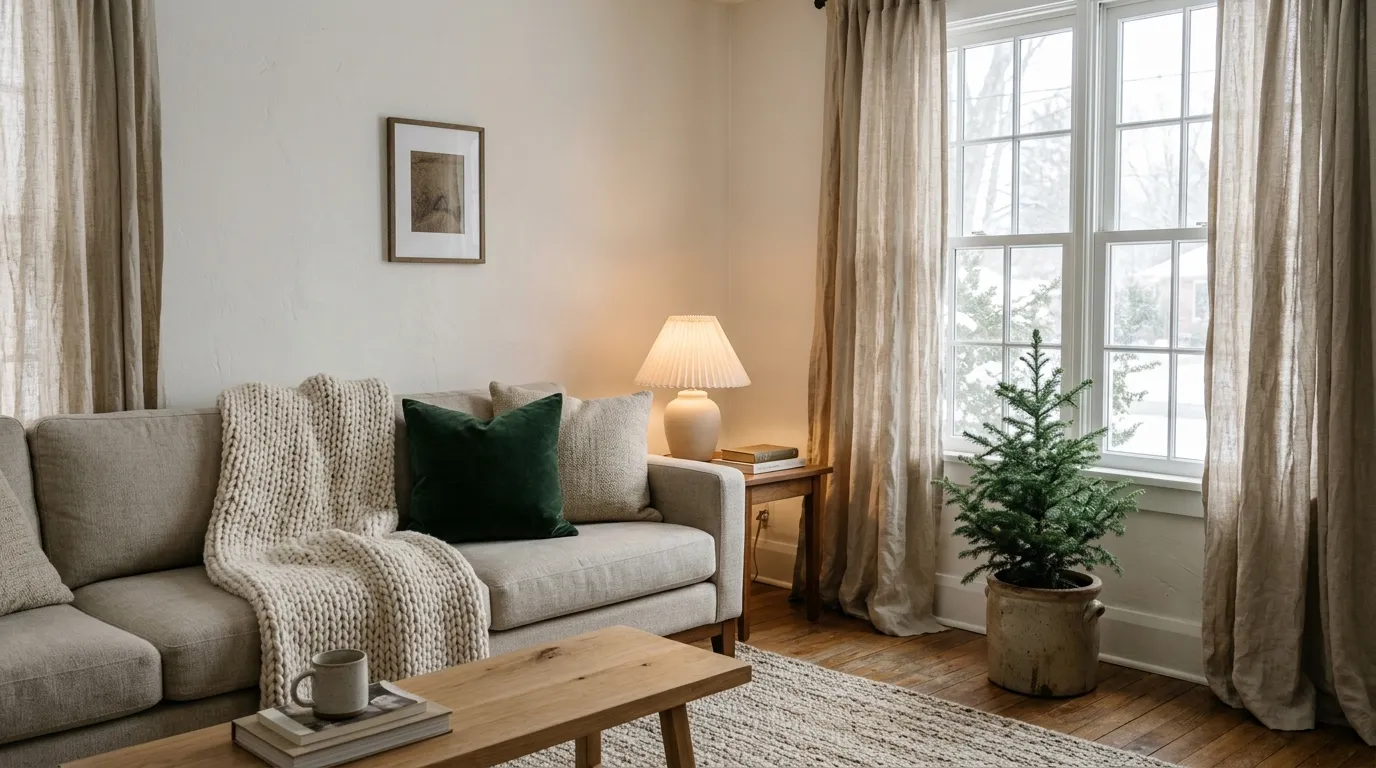
You need somewhere to sit and a light that is not overhead. A sofa or loveseat is the biggest purchase in the room, so measure carefully. An area rug grounds the space; our Rug Size Guide helps you avoid a rug that is too small. Add a floor lamp for warm light, a coffee table and a TV stand when you know how you use the room, and finish with curtains and wall art. To plan where everything goes, use the Furniture Layout Planner.
Kitchen and dining
Start small. A few dishes and glasses, one pot, one pan and basic cutlery let you cook most things. Add kitchen towels and a small table and chairs when you know whether you eat at a table, a counter or the couch. Check what the apartment already includes before buying anything.
Bathroom
Buy a shower curtain (and a liner if it does not come with one), towels (two sets per person is a comfortable minimum), bath mats and a toilet brush on day one. A storage caddy is a small upgrade that matters a lot in a tiny bathroom.
Cozy touches
These cost little and change how the apartment feels. Swap harsh bulbs for warm light bulbs, add a few plants, some frames or prints and candles (check your lease and never leave them unattended). An entry tray or hooks by the door stops keys and bags from landing on every surface.
Safety and basics
This is the least glamorous category and one of the most important. Buy power strips, a first aid kit, a basic tool kit and cleaning supplies, and do the smoke detector check in the first hour. More on safety below.
Renter-friendly decor
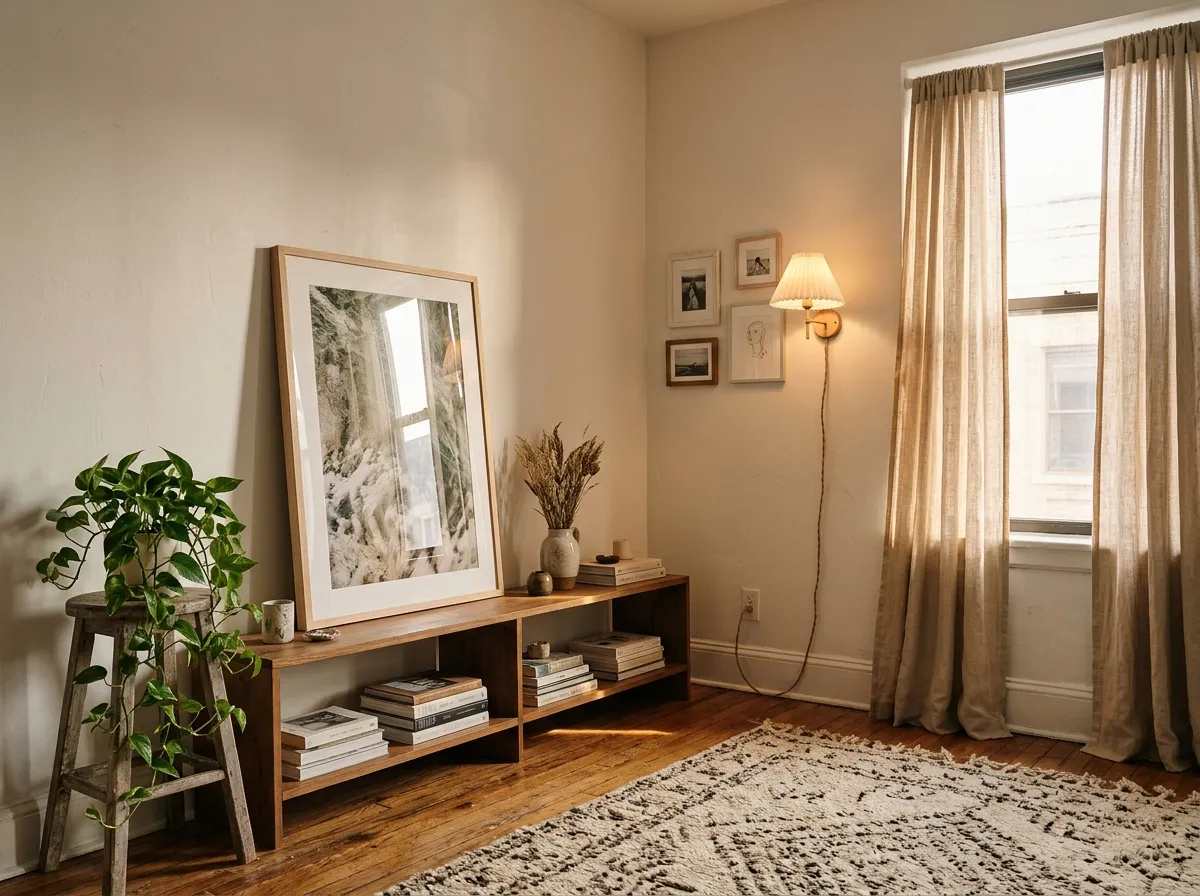
You can make a rental feel personal without damaging anything. These ideas come up again and again because they work.
| Idea | What it does | Good to know |
|---|---|---|
| Rugs | Adds color, warmth and sound absorption; covers dated flooring | Use a rug pad to stop slipping and protect floors |
| Plants | Adds life and softness | Choose easy plants that suit your light |
| Lamps | Replaces harsh overhead light with a warm glow | Use warm bulbs and place lamps at different heights |
| Removable wallpaper | Transforms a wall without paint | Test a small patch first. Our Peel-and-Stick Wallpaper Calculator works out how many rolls you need |
| Adhesive hooks | Hang light items without nails | Check the weight limit and follow the surface instructions |
| Curtains | Hide blinds, add height and soften the room | Hang them high and wide for the best effect |
| Framed prints | Adds personality quickly | Lean large frames on a shelf or the floor if you cannot drill |
Always check your lease first. Rules about nails, paint and wall decor vary. When in doubt, ask your landlord in writing before you start.
If you are allowed to paint, choose colors with our Color Palette Generator so your rooms work together.
Decorating on a tight budget
A first apartment is rarely furnished in one go, and it does not need to be. A few habits make the money go further:
- Set a total first, then divide it across categories with the Decorating Budget Planner. The Renter preset moves the paint budget into lighting and textiles.
- Buy the sofa, mattress and bed frame carefully, since you use them every day. Buy side tables, mirrors and frames second-hand.
- Check thrift stores and online marketplaces. Lamps, side tables, mirrors and frames are easy to find and cheap.
- Ask before you buy. Friends and family often have spare dishes, throws and small furniture.
- Wait for the extras. Art, candles and accessories are cheaper and better chosen after a few weeks.
Measure before you order
A sofa that does not fit through the door is the most expensive mistake in a first apartment. Before you order any large piece:
- Measure the piece (height, width, depth and diagonal depth).
- Measure every route it must travel: front door, hallways, stairwells, corners and the elevator.
- Measure the final spot and leave room to walk around it.
- Check delivery rules, such as elevator booking times or stair limits.
Our Will It Fit? Checker helps you confirm that a piece fits before you buy it.
Safety and insurance basics
- Smoke detectors. Press the test button on each detector in the first hour. If one does not work, tell your landlord so it can be fixed or replaced.
- First aid kit. Keep it somewhere easy to find, such as under the bathroom sink or in the kitchen.
- Basic tool kit. A screwdriver, a hammer, a measuring tape, a level and a set of Allen keys cover most assembly jobs.
- Power strips. Do not overload outlets, and choose strips with surge protection for electronics.
- Renter’s insurance. Many landlords require it and it is usually affordable. Check your lease and ask your insurer what it covers.
Common first-apartment mistakes
- Buying decor before essentials. Pillows and candles cannot replace a mattress and a shower curtain.
- Buying everything in one weekend. You will not know how you use the space yet, so some choices will be wrong.
- Skipping measurements. This is the most expensive mistake on the list.
- Choosing cheap items you will replace. A bargain mattress or sofa can cost more over time. Spend where you use it daily.
- Ignoring the lease. Rules about nails and paint can cost you your deposit.
- Forgetting the small things. Power strips, light bulbs, cleaning supplies and hooks are easy to overlook, and you will want them on day one.
- Overlooking lighting. One bright ceiling light makes any room feel cold. Use warm lamps at different heights, and try our Lighting Calculator if you are unsure how much you need.
Your first 24 hours
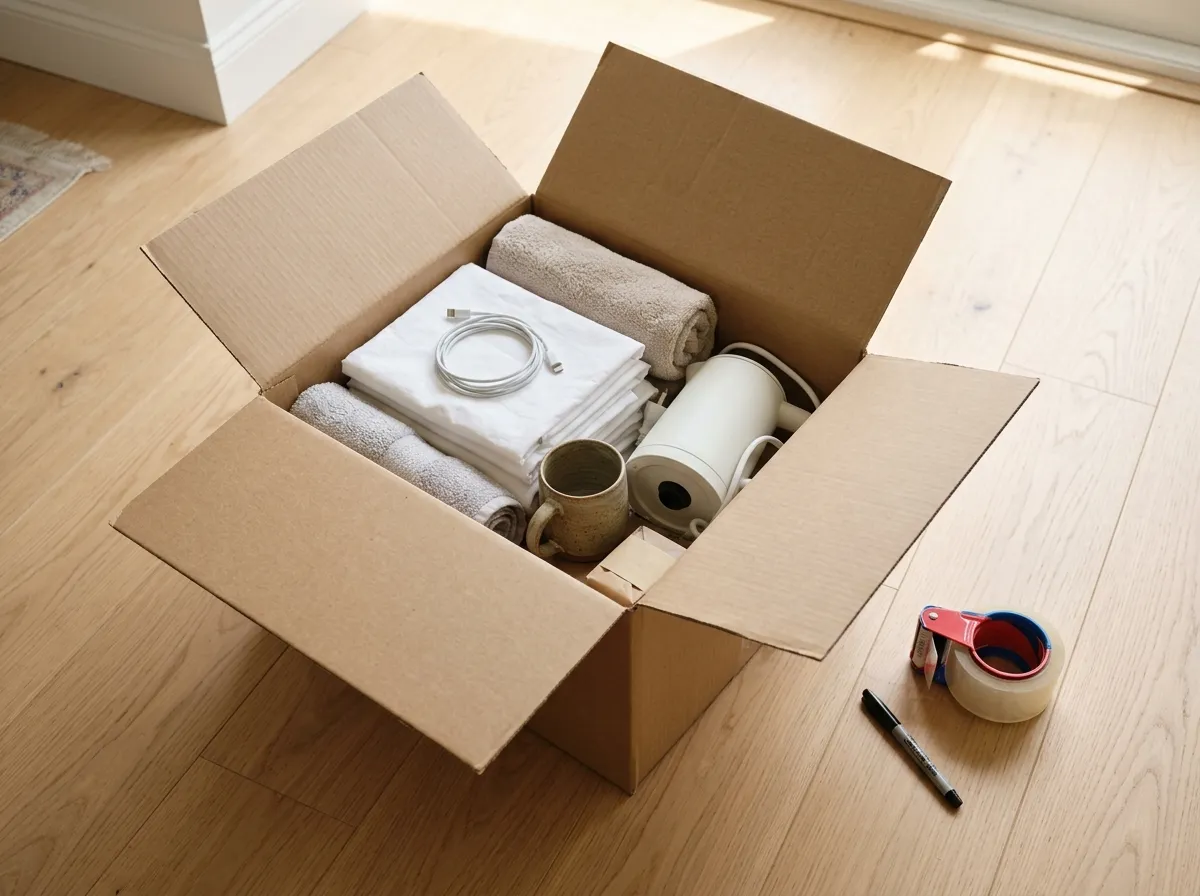
These steps are not on the shopping list, but they save you trouble later. Tick them off as you go.
More questions
The most common questions are answered in the checklist above. Here are a few more.
How do I add things that are not on the list?
Type the name in the “Add your own item” box and tap Add. It appears in its own “My items” group at the bottom of the checklist and is saved in your browser along with your ticks.
What if I share the apartment with a roommate?
Decide early which shared items you will split, such as a sofa, a TV or cookware, and which are personal. Agree who keeps what if one of you moves out, and note who paid for each item. Each of you can use the checklist on your own device to track your own purchases.
Should I buy a furniture set?
Sets look cohesive and can be convenient, but they can also be bulky and hard to adapt later. Buying key pieces separately gives you more control over size, color and budget, and lets you mix in second-hand finds.
How long does it take to furnish a first apartment?
Most people cover the essentials in the first week and spend the next few weeks to a few months adding comfort and decor. There is no deadline. Living in the space first helps you buy only what you need.
Ready to get started? Scroll back up, tick what you already own and add anything that is missing. Once the essentials are covered, the next step is measuring your rooms so you buy the right sizes.