What Size Rug Do I Need?
The wrong rug size is one of the most common decorating mistakes. A rug that’s too small makes furniture look like it’s floating, while the right size ties the whole room together. Choose your room type, enter a few measurements and get a size recommendation in standard rug sizes you can actually buy.
- Choose living room, bedroom or dining room.
- For a living room, enter the room length and width. For a bedroom, pick your bed size. For a dining room, enter your table length and width in inches.
- Tap Find my rug size.
- Compare the result with the sizes available in your favorite store.
- Living room: place at least the front legs of your sofa and chairs on the rug so the seating feels connected.
- Leave about 18 inches of bare floor around the rug to frame the space.
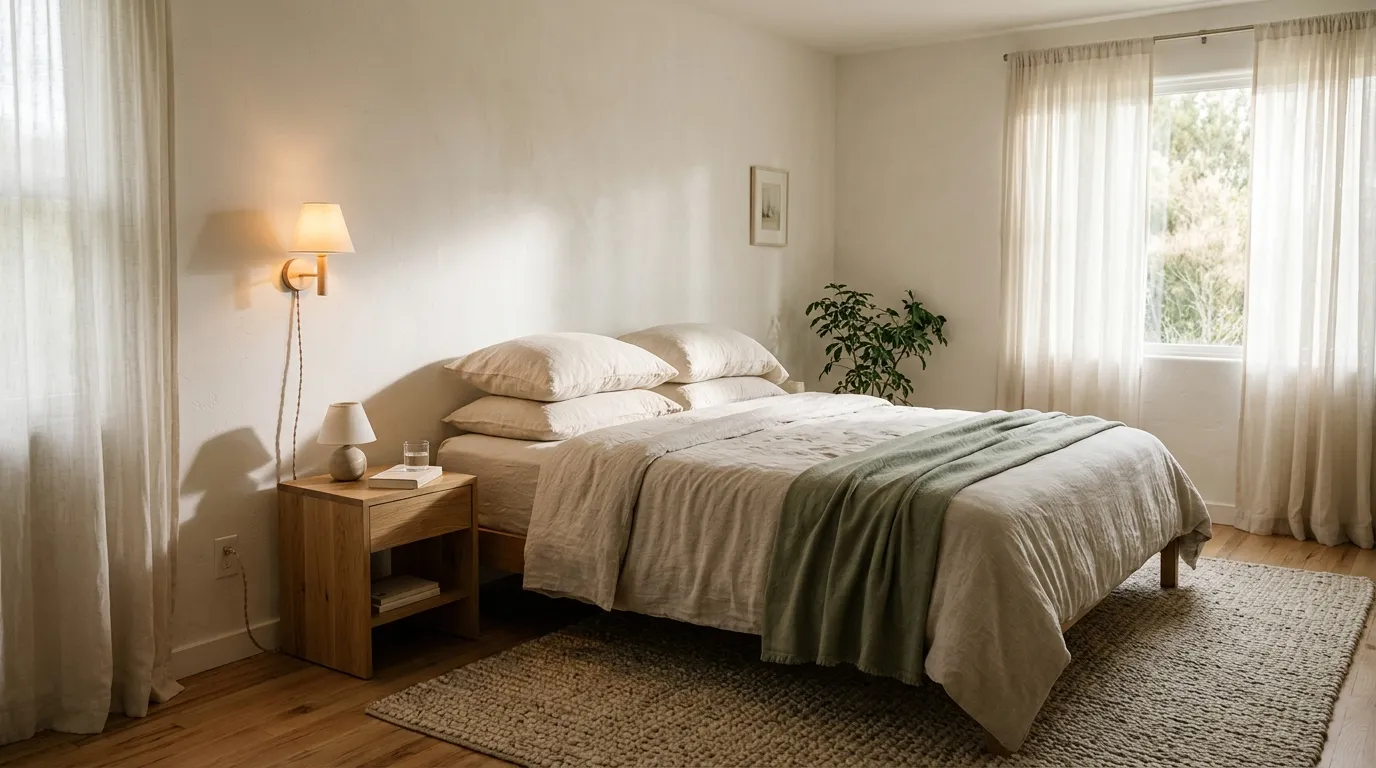
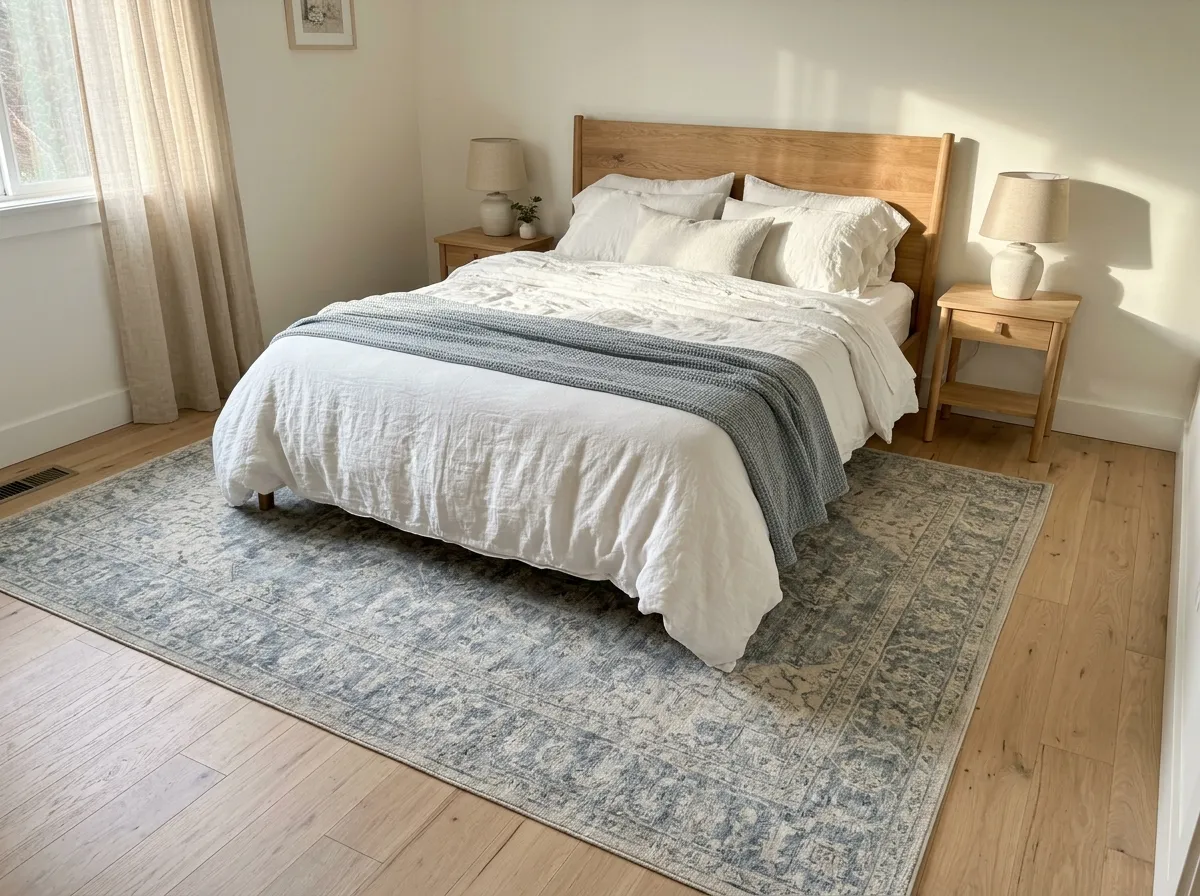
- Bedroom: the rug should extend 18 to 24 inches past the sides and the foot of the bed.
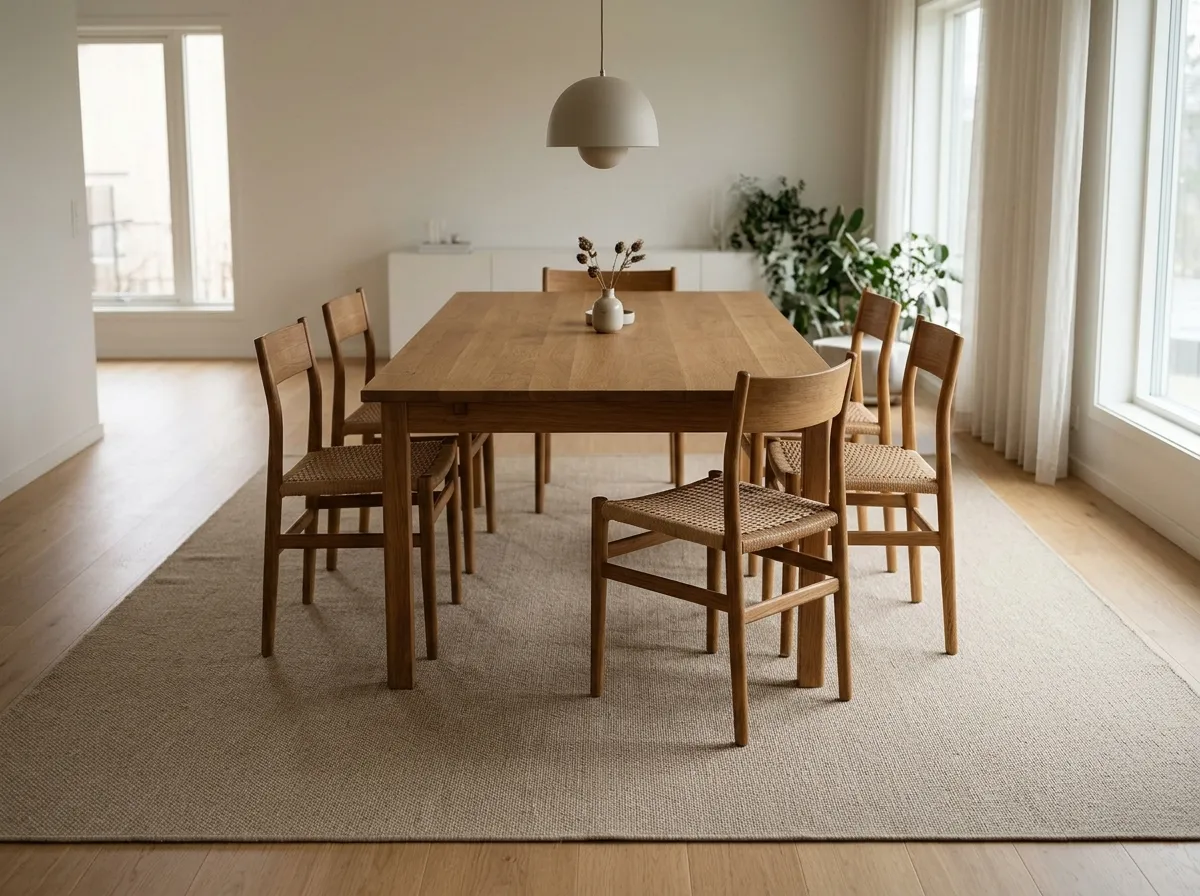
- Dining room: allow at least 24 inches around the table so chairs stay on the rug when pulled out.
- Standard sizes are 5×8, 6×9, 8×10, 9×12 and 10×14 ft. Custom or runner sizes are available for hallways.
- Use a rug pad to stop slipping and add cushion.
Should all furniture legs be on the rug?
There are three common choices: all legs on (needs a large rug, like 9 × 12), just the front legs on (the most popular and works in many rooms) or no legs on (a small floating rug, which can look disconnected).
What size rug goes under a queen bed?
An 8 × 10 ft rug is the most common choice. A 9 × 12 ft rug gives a roomier look. You can also place two runners on either side of the bed.
Is an 8 × 10 rug big enough for a living room?
It fits many medium living rooms. In larger rooms, try 9 × 12. In small rooms, a 5 × 8 ft rug is usually enough.
What size rug do I need for a small apartment?
A 5 × 8 ft rug is a flexible choice for most apartments. Keep the front legs of your sofa on it if you can.
What size rug pad should I buy?
Choose a pad about 1 inch smaller than the rug on every side, so it stays hidden.
Read the full rug size guide ↓
How to Choose the Right Rug Size for Any Room
A rug that is too small is the most common rug mistake. It sits in the middle of the room like a postage stamp, and the furniture around it looks like it is floating. The right size does the opposite: it pulls the whole room together.
The guide above turns a few measurements into a size you can actually buy. This article explains the rules behind the answers, so you can check them against your own room, adjust them for your furniture and avoid the usual surprises when the rug arrives.
How the guide works
- Choose a room type: living room, bedroom or dining room.
- Enter the measurements for that room. For a living room, enter the room length and width in feet. For a bedroom, pick your bed size. For a dining room, enter the table length and width in inches.
- Tap Find my rug size. You get a recommendation in standard sizes.
- Compare it with the store. Check the exact size of the rug you are looking at against the result.
Each room type uses a different rule. The living room rule leaves 18 inches of bare floor on every side, and picks the largest standard size that fits. The bedroom recommendation depends only on the bed size. The dining room rule adds 24 inches on every side of the table, and picks the smallest standard size that covers that area.
The standard sizes the guide chooses from are 3×5, 4×6, 5×8, 6×9, 8×10, 9×12 and 10×14 feet. The guide never suggests anything outside that list.
What to measure first
- Living room: the room length and width, wall to wall. Our Room Size Calculator helps if you want the square footage as well.
- Bedroom: your bed size (twin, full, queen or king). If you have a wide frame or a headboard that sticks out, measure it too.
- Dining room: the table length and width in inches. Measure the tabletop itself, and for an extension table, measure it with the leaf in if you use it.
- Your furniture layout. Decide where the sofa, chairs and bed will go before you measure. If you are still deciding, the Furniture Layout Planner helps.
- Doors, vents and thresholds. Check that a rug will not block a door that swings inward or cover a floor vent.
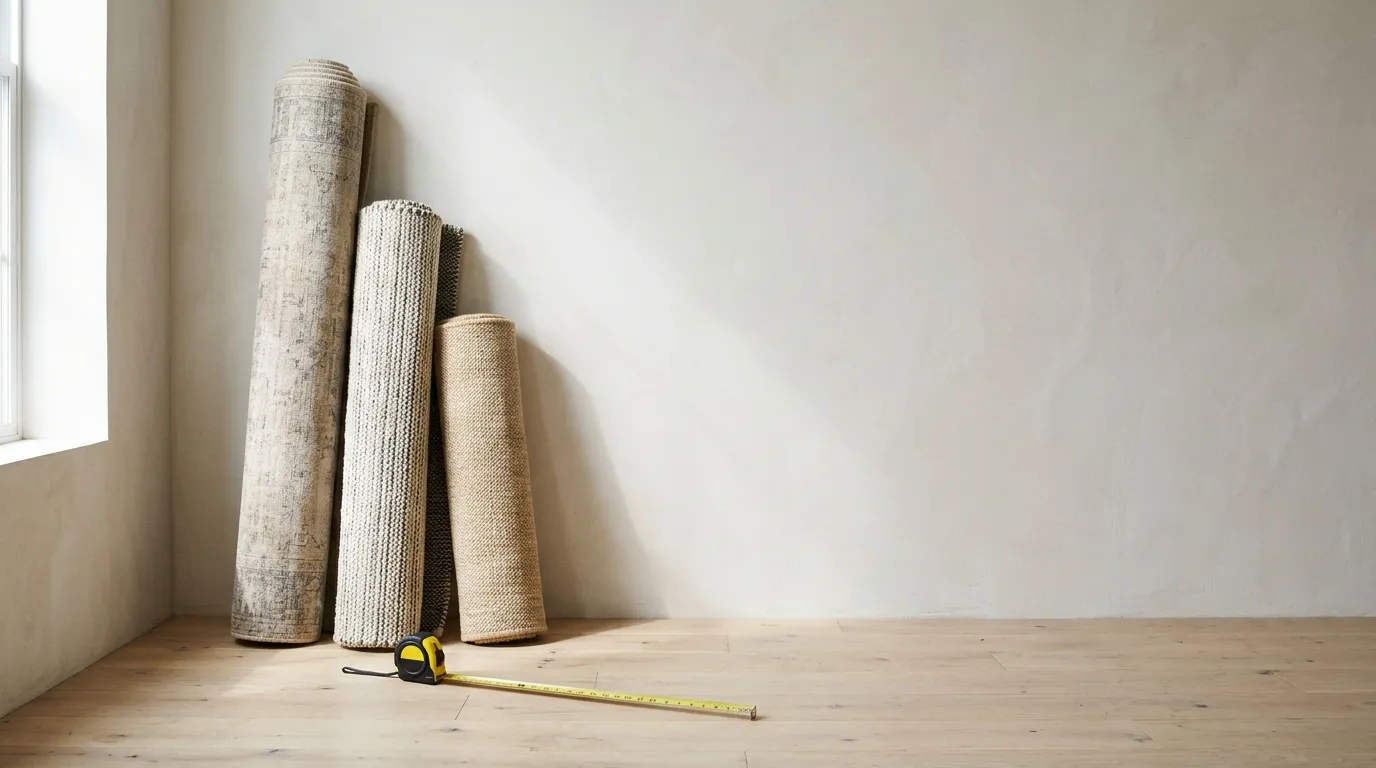
Sketch the room, mark where the rug will go and write the dimensions down. You can even tape the outline on the floor with painter’s tape to see how it looks before you order.
Living room rugs
For the living room, the guide takes the room’s longer side and shorter side, subtracts 3 feet from each (18 inches on each side of the rug), and picks the largest standard size that fits inside what is left. That is why a 14 × 12 ft room gets an 8×10 rug: the room has 11 feet of length and 9 feet of width left after the margins, and 8×10 is the biggest standard size that fits.
Here is that room drawn to scale. The rug sits in the center, and 24 inches of floor shows on every side, which is more than the 18 inch minimum because the next size up (9×12) does not fit.
- Room: 14 ft long and 12 ft wide. Minus 3 ft from each, that leaves 11 × 9 ft.
- Rug: 8×10 is the largest standard size that fits inside 11 × 9 ft.
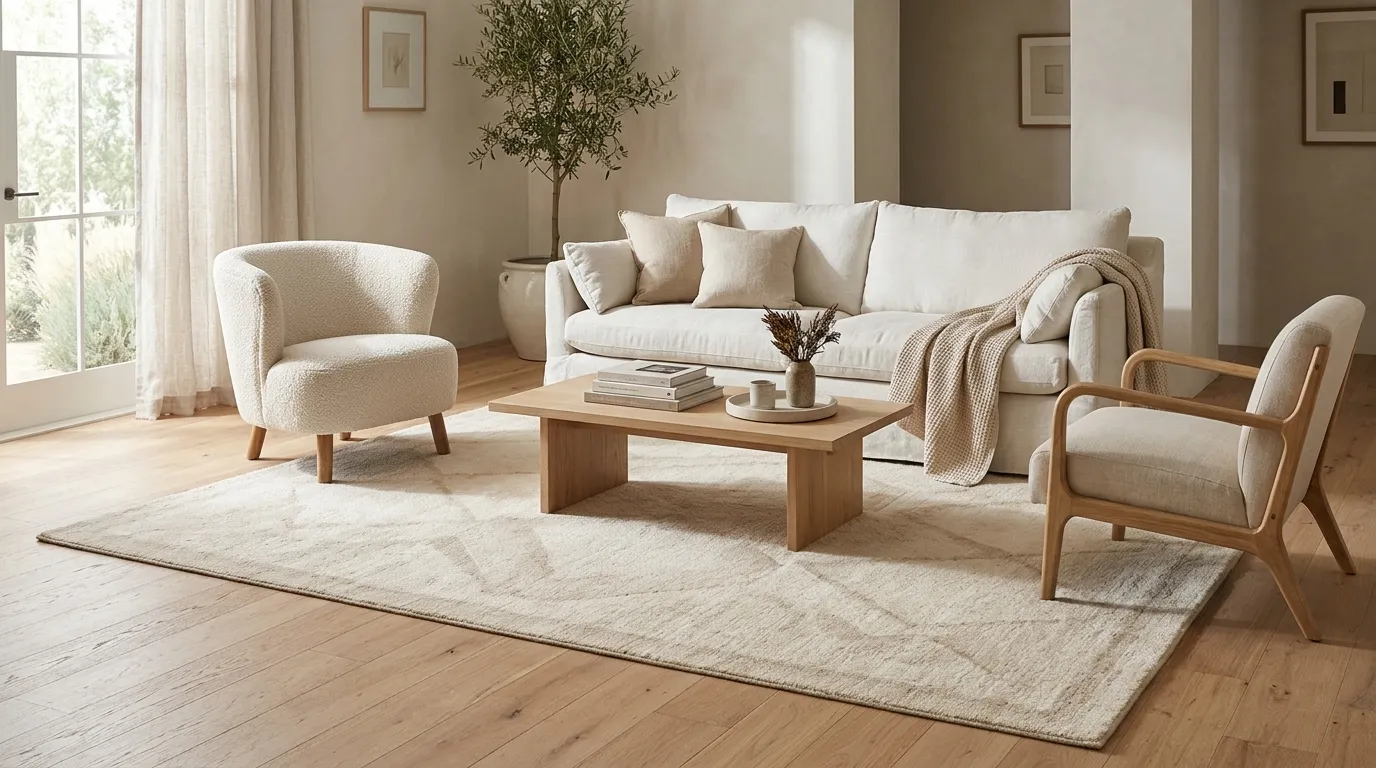
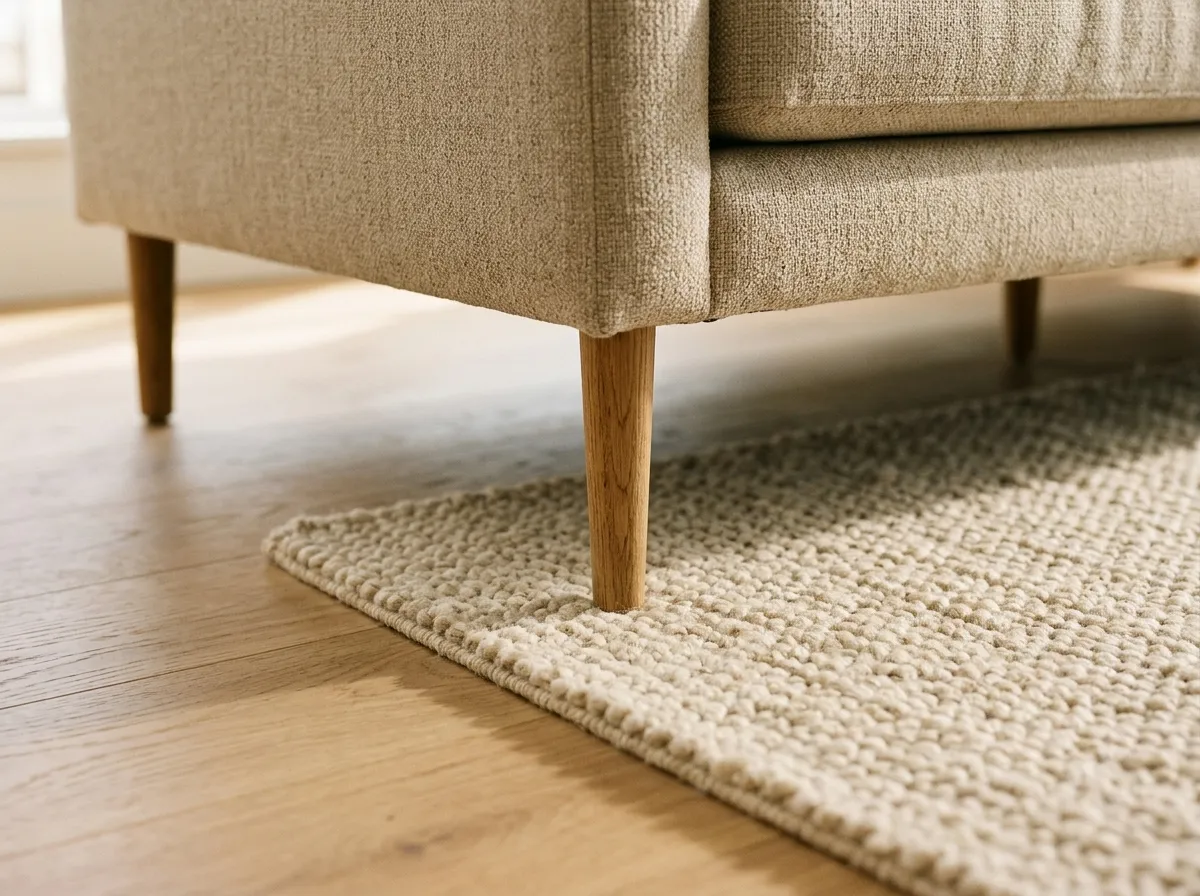
The tip that goes with the rule is to place at least the front legs of your sofa and chairs on the rug. That connects the seating to the rug, so everything reads as one group. There are three common choices, and they work in different sizes of room:
- All legs on. This looks the most put together, but it needs a large rug, such as 9 × 12.
- Front legs on. This is the most popular choice and works in many rooms.
- No legs on. A small floating rug can look disconnected from the furniture, so it is the choice to avoid unless the room is very small.
The sizes in the tool are for rectangular rugs, so the guide’s results assume the rug is parallel to the walls and centered. If your seating is pushed to one side, measure where the furniture sits and place the rug under it rather than in the exact middle of the room.
Rug sizes by room size
This table shows what the guide recommends for common living room sizes, and how much bare floor each choice leaves. The longer side of the room is listed first, and “ends” means the two short edges of the rug.
| Room (ft) | Guide recommends | Floor at the ends (in) | Floor at the sides (in) |
|---|---|---|---|
| 8 × 6 | 3×5 | 18 | 18 |
| 10 × 8 | 4×6 | 24 | 24 |
| 10 × 10 | 4×6 | 24 | 36 |
| 12 × 10 | 6×9 | 18 | 24 |
| 12 × 12 | 6×9 | 18 | 36 |
| 14 × 12 | 8×10 | 24 | 24 |
| 15 × 12 | 9×12 | 18 | 18 |
| 16 × 14 | 9×12 | 24 | 30 |
| 18 × 14 | 10×14 | 24 | 24 |
| 20 × 16 | 10×14 | 36 | 36 |
The rug is centered, with its long side along the room’s long side. Floor showing is (room − rug) ÷ 2, in inches.
Notice that “about 18 inches” in the guide really means “at least 18 inches.” The rug is the largest that keeps that margin, so the actual gap can be bigger when the next size up does not fit. A 10 × 10 ft room gets a 4×6 rug with 24 inches at the ends and 36 inches along the sides.
The next table turns the rule around. It shows the smallest room each standard size needs, with the longer side first, and the rug’s size in inches.
| Rug | In inches | Area (sq ft) | Smallest room for it |
|---|---|---|---|
| 3×5 | 36 × 60 | 15 | 8 × 6 ft |
| 4×6 | 48 × 72 | 24 | 9 × 7 ft |
| 5×8 | 60 × 96 | 40 | 11 × 8 ft |
| 6×9 | 72 × 108 | 54 | 12 × 9 ft |
| 8×10 | 96 × 120 | 80 | 13 × 11 ft |
| 9×12 | 108 × 144 | 108 | 15 × 12 ft |
| 10×14 | 120 × 168 | 140 | 17 × 13 ft |
Smallest room = rug size + 3 ft in each direction, which leaves 18 inches of floor all round.
Small rooms
If your room is shorter than 8 ft or narrower than 6 ft, even the smallest rug in the list does not leave 18 inches of floor all around. In that case the guide suggests trying a 5×8 or a 4×6 rug to keep the room balanced, rather than giving an exact size. The same message appears if the length or width box is left empty.
Treat that as a starting point. In a very small room, the margins will be tighter than the 18 inch guideline, and a smaller rug such as a 3×5 may suit a tiny entryway or a corner. Use the fit checker below to see how much floor will show with a particular rug.
For an apartment, a 5×8 rug is a flexible choice for many layouts, and the tip is to keep the front legs of your sofa on it if you can. In a room around 10 × 8 ft, though, the 18 inch rule points to a 4×6, so measure your own space before you commit. Starting out? Our First Apartment Checklist covers the rest of the essentials.
Bedroom rugs
For the bedroom, the guide does not look at the room at all. It gives a size based on your bed, and the tip is to place the rug so that it extends 18 to 24 inches past the sides and the foot of the bed.
| Bed | Typical mattress width | Guide recommends | Rug past each side (in) |
|---|---|---|---|
| Twin | 38 in | 5×8 ft | 11 |
| Full | 54 in | 8×10 ft | 21 |
| Queen | 60 in | 8×10 ft (or 9×12 for a roomier look) | 18 (24 with 9×12) |
| King | 76 in | 9×12 ft | 16 |
Mattress widths are typical sizes, so measure your own bed. The last column is (rug width − mattress width) ÷ 2 with the rug centered across the bed. A wide frame leaves less rug showing.
The table shows where the 18 to 24 inch tip is easy to meet and where it is not. A queen with an 8×10 rug gets 18 inches on each side, and a 9×12 gets 24. A full gets 21. A king with a 9×12 gets about 16 inches, which is slightly under the tip, and a twin with a 5×8 gets about 11 inches. If you want the full margin on a twin or a king, a size up, such as a 6×9 for a twin (about 17 inches) or a 10×14 for a king (about 22 inches), gets closer to the tip, as long as the room has space for it.
The length matters too. The tip is for the foot of the bed, so slide the rug so it starts a little way under the bed and extends past the foot. You can also place two runners on either side of the bed, which is another option the guide mentions for a queen.
Dining room rugs
A dining rug has a practical job. When someone pulls a chair back, the chair legs should stay on the rug, because a chair that drops off the edge catches and wobbles. The guide adds 24 inches on every side of the table, so the rug has to cover the table length plus 48 inches, and the table width plus 48 inches. It then picks the smallest standard size that covers that area.
For a 72 × 36 inch table, that is 120 × 84 inches, or 10 × 7 feet. The 8×10 is the smallest standard rug that covers it, and the drawing shows how it fits.
- Needed: 72 + 48 = 120 in long and 36 + 48 = 84 in wide.
- Closest standard size: 8×10, because 10 ft covers the 10 ft length and 8 ft covers the 7 ft width.
Here is what the guide gives for other table sizes:
| Table (in) | Rug needed (ft) | Closest standard size |
|---|---|---|
| 48 × 48 (square or round) | 8.0 × 8.0 | 8×10 |
| 60 × 36 | 9.0 × 7.0 | 8×10 |
| 72 × 36 | 10.0 × 7.0 | 8×10 |
| 84 × 40 | 11.0 × 7.3 | 9×12 |
| 96 × 42 | 12.0 × 7.5 | 9×12 |
| 108 × 44 | 13.0 × 7.7 | 10×14 |
| 120 × 48 | 14.0 × 8.0 | 10×14 |
Rug needed = table size + 48 in in each direction, converted to feet. If the rug needed is bigger than a 10×14, the guide says “larger than 10×14 ft”.
Because the standard list only has rectangles, a square or round table is rounded up to the next rectangle, so a 48 inch round table gets an 8×10 even though it needs only 8 × 8 feet. If you want a rug that is exactly square or round, look for that shape in the size you need. If the table has leaves, measure it with the leaves in, so the chairs still stay on the rug at the longest setting.
Standard sizes and pad sizes
The table below puts the standard sizes in inches and shows the pad to match. The rug pad tip is to choose a pad about 1 inch smaller than the rug on every side, so it stays hidden. That means the pad is 2 inches smaller than the rug in each direction.
| Rug | Rug (in) | Pad (in) | Area (sq ft) |
|---|---|---|---|
| 3×5 | 36 × 60 | 34 × 58 | 15 |
| 4×6 | 48 × 72 | 46 × 70 | 24 |
| 5×8 | 60 × 96 | 58 × 94 | 40 |
| 6×9 | 72 × 108 | 70 × 106 | 54 |
| 8×10 | 96 × 120 | 94 × 118 | 80 |
| 9×12 | 108 × 144 | 106 × 142 | 108 |
| 10×14 | 120 × 168 | 118 × 166 | 140 |
Pad = rug minus 2 in in each direction. Pads are often sold in standard sizes and trimmed to fit. Check the exact size of the rug you buy, since it can differ slightly from the label.
The guide’s tip lists 5×8, 6×9, 8×10, 9×12 and 10×14 as the standard sizes, but its recommendations also use 3×5 and 4×6, which are common for entryways and small spaces. Custom or runner sizes are available for hallways, and the guide does not calculate those.
Rug fit checker
Use this to check a specific rug in a specific room. Enter the room size and the rug size in feet, and you get the floor showing at the ends and sides, plus the pad size. The rug is assumed to be centered, with its long side along the room’s long side.
The defaults are an 8×10 rug in a 14 × 12 ft room.
Want a recommendation for your room? Back to the guide ↑
Rug pads and buying tips
- Use a rug pad. The tip is that a pad stops slipping and adds cushion. It also helps keep corners flat, which matters for safety, because a curled corner is easy to trip on.
- Match the pad to the rug. Use a pad about 1 inch smaller on every side, using the table above.
- Check the exact size. The label says 8×10, but the real size can differ by a little. Compare the dimensions on the product page with your measurements.
- Tape it out first. Mark the rug’s outline on the floor with painter’s tape and live with it for a day. It is the cheapest way to avoid a wrong size.
- Go up a size if you are between two. For a living room, the larger rug usually looks better as long as the room keeps a margin of floor around it. For a dining room, round up so the chairs stay on the rug.
- Plan the colors. Pick the rug’s colors with our Color Palette Generator, and check that the piece will get through the door and fit the space with the Will It Fit? Checker.
- Set a budget. A large rug is one of the bigger purchases in a room. The Decorating Budget Planner shows how to fit it in.
A note on prices and fit. This guide gives general planning guidance, not professional advice. Rug prices, sizes and return policies vary by seller, so check the exact dimensions and the return terms before you order. Measure your own furniture, because mattress and table sizes differ from the typical ones used here.
Common mistakes
- Buying a rug that is too small. A small floating rug is the classic mistake. Go up a size.
- Leaving no floor showing. Without about 18 inches of bare floor, the rug looks like wall-to-wall carpet that does not quite fit.
- Ignoring the furniture legs. At least the front legs of the sofa and chairs should sit on the rug.
- Sizing the bedroom rug to the room. Size it to the bed, so it extends 18 to 24 inches past the sides and the foot.
- Forgetting about the chairs. A dining rug should leave 24 inches around the table so chairs stay on it when pulled out.
- Skipping the pad. Without one, a rug slips and wears faster.
- Trusting the label. Check the exact dimensions, and tape the outline on the floor first.
- Measuring before the layout is final. Move the furniture first, then measure.
Before you buy: checklist
Tick these off before you order.
More questions
The most common questions are answered in the guide above. Here are a few more.
Why does the guide suggest a smaller rug than I expected?
In a living room, the guide leaves 18 inches of bare floor on every side and picks the largest standard size that fits. If you prefer less floor showing, try the next size up and check the result with the fit checker above.
What size rug do I need for a king bed?
The guide recommends a 9 × 12 ft rug for a king bed. With a typical 76 inch mattress, that leaves about 16 inches on each side, a little under the 18 to 24 inch tip, so a 10 × 14 ft rug gives about 22 inches if your room has space.
What size rug do I need for a round dining table?
Enter the diameter as both the table length and the table width. For a 48 inch round table, the guide shows that you need at least 8 × 8 ft, and the closest standard size is 8 × 10 ft, because the standard list only has rectangles.
Does the guide work for runners and hallways?
No. The guide recommends standard room-size rugs. Runners and custom sizes are available for hallways, and you can also place two runners on either side of a bed.
Ready to pick your rug? Scroll back up, choose your room type and see your size. Once the rug is chosen, the next step is making sure the whole room fits your budget.