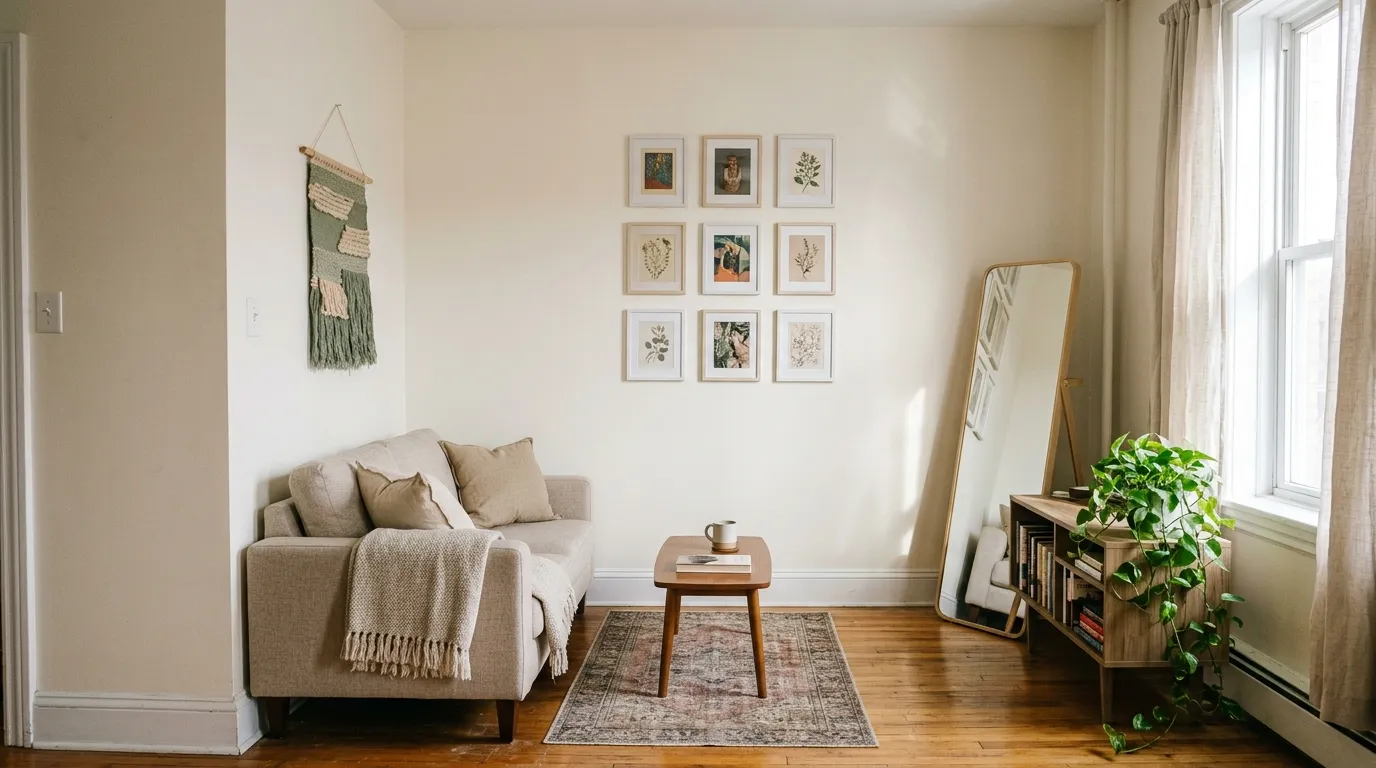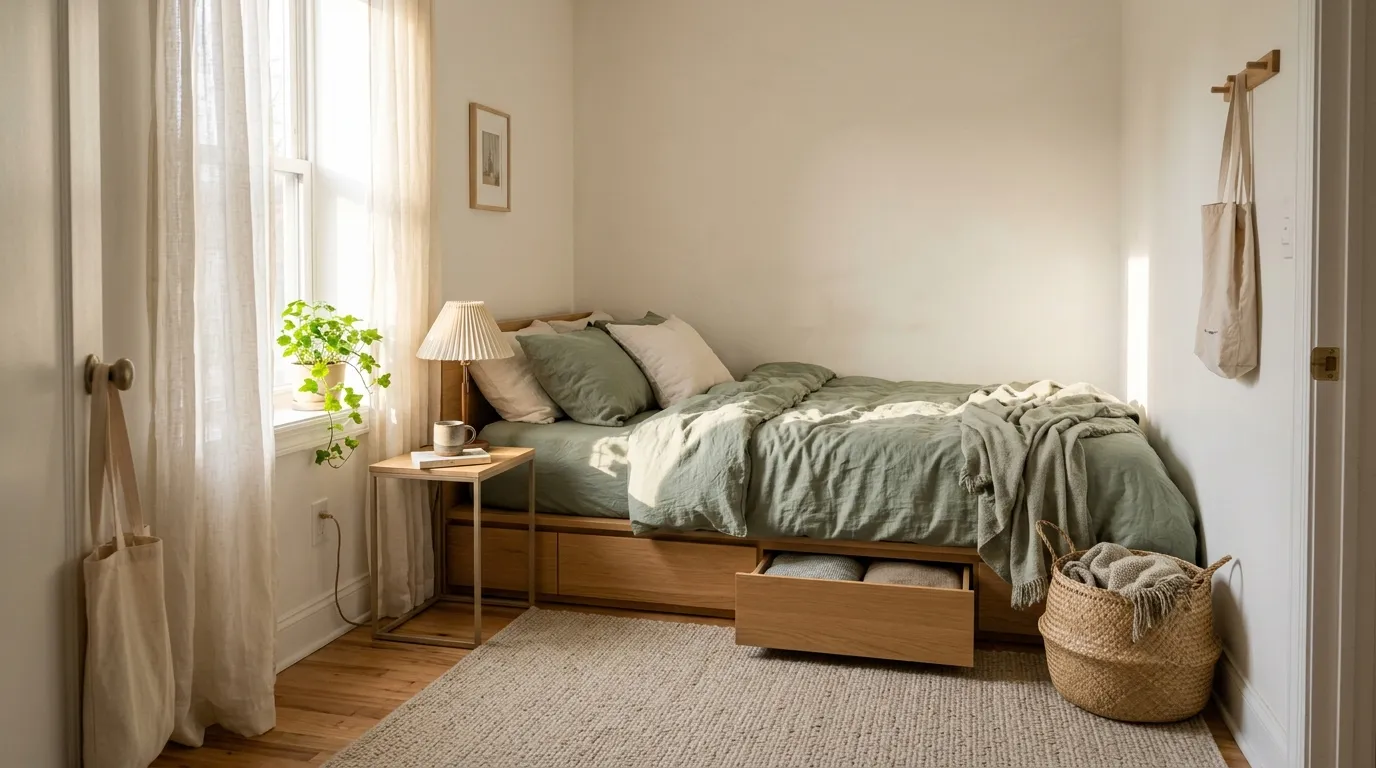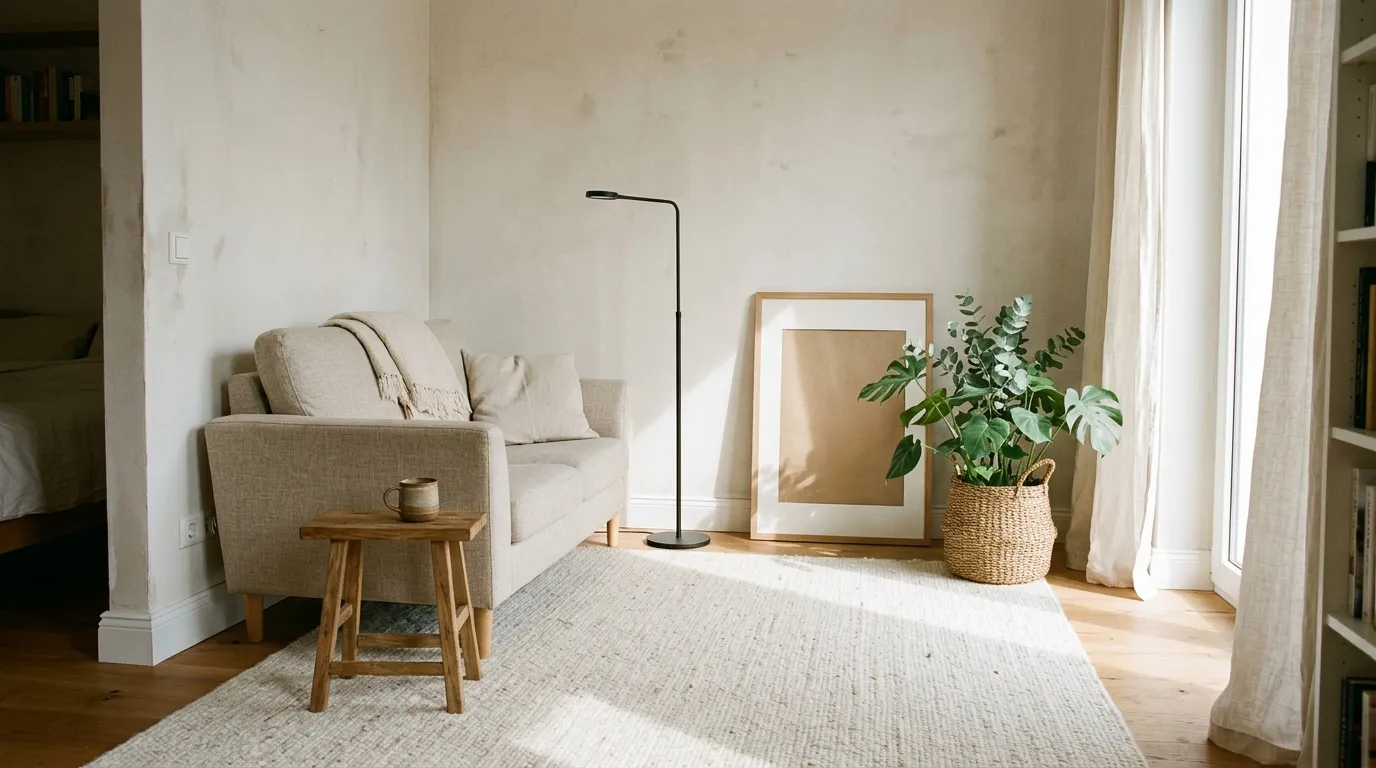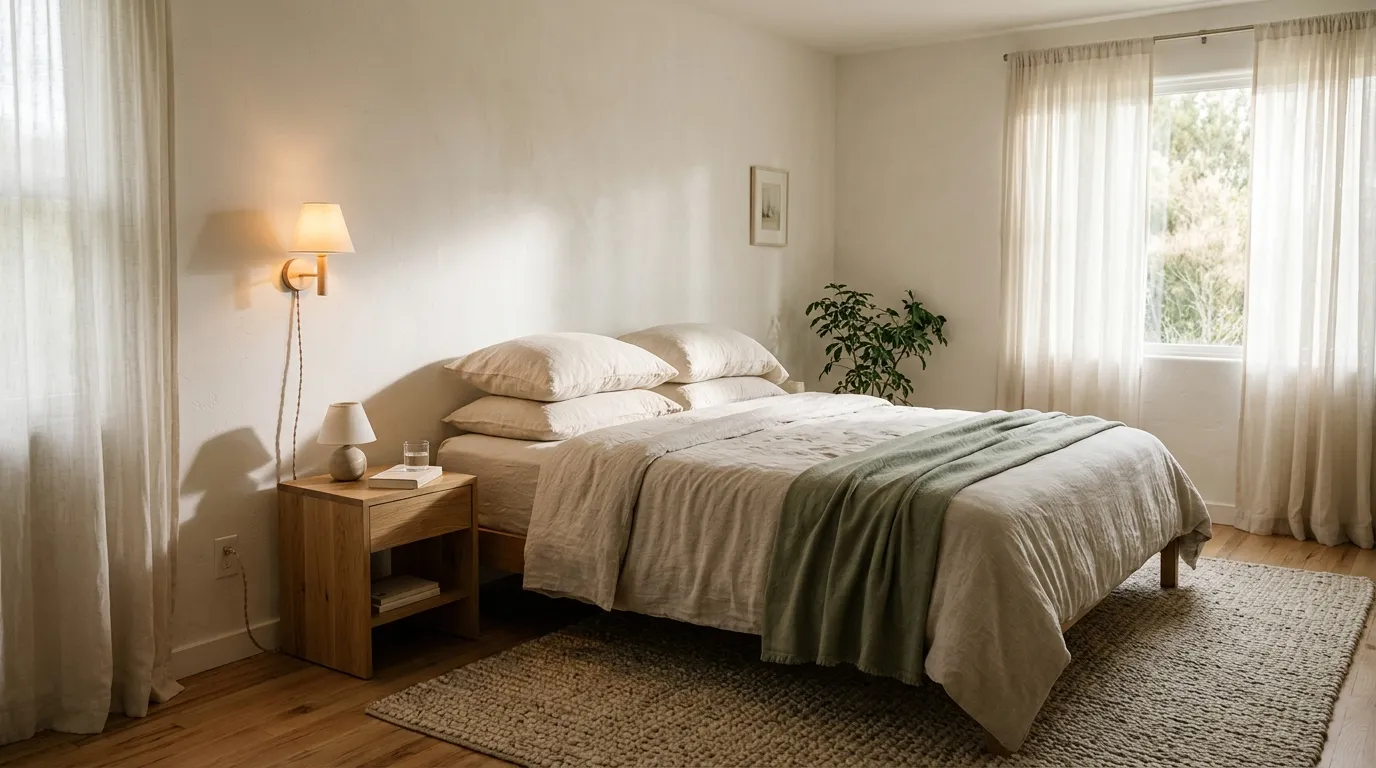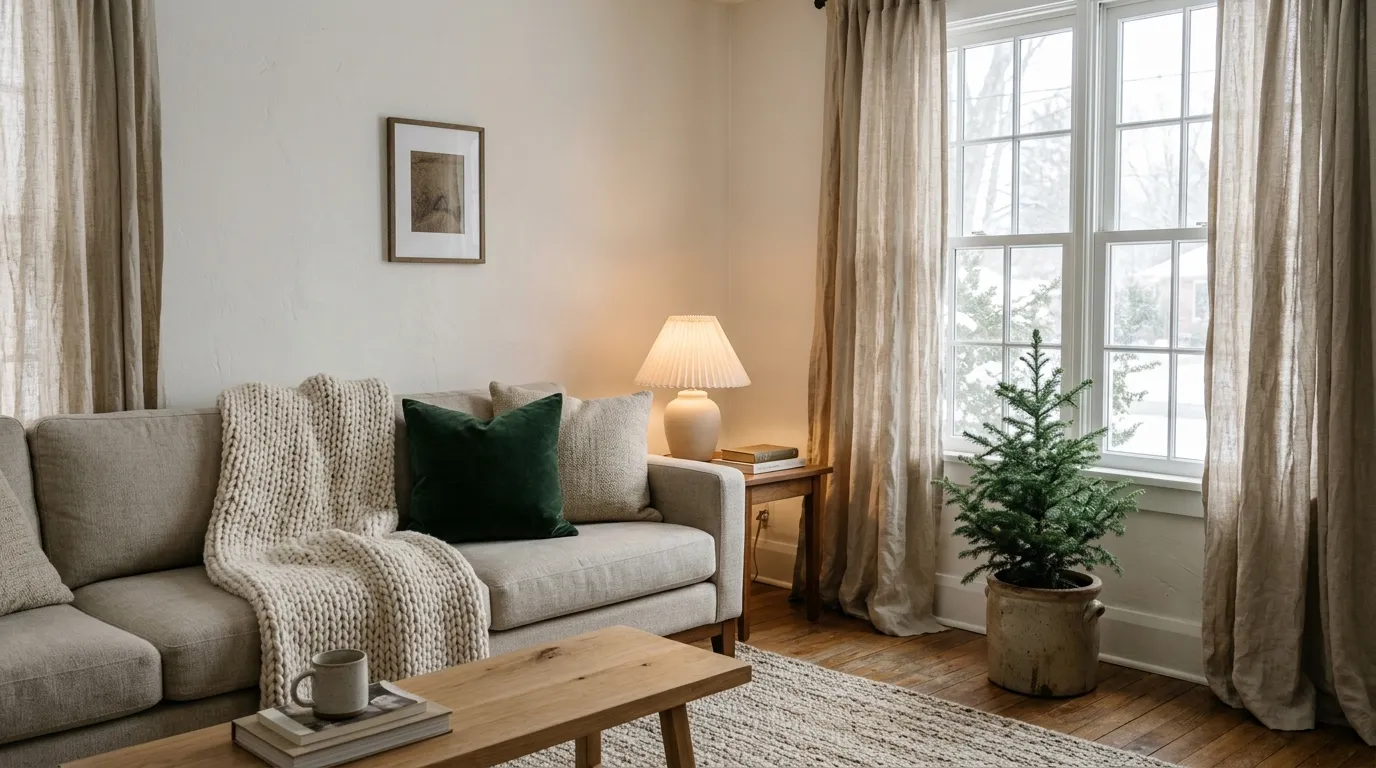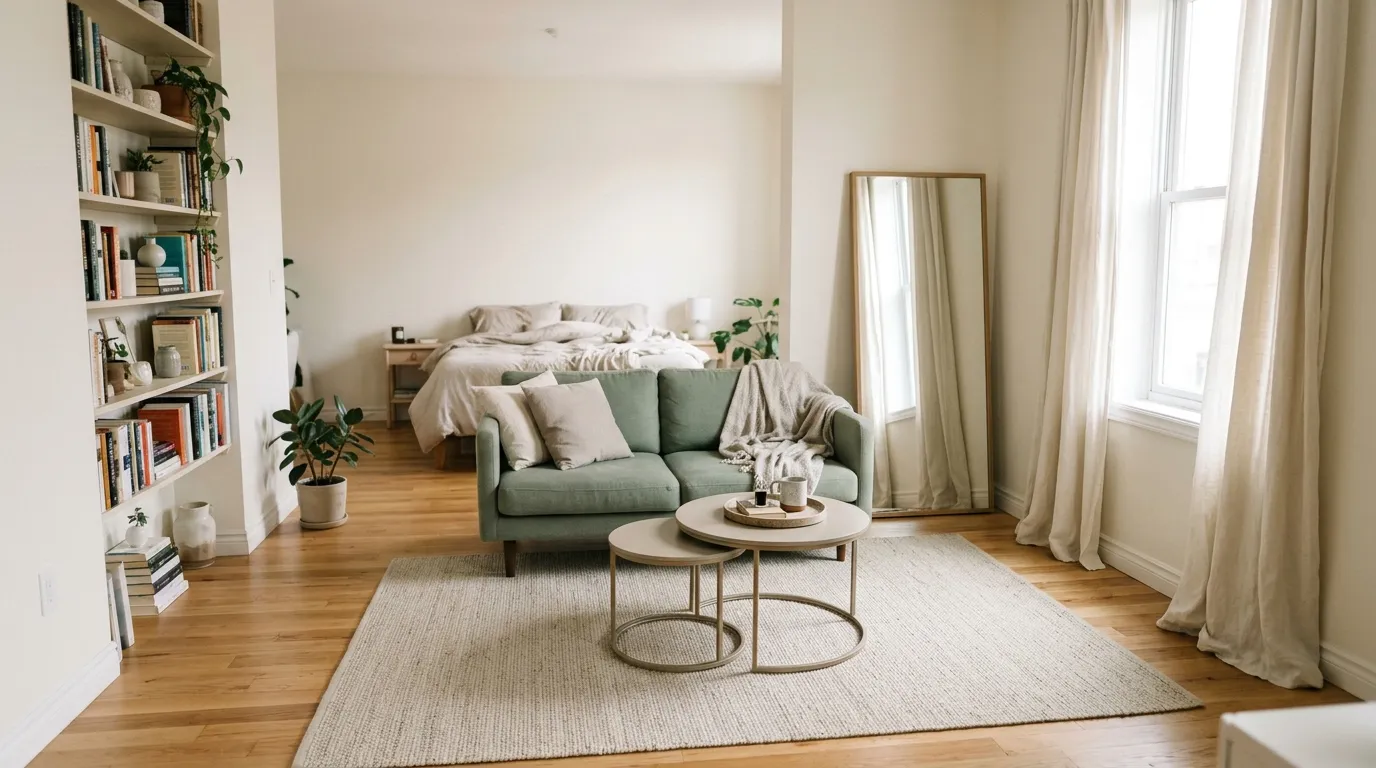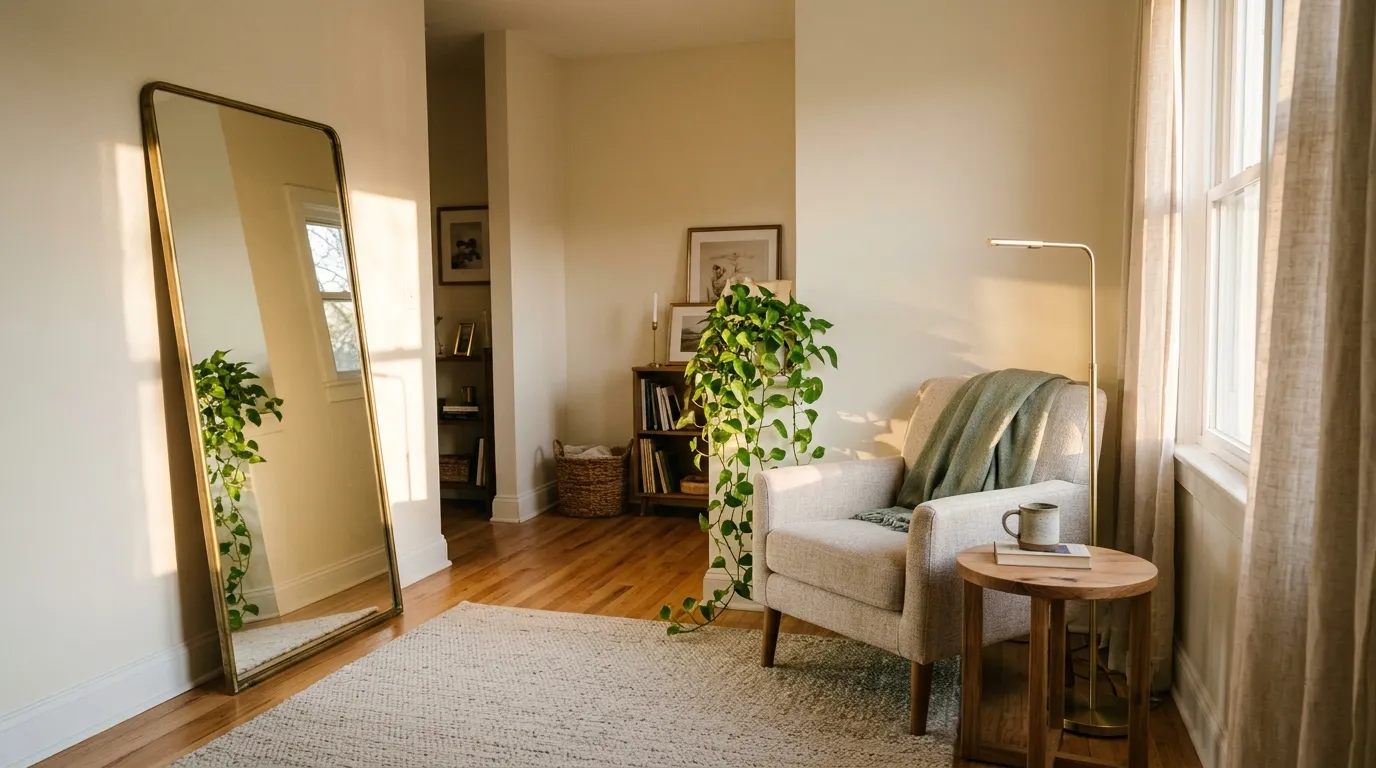

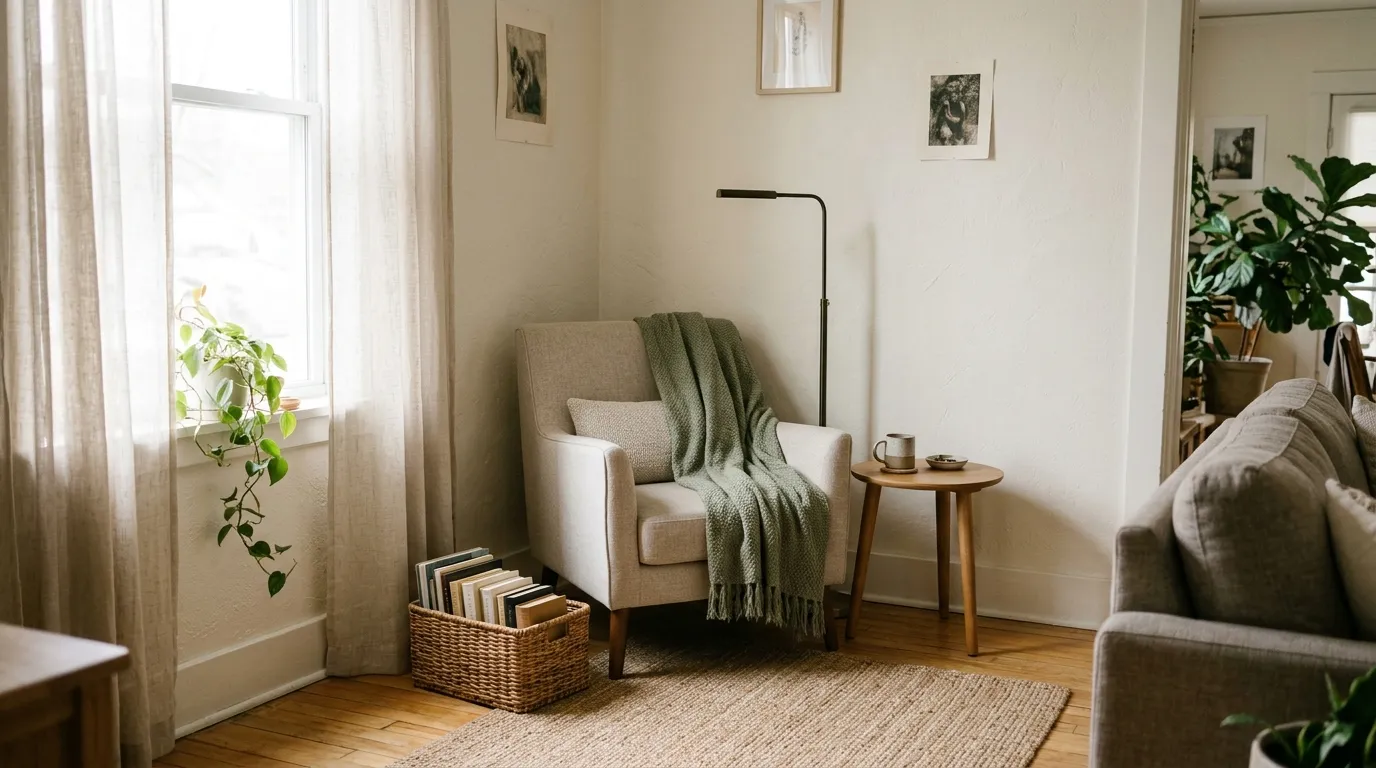
There is usually one corner at home that does nothing. It collects a laundry basket, a pile of mail, a tote bag you meant to unpack, and you walk past it every day. This guide shows you how to create a reading nook in that exact spot, no spare room required.
What you need is simple: one seat you actually want to sit in, a light at the right height, and a small place to set a mug. You do not need a big space or a big budget, just a plan that fits the floor you have.
I like to build a nook in six small steps, because each one is easy to finish in an evening and easy to undo if you rent. I’d start with the corner itself.
Before You Start: Materials and Time
- Time: about 2 to 3 hours, plus shopping time
- Difficulty: easy
- Budget level: budget-friendly
- Renter-friendly: yes, but check your lease before drilling or mounting anything
What You’ll Need
- Measuring tape
- Painter’s tape
- One comfortable seat, such as a compact armchair or a floor cushion with back support
- A floor lamp or plug-in light
- A small side table or stool
- A throw blanket and one or two pillows
- A basket or small shelf for books
1. Pick the Right Corner
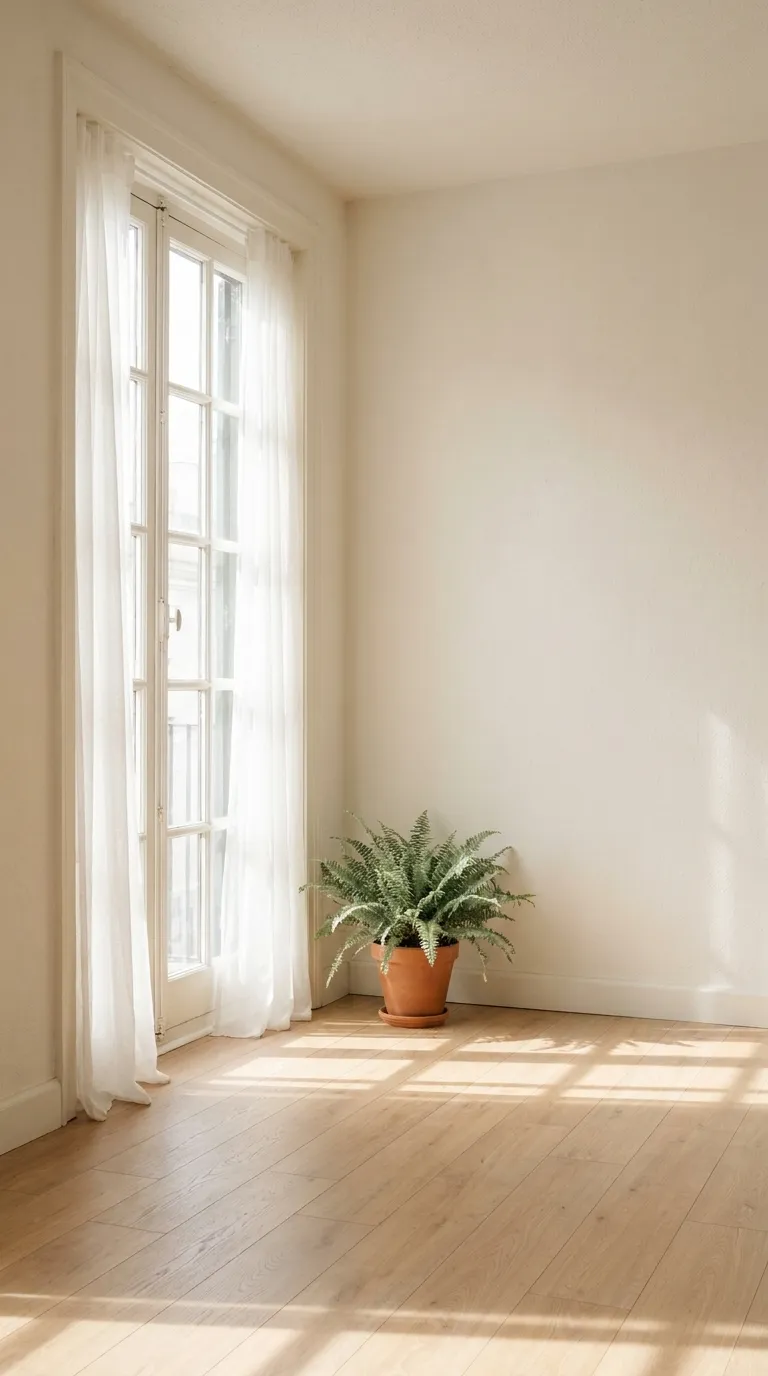
Not every corner deserves a reading chair. The best one gets some daylight, sits a little out of the room’s main path, and has enough floor around it that you can sit down without bumping into anything.
Walk through your place and look at each corner as if it were a spare room. A corner near a window usually wins, because natural light makes the spot inviting from the first morning and saves you from switching on a lamp at noon.
How to Do It
- Walk the room around the time you would usually read and note where the daylight falls.
- Check each candidate corner for doors, heating vents, radiators, and outlets within reach.
- Stand in the corner and picture yourself sitting with your back supported and your feet planted.
- Confirm the corner has about 4 feet by 4 feet of clear floor, or 3 feet by 3 feet if you plan to sit on the floor.
- Choose the corner with the best light first, then solve outlets and storage.
Why It Works
A corner gives you a wall behind and beside you, so the spot feels contained without any new furniture. Because it sits out of the main path, it stays quiet even in a small room.
Common Mistakes to Avoid
- Picking the darkest corner just because it is empty
- Blocking a door swing, a heating vent, or a radiator
- Choosing a corner right beside the TV or the busiest walkway
A Simple Rule to Remember
Pick for light first, because everything else in a nook can be moved.
2. Measure Your Space Before You Buy
A chair that looks small in a store can swallow a corner at home. Measuring first keeps you from returning furniture and from squeezing a nook into a spot that is too tight to use.
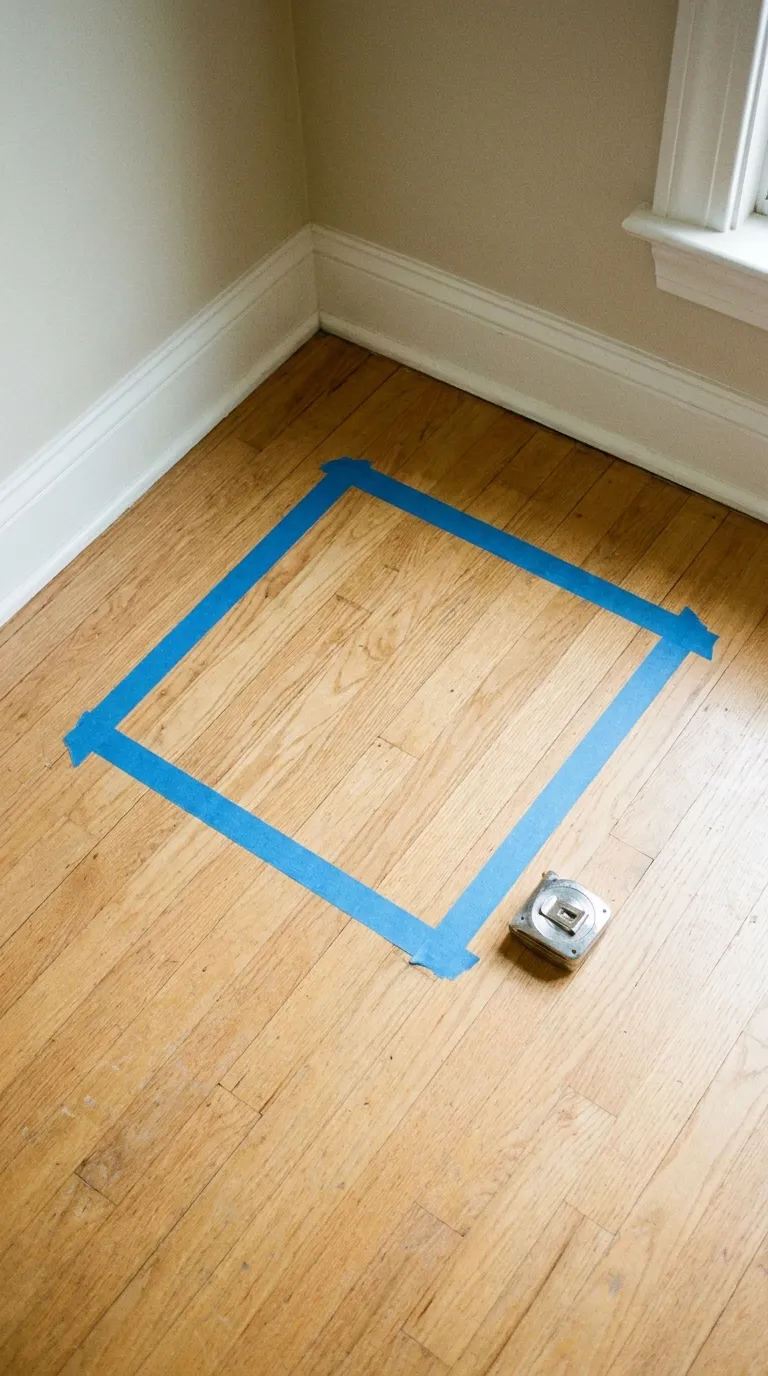
A quick furniture layout on the floor, made with tape, shows you the real footprint in minutes. Paper sketches help, but tape lets you step inside the plan and feel the space.
How to Do It
- Measure out from the corner along both walls and write down the two numbers.
- Measure the width and depth of the chair or cushion you plan to use.
- Test a small hidden spot with painter’s tape first, then mark the footprint on the floor: 4 feet by 4 feet (48 inches by 48 inches) for an armchair with a small side table, 3 feet by 3 feet (36 inches by 36 inches) for a floor cushion.
- Walk around the tape and keep a 30-inch walkway clear between the nook and the room’s main path.
- Check that no door, drawer, or window needs to swing into the marked area.
Why It Works
Tape shows scale in a way numbers on paper do not. You can see right away whether the nook crowds the room or fits comfortably inside it.
Common Mistakes to Avoid
- Measuring the wall but forgetting the depth the seat needs
- Buying furniture before taping the footprint
- Leaving no walkway, so the nook turns into an obstacle
A Simple Rule to Remember
If it does not fit inside the tape, it will not fit inside the room.
Enter your corner size and pick a seat type to see if the nook fits.
3. Choose One Comfortable Seat
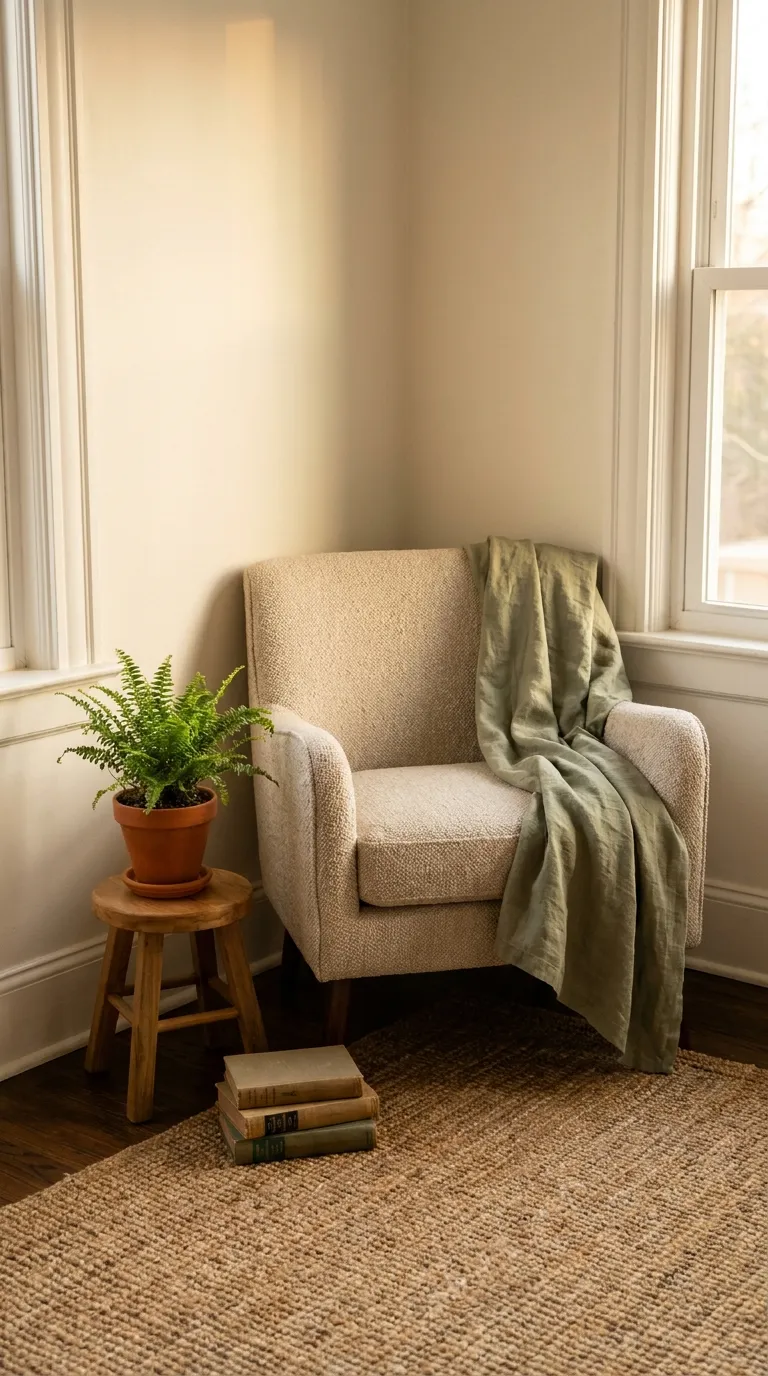
The seat is the heart of the nook, so spend your effort here. A good reading seat holds your back, lets your feet rest on the floor, and makes you want to stay for one more chapter.
You only need one. A compact armchair gives the most support, while a floor cushion with a firm back pillow works in a corner that is too small for a chair.
How to Do It
- Decide between an armchair and a floor seat based on your taped footprint: 4 feet by 4 feet or 3 feet by 3 feet.
- Sit in the chair, in a store or at home, for a full chapter before you commit.
- Check that your feet reach the floor and your back is supported without slouching.
- For a floor seat, place it against the wall and add a firm cushion behind your back.
- Angle the seat slightly toward the window or the light, not toward the door.
- Keep a throw blanket within arm’s reach so you do not need to get up.
Why It Works
One well-chosen seat gives the corner a clear purpose. It reads as a reading spot instead of a storage spot.
Common Mistakes to Avoid
- Choosing a chair that is too deep to sit upright
- Picking looks over comfort and regretting it by page ten
- Using a dining chair because it is already in the room
A Simple Rule to Remember
One seat that is fully comfortable beats two that are almost right.
4. Choose Three Calm Colors
A nook feels calm when its colors agree with each other. A simple color palette of three shades is enough, and it saves you from buying pieces one at a time and hoping they match.
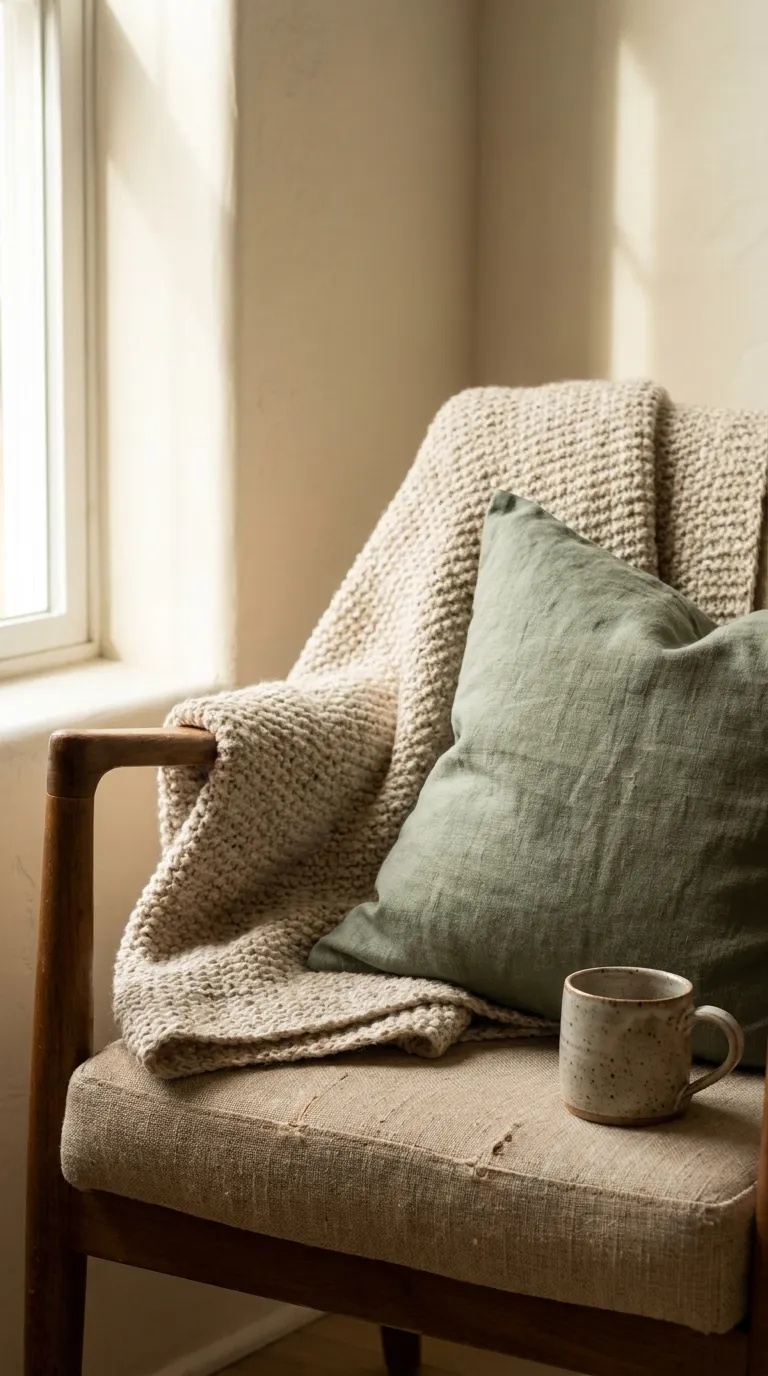
Start from what is already in the corner: the wall, the floor, the curtain. Warm white, oatmeal, and sage green make an easy starting trio, but any three shades that suit your room will work.
How to Do It
- Name the color of the wall or floor next to the nook. That is your base.
- Choose a main shade for the seat or rug, such as oatmeal, that sits close to the base.
- Pick one accent, like sage green, for a throw or a pillow.
- Follow the 60-30-10 split: about 60% base, 30% main shade, 10% accent.
- Hold the fabrics together in daylight before you buy anything else.
Why It Works
Repeating three shades makes the corner look planned, even when the pieces came from different places. The small accent gives your eye a place to land.
Pick a base color and a style to see a five-color palette you can copy.
Common Mistakes to Avoid
- Adding a fourth or fifth color because it was on sale
- Judging fabric colors only under store lighting
- Making the accent as large as the base
A Simple Rule to Remember
Repeat three colors, and let the smallest one be the boldest.
Renter Note
If you want to paint the nook wall, check your lease first, follow the product label, and ventilate the room. Textiles and a rug give the same effect with nothing to repaint when you move out.
5. Layer the Lighting
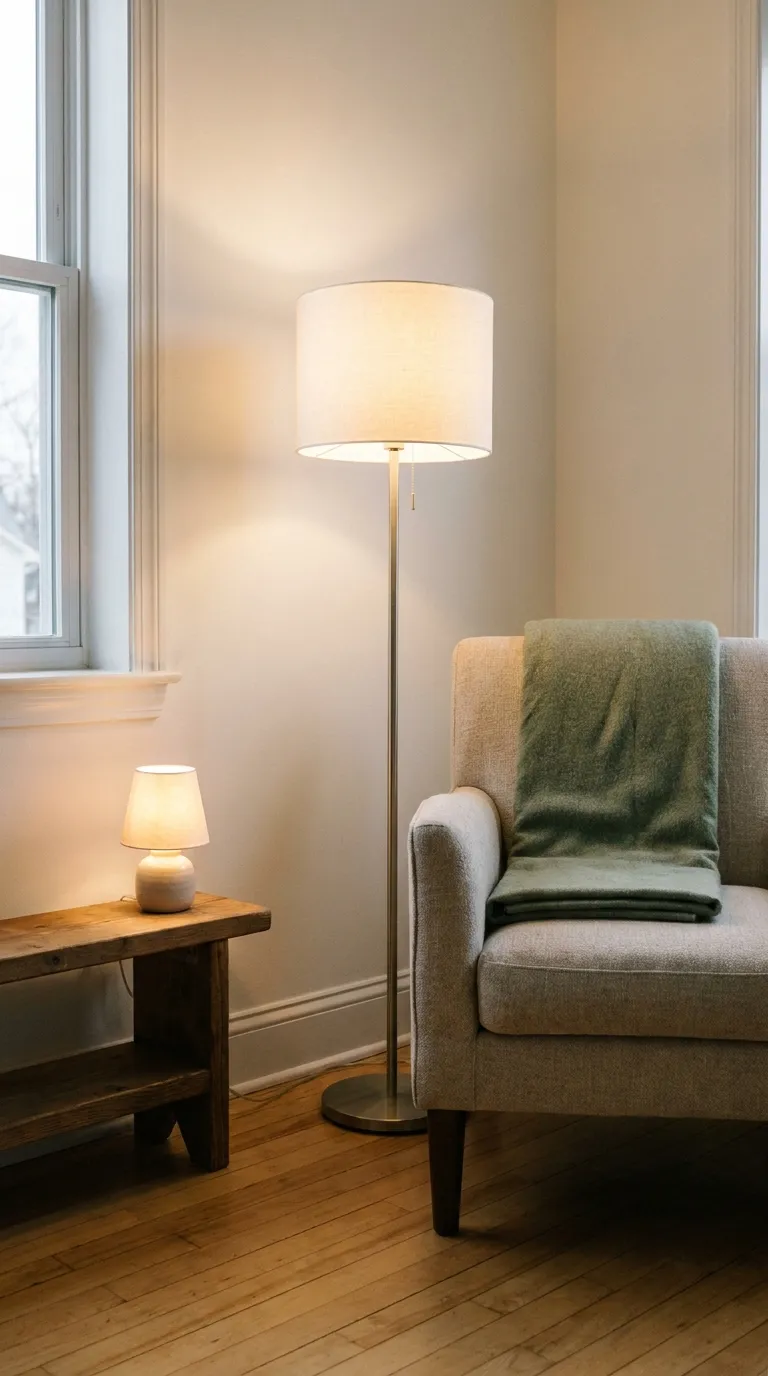
A single ceiling light makes a nook feel like any other part of the room. Reading corners work best with a bright light for the page and a softer one for the mood.
Think in two layers. A reading light goes beside the seat, and a second, dimmer light sits at a different height to fill in the shadows.
How to Do It
- Put a floor lamp or table lamp beside the seat, slightly behind your shoulder, so the light falls on the page and not into your eyes.
- Set the bottom of the shade near eye level when you are seated.
- Choose a warm white bulb and stay within the maximum wattage printed on the lamp’s label.
- Add a second, softer light at a different height, such as a small plug-in lamp or a string of lights on a shelf.
- Run cords along the wall or baseboard, away from where you walk.
- Keep bulbs and shades clear of throws, curtains, and paper.
Why It Works
Two light sources at two heights stop the corner from looking flat. The reading light does the work, and the softer one makes the whole spot easier to settle into.
Common Mistakes to Avoid
- Relying on the overhead light alone
- Placing the lamp in front of you so it glares on the page
- Letting cords cross the walkway
A Simple Rule to Remember
Light the page first, then light the corner.
Renter Note
Plug-in lamps need no drilling. If you use adhesive cord clips, stay within their stated weight limit and check your lease, and hire a licensed electrician for any hardwired fixture.
6. Add a Side Table and Book Storage
The last step keeps you in the seat. If you have to stand up every time you want a sip of tea or the next book, the nook stops being restful and starts being a chore.
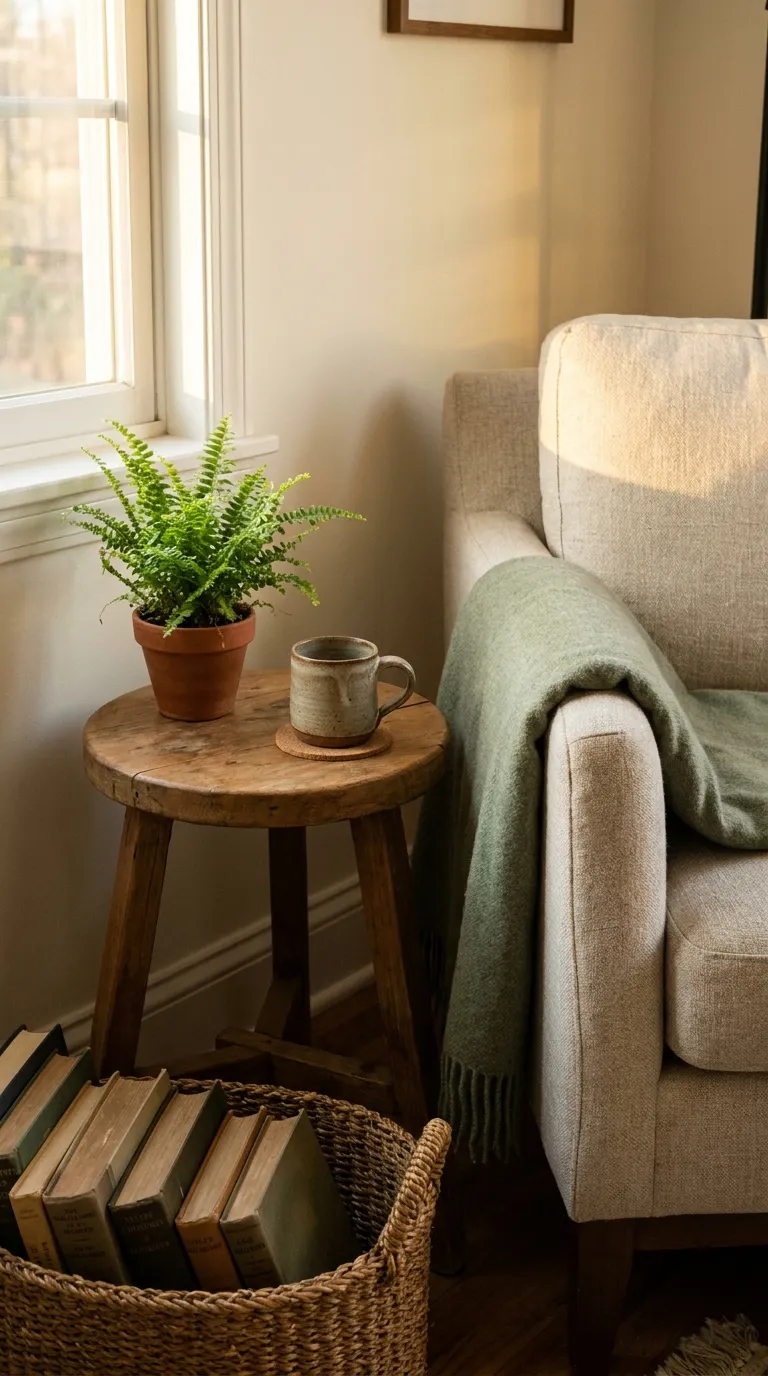
A small side table and one spot for books are enough. Keep both within arm’s reach so you can settle in once and stay.
How to Do It
- Place a small side table or stool beside the seat, about as high as the arm of the chair.
- Keep the top short: a coaster, a mug, and the book you are reading.
- Store the next few books in a basket or on a low shelf next to the seat.
- If you add a tall shelf, secure it to the wall with anchors rated for its weight and follow the product’s instructions.
- Finish with one small plant or one framed print. Check that a plant is safe for pets before buying.
- Sit down and reach for everything. Move anything that makes you stand.
Why It Works
Everything within reach means you get comfortable once and stay. The nook feels finished because each thing has a job.
Common Mistakes to Avoid
- Choosing a table so tall or wide that it crowds the seat
- Piling books on the floor until the corner looks cluttered
- Leaving a tall shelf unanchored
A Simple Rule to Remember
Everything you need should be reachable without standing up.
Renter Note
Freestanding baskets, stools, and leaning shelves skip the drilling. If you want wall shelves, check your lease first and use hardware rated for the weight of the books.
Quick Step Cheat Sheet
Here is the whole nook at a glance, one row per step.
| Step | Why It Works | Quick Fix |
|---|---|---|
| 1. Pick the Right Corner | Natural light makes the spot inviting | Move to the sunniest clear corner |
| 2. Measure Your Space | Tape shows the real footprint | Re-tape using the seat’s true size |
| 3. Choose One Comfortable Seat | One good seat gives the corner purpose | Add a firm back cushion |
| 4. Choose Three Calm Colors | Repeating three shades looks planned | Shrink the accent to about 10% |
| 5. Layer the Lighting | Two heights remove flat, harsh light | Add a small plug-in lamp |
| 6. Add a Side Table and Book Storage | Everything stays within arm’s reach | Swap in a smaller table |
The Principles Behind These Steps
Measure Twice, Buy Once
Every step in this guide starts with a number you can check: the corner, the footprint, the walkway. Numbers keep a nook from outgrowing its corner.
Start With the Seat, Then Build Around It
The seat decides the size of the table, the position of the lamp, and the colors around it. Choose it early and everything after gets easier.
Light Comes From More Than One Height
A single lamp can do the job, but two lights at two heights give the corner depth. One handles reading, the other handles atmosphere.
Leave Breathing Room
A nook works better with a little empty floor around it. Keep the 30-inch walkway open and let the corner feel like part of the room, not a pile in the corner.
Common Reading Nook Mistakes Worth Skipping
Treating the Nook as a Dumping Spot
It is easy to let bags and boxes drift back into the corner. Fix: keep a small basket nearby for odds and ends, and give the seat a clear purpose.
Skipping the Lighting
A comfortable chair in a dim corner rarely gets used. Fix: add the reading light first, even if the rest of the nook comes later.
Forgetting Where the Book Goes
A nook without a place for books ends up with books everywhere else. Fix: set up one basket or low shelf within reach of the seat.
Final Tips for Success
How to Create a Reading Nook on a Small Budget
Start with what you already own. A chair from another room, a lamp from the bedroom, and a throw from the sofa can carry the nook until you decide what is worth buying. Secondhand shops and online marketplaces are good places to look for a chair and a small table.
Basics Worth Owning
- A comfortable seat you have tested for a full chapter
- A reading lamp with a warm white bulb
- A small side table or stool
- A throw blanket and one pillow
- A basket for books
Give It a Week
Use the nook for a few days before you add anything. You will quickly see what is missing and what is in the way.
Conclusion
A reading nook does not need a spare room, a big budget, or a perfect corner. It needs a spot with good light, a seat that fits, a calm set of colors, and a light and a table within reach.
Now you know how to create a reading nook that fits the corner you already have. Start with the tape, trust the numbers, and add one layer at a time.
If you rent, every step here can be undone when you move. The nook can travel with you to the next place.
Save this guide for the next time you rearrange the room, and tuck a book in the corner while you are at it.