
You walk into your bedroom and the bed takes up most of the floor. Clothes sit on a chair, boots wait by the door, and the extra blanket has nowhere to go. If you are shopping for storage bed frames small bedroom layouts can actually handle, the answer starts under the mattress.
What you need is not more furniture. You need a frame that holds seasonal clothes, bedding, or shoes while leaving enough floor to walk around the bed. The right style depends on your ceiling height, your door width, and how often you reach for what you store.
I’ve ordered the eight looks below from the simplest to the most space-saving. Each one comes with a clear formula, the room it needs, and where to save or spend.
1. Drawer Platform Bed
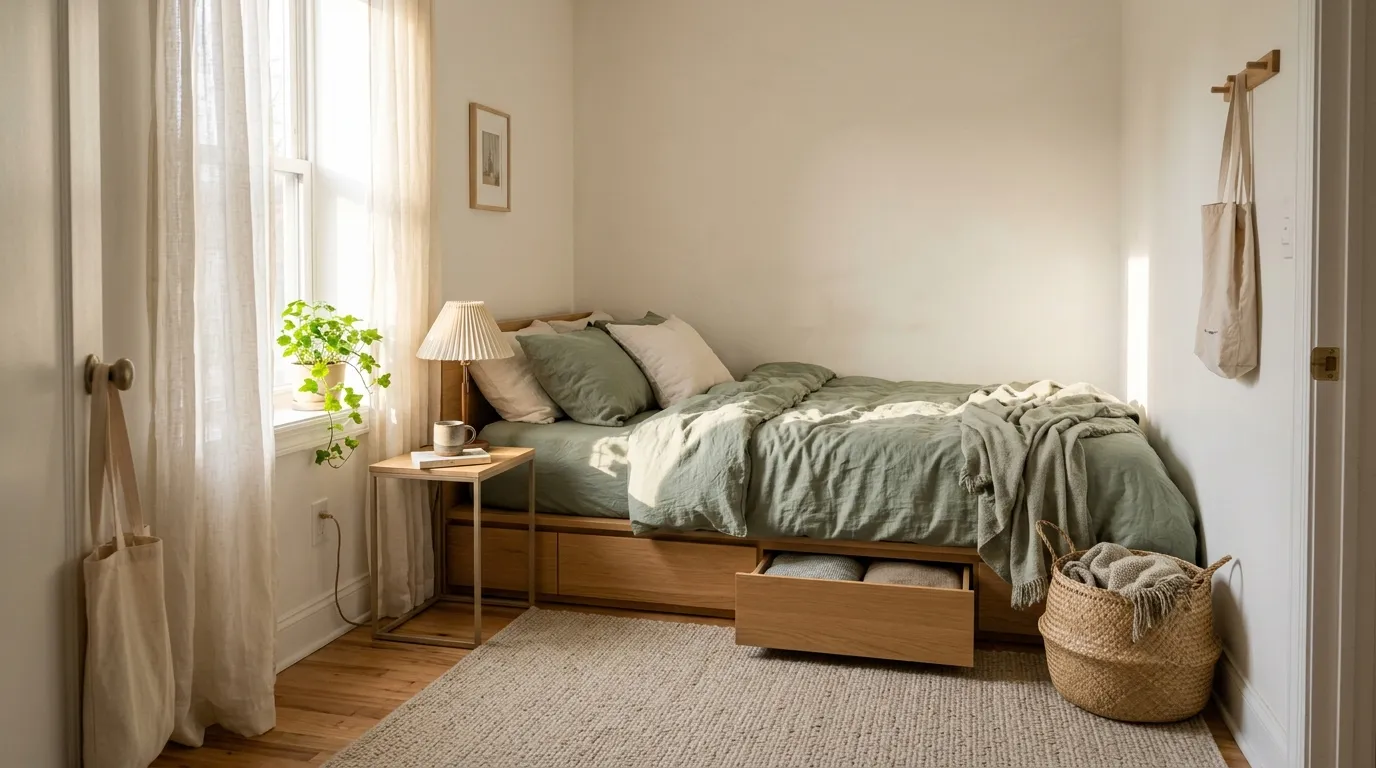
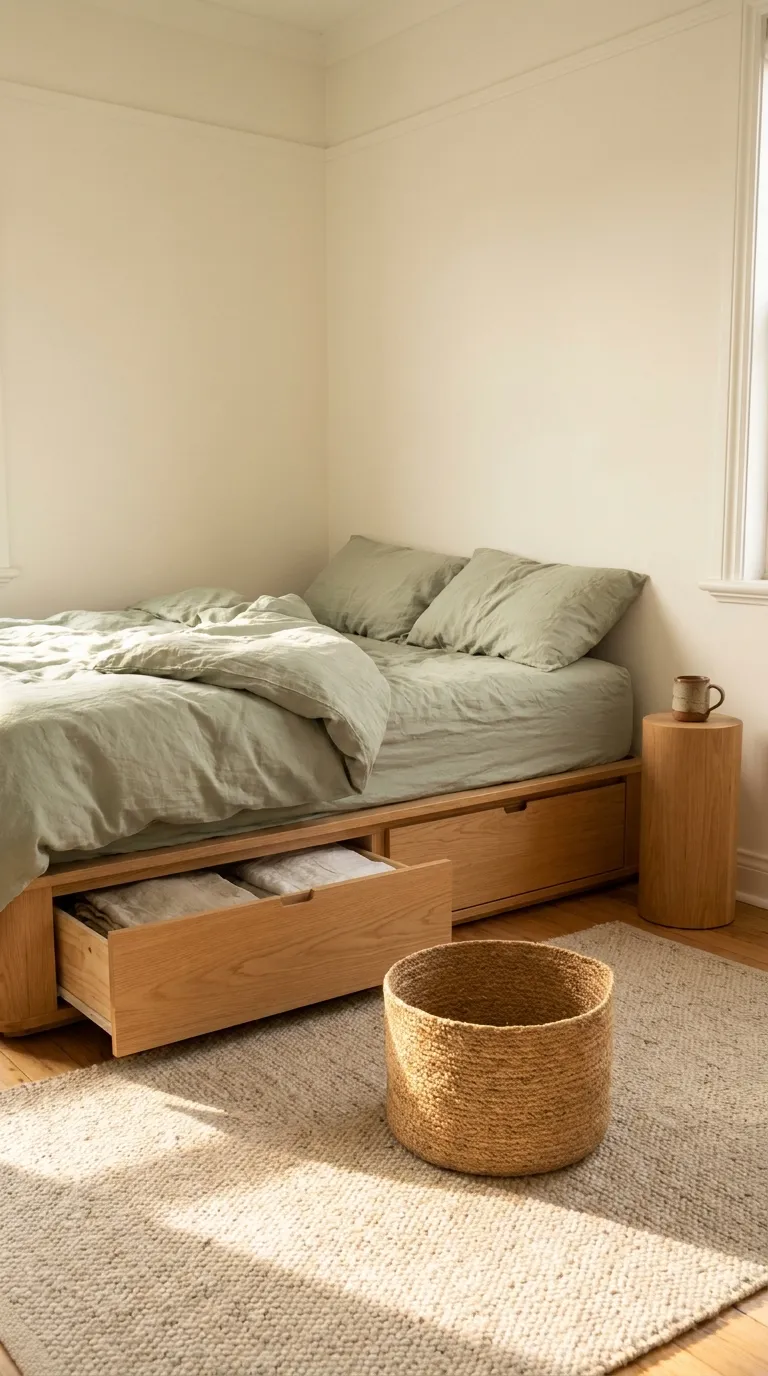
Drawers built into the base turn dead space into a dresser you sleep on. This look suits a bedroom where the closet is small and a separate dresser would block the floor. Everything stays closed, so the room looks tidy.
The Formula
- Anchor: platform frame with built-in drawers on one or both sides
- Support: slim bedside table with a lower shelf
- Accent: sage green throw folded at the foot
Why It Works
The drawers hold the contents of a small dresser inside the footprint the bed already takes up. A low profile also keeps sightlines open, so the room feels wider.
Space Needed
Leave about 24 inches of floor beside each drawer side so a drawer can open fully without you stepping onto the bed. That clearance is the trade-off: drawers on both sides push the bed toward the middle of the room, which is hard in a very narrow space. In that case, choose drawers on one side only.
Save or Invest
- Save on: the headboard, since a simple panel or a separate one can be added later
- Invest in: smooth drawer runners, because you will open them every day
2. Lift-Up Storage Bed
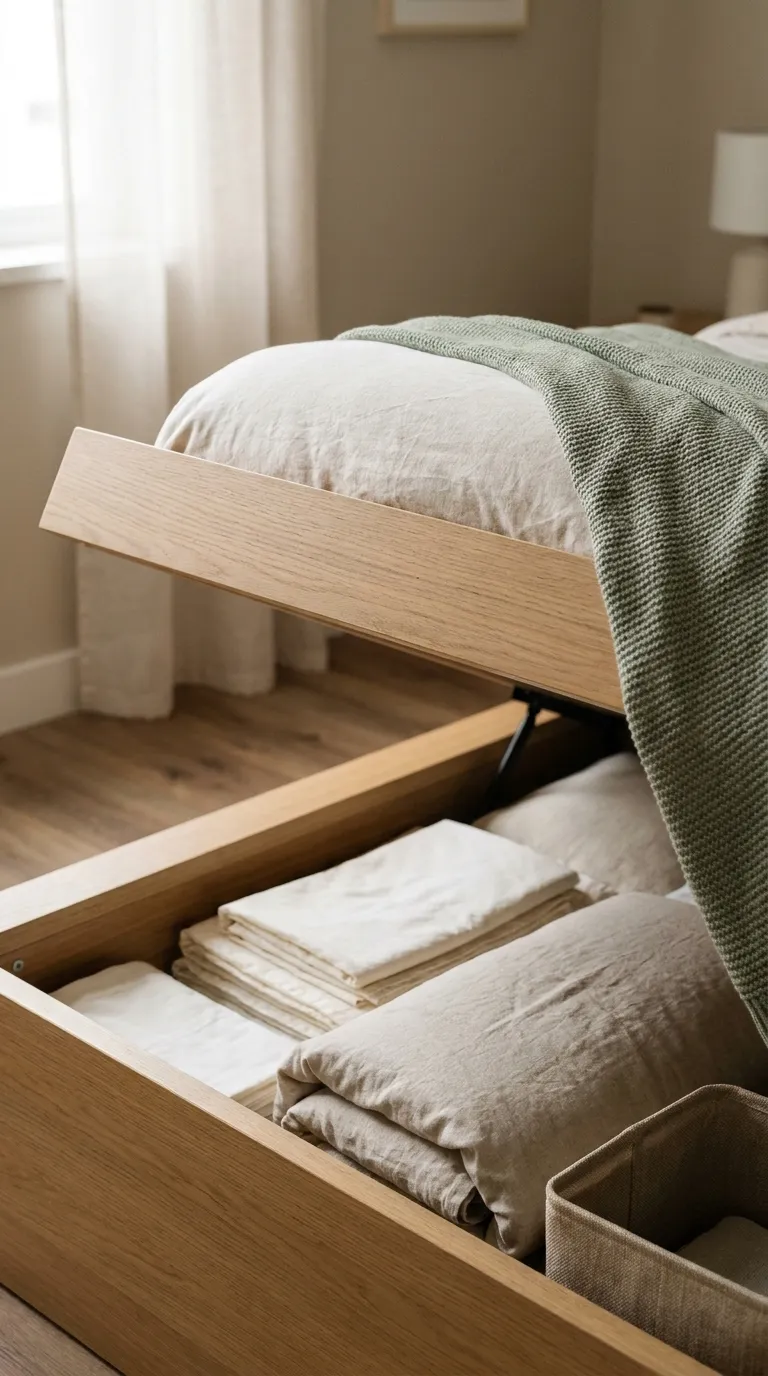
A lift-up frame raises the mattress base on gas-powered hinges and opens one large hidden space underneath. It suits a small bedroom with bulky things to store, like extra bedding, luggage, or off-season coats.
The Formula
- Anchor: lift-up frame with one large hidden compartment
- Support: fabric bins that sort what goes inside
- Accent: oatmeal throw pillow on the headboard side
Why It Works
One big compartment holds items that drawers cannot, such as a folded duvet, a suitcase, or a stack of winter sweaters. Nothing sticks out, so the floor stays clear. Here is how the main under-bed options compare.
| Style | Best For | Trade-Off |
|---|---|---|
| Lift-up | Bulky items | Lifting each time |
| Drawers | Daily clothes | Needs floor clearance |
| Open under-bed | Shoes and bins | Clutter stays visible |
Space Needed
Plan for about 24 inches of clear space on the side or at the foot where the base lifts, so the mattress can rise without hitting furniture or a wall. If a low shelf or window sill sits close by, check the clearance first.
A lift-up frame is a large, heavy piece, so measure your doorway, hallway, and any turn before you order. Interior doorways are often about 30 inches wide, and some in older buildings are narrower. Write down the frame’s width, depth, and height from the product page and compare them with your narrowest opening.
Enter the frame’s size and your doorway width below to see how it should pass through.
Save or Invest
- Save on: the headboard, because a plain panel works fine
- Invest in: the lift mechanism, since it carries the mattress weight every time you open it
3. Storage Headboard Bed
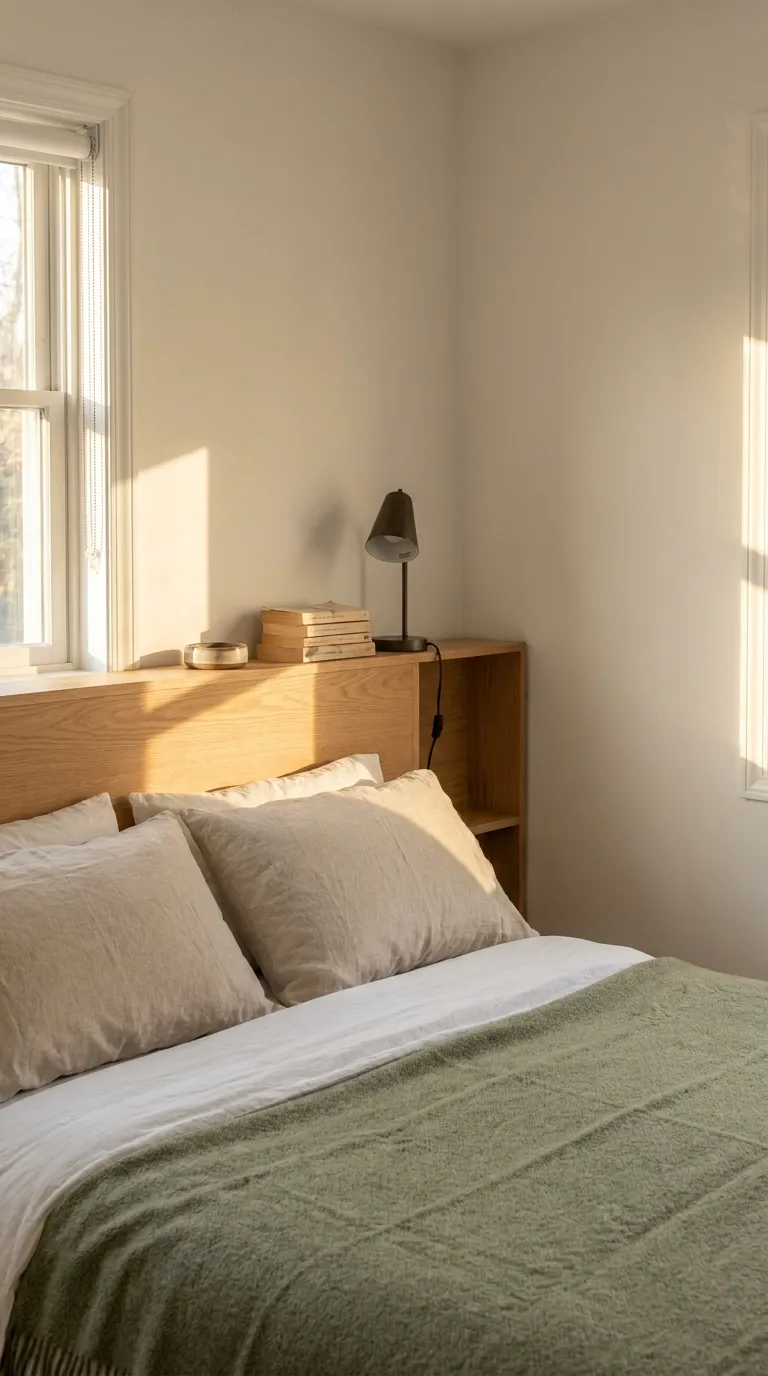
If the floor is too tight for drawers, build storage up instead. A frame with a shelf or cabinet headboard holds books, a lamp, and a glass of water, so you may not need a nightstand at all.
The Formula
- Anchor: bed frame with a shelf or cabinet headboard
- Support: plug-in reading lamp placed on the shelf
- Accent: small stack of books and a ceramic dish
Why It Works
Storage at the head of the bed uses wall height instead of floor space. It also keeps everyday items within reach, which makes the room feel organized without extra furniture.
Space Needed
A shelf headboard often adds about 8 to 10 inches to the length of the bed, so measure from the wall to the door before you buy. Side clearance stays the same as a regular frame.
Save or Invest
- Save on: extra cubbies, since a few open shelves hold what you reach for daily
- Invest in: a sturdy back panel, because the shelf will carry books and a lamp
Renter-Friendly Swap
Check your lease before drilling into any wall. Choose a headboard unit that attaches to the bed frame, not the wall, and add felt pads under its feet. If the unit is tall, follow the product’s instructions and use anchors rated for its weight.
4. Raised Frame With Under-Bed Bins
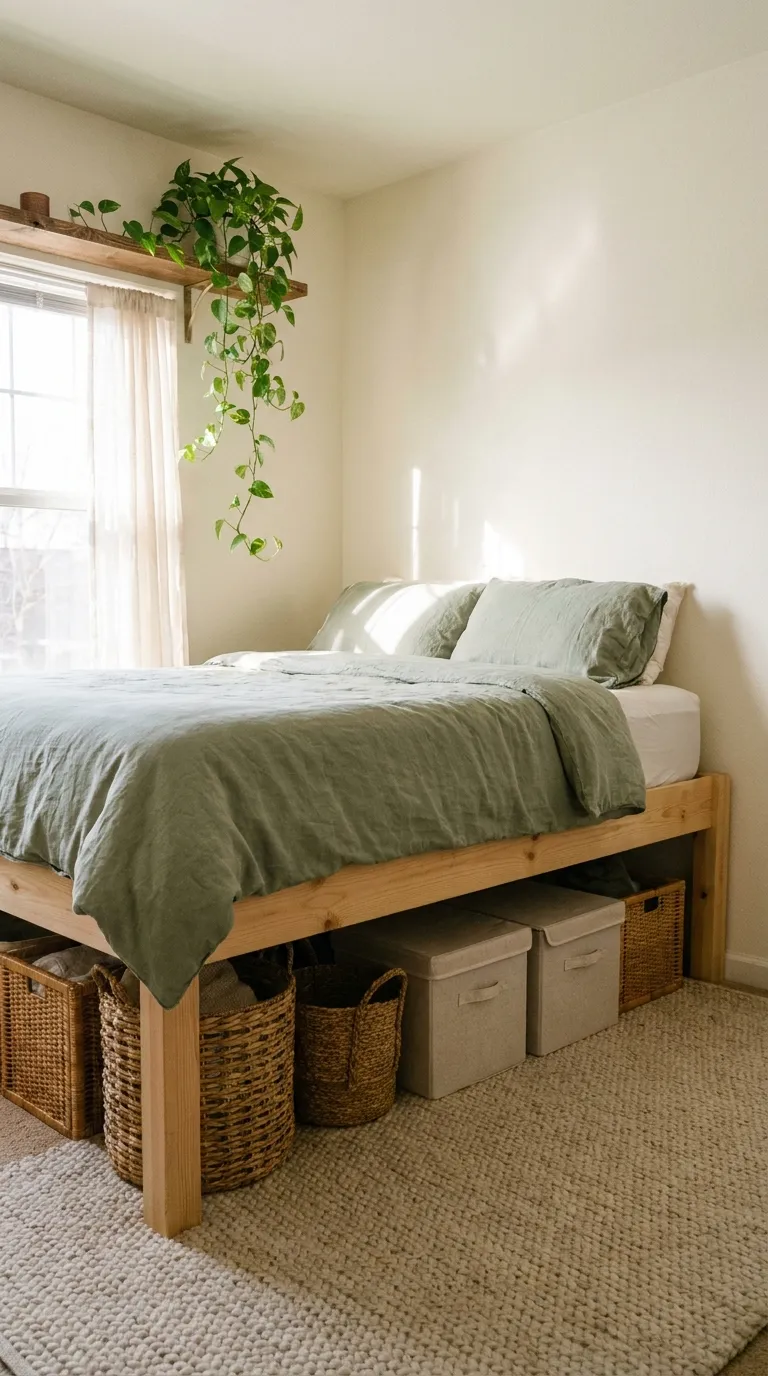
A raised frame lifts the mattress high enough to slide bins, baskets, or rolling crates underneath. It is the most flexible look here, because you choose the containers and can change them whenever your needs shift.
The Formula
- Anchor: raised bed frame with open space underneath
- Support: lidded bins or woven baskets sized to fit
- Accent: linen bed skirt that hides the bins
Why It Works
Open space under the bed lets you store by category: shoes in one bin, off-season sweaters in another. A bed skirt or a row of matching baskets makes the storage look planned instead of messy. The trade-off is that dust collects faster in open space, so plan a quick sweep each time you rotate items.
Space Needed
Measure the gap from the floor to the bottom of the frame and choose bins about 1 inch shorter, so they slide in without scraping. Leave about 24 inches of floor beside the bed so you can pull a bin all the way out.
Save or Invest
- Save on: the bins, since basic lidded ones work well
- Invest in: a sturdy frame with strong slats, because it carries your weight every night
5. Daybed With Trundle Drawers
A daybed with trundle drawers works as a sofa by day and a bed at night. It suits a small bedroom that also needs a seat for a friend or a spot to read, without adding a separate chair.
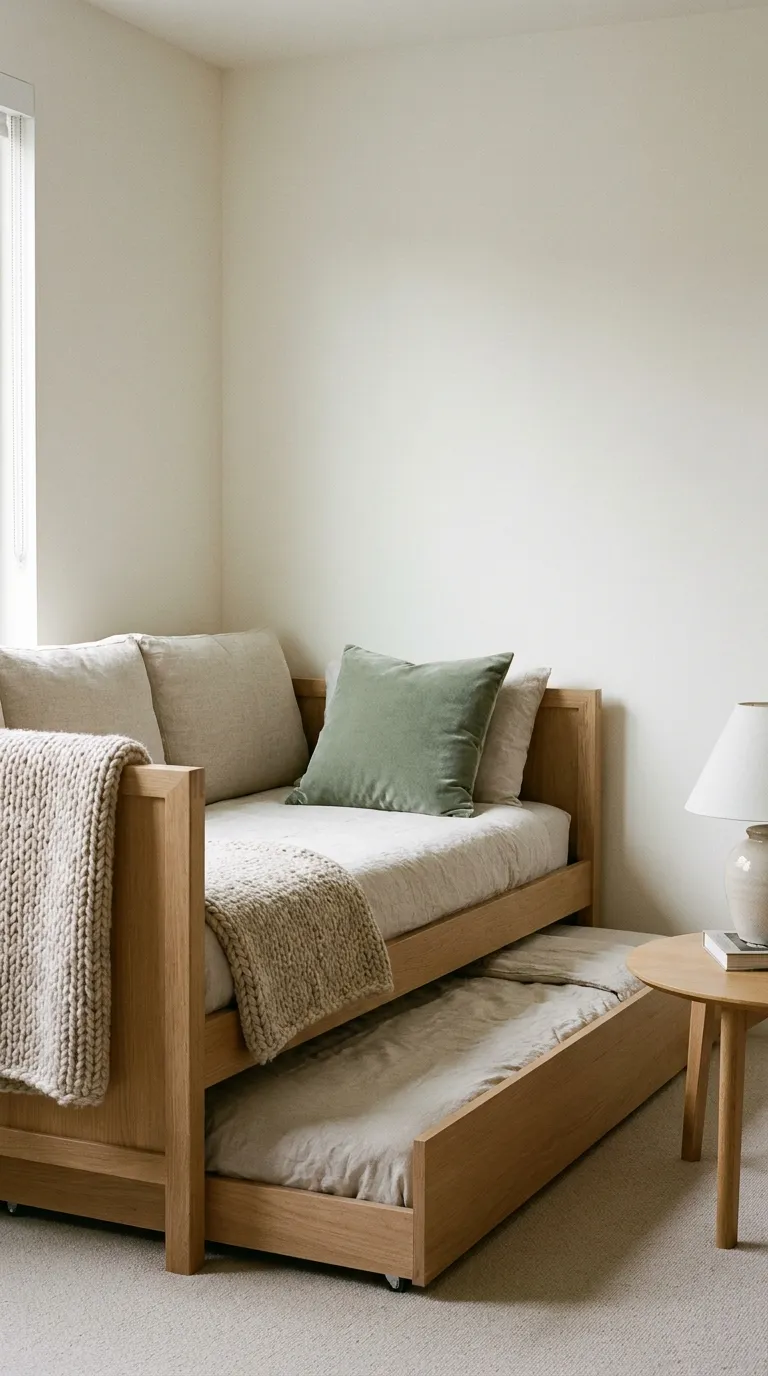
The Formula
- Anchor: daybed frame with trundle drawers underneath
- Support: two or three back cushions in oatmeal
- Accent: woven throw draped over one arm
Why It Works
The frame sits against a wall like a sofa, so it frees the center of the room. Trundle drawers hold bedding or clothes while keeping the footprint small. Placing it along the longest wall keeps the walking path open.
Space Needed
A twin mattress is about 38 inches wide and 75 inches long, and a daybed frame adds a little more on each side. Leave about 24 inches in front of the frame so the trundle drawers can pull out fully.
Save or Invest
- Save on: extra cushions, since two are enough to start
- Invest in: a firm slat base, because this piece does double duty as a seat and a bed
Try it: pick a bed style and a room size, then see whether you keep a clear walking path.
6. Loft Bed With Desk Below
A loft bed lifts the mattress up and frees the floor underneath for a desk, a dresser, or a reading chair. It is a strong choice for a tiny bedroom, as long as the ceiling is high enough.
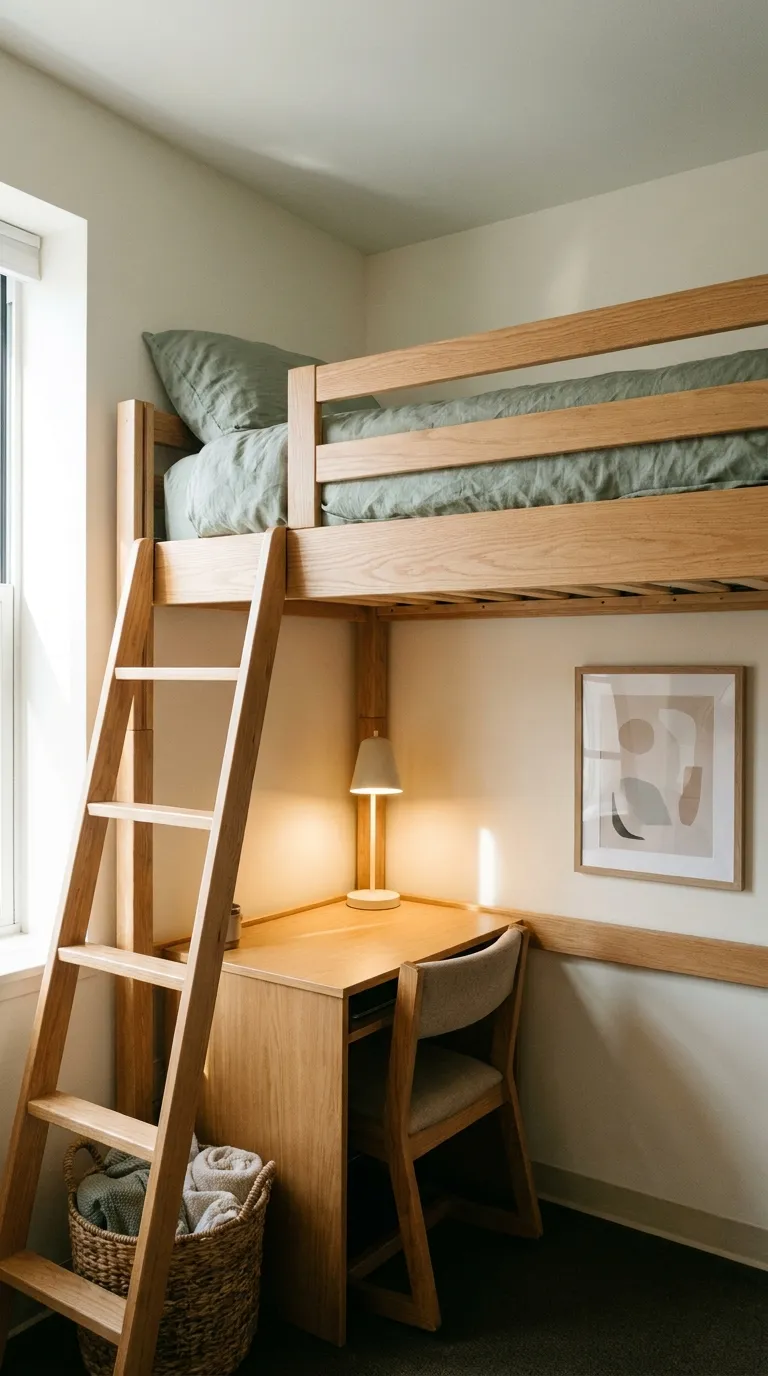
The Formula
- Anchor: loft bed frame with a ladder or steps
- Support: compact desk or dresser underneath
- Accent: plug-in light mounted on the desk side
Why It Works
Going up gives you a whole second zone, so one room can hold a bed and a work corner. The desk or dresser underneath replaces furniture that would otherwise sit beside the bed. The trade-off is the ladder: climbing every night and changing sheets up high is not for everyone.
Space Needed
Loft beds need a taller ceiling than a standard bed, so check the product’s minimum ceiling height before ordering. Underneath, plan for about 24 inches of desk depth plus room to pull out a chair.
Save or Invest
- Save on: the desk, since a basic one fits the space
- Invest in: a sturdy frame with guard rails and a stable ladder, because you sleep above the floor
Renter-Friendly Swap
Check your lease before you attach anything to a wall or ceiling. Choose a freestanding loft frame instead of one that bolts to the wall, and follow the product’s assembly instructions. If a frame needs wall anchors, use ones rated for its weight and ask your landlord first.
7. Narrow Twin Corner Frame
A twin frame pushed into a corner leaves the rest of the room open. With one long drawer or a few cubbies beneath it, you get storage without giving up more floor.
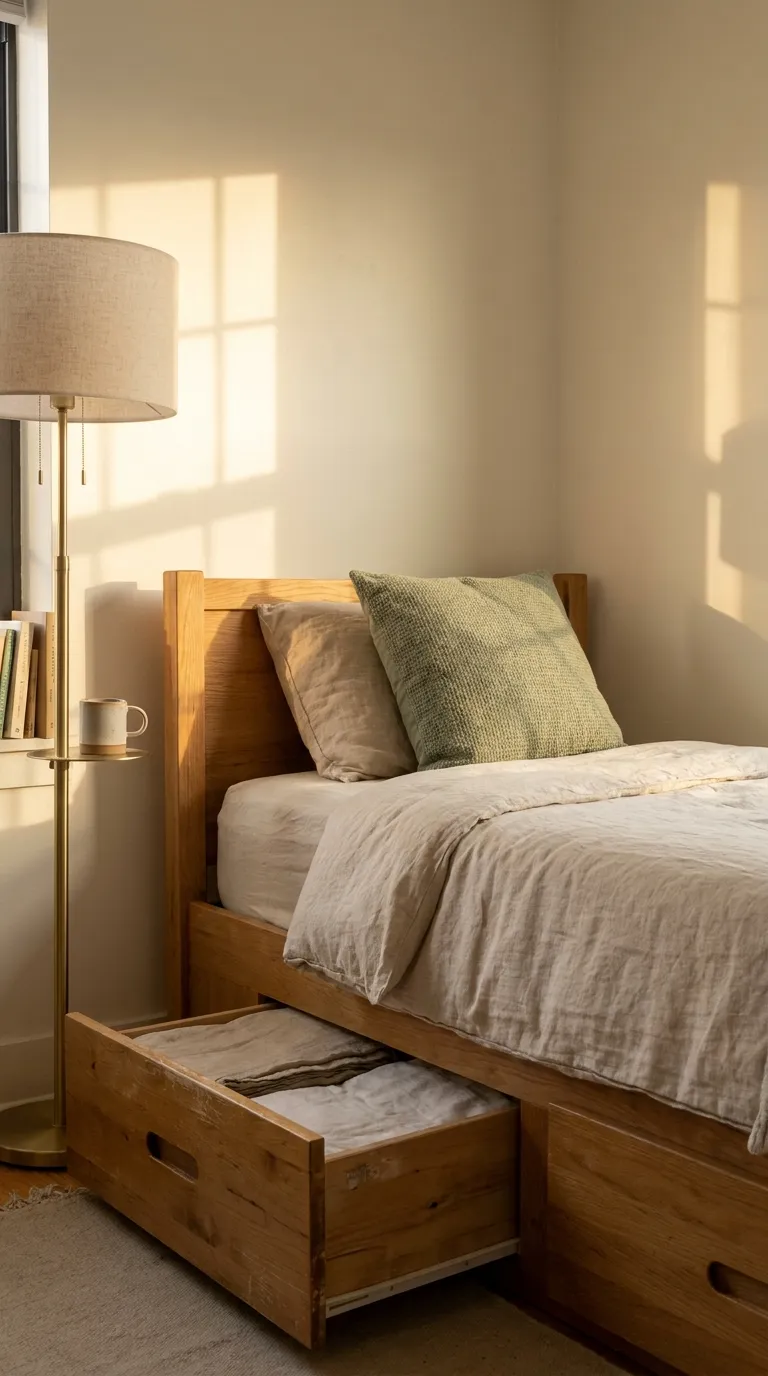
The Formula
- Anchor: twin storage frame with a long drawer or cubbies
- Support: slim floor lamp beside the headboard
- Accent: sage green pillow against the corner
Why It Works
Corner placement keeps two sides against walls, so only one side needs clearance. The rest of the floor can hold a chair, a rug, or a small dresser. The trade-off is that making the bed takes a little more effort with two sides blocked.
Space Needed
A twin mattress is about 38 inches wide and 75 inches long. Leave about 24 inches on the open side, and choose a frame whose drawer pulls out toward that side.
Save or Invest
- Save on: the finish, since the sides facing the walls stay hidden
- Invest in: strong drawer runners, because the drawer is your main storage
8. Wall Bed With Built-In Shelves
A wall bed folds up into a cabinet during the day and opens at night. With shelves on the sides, it turns a bedroom into a room you can use for more than sleeping.
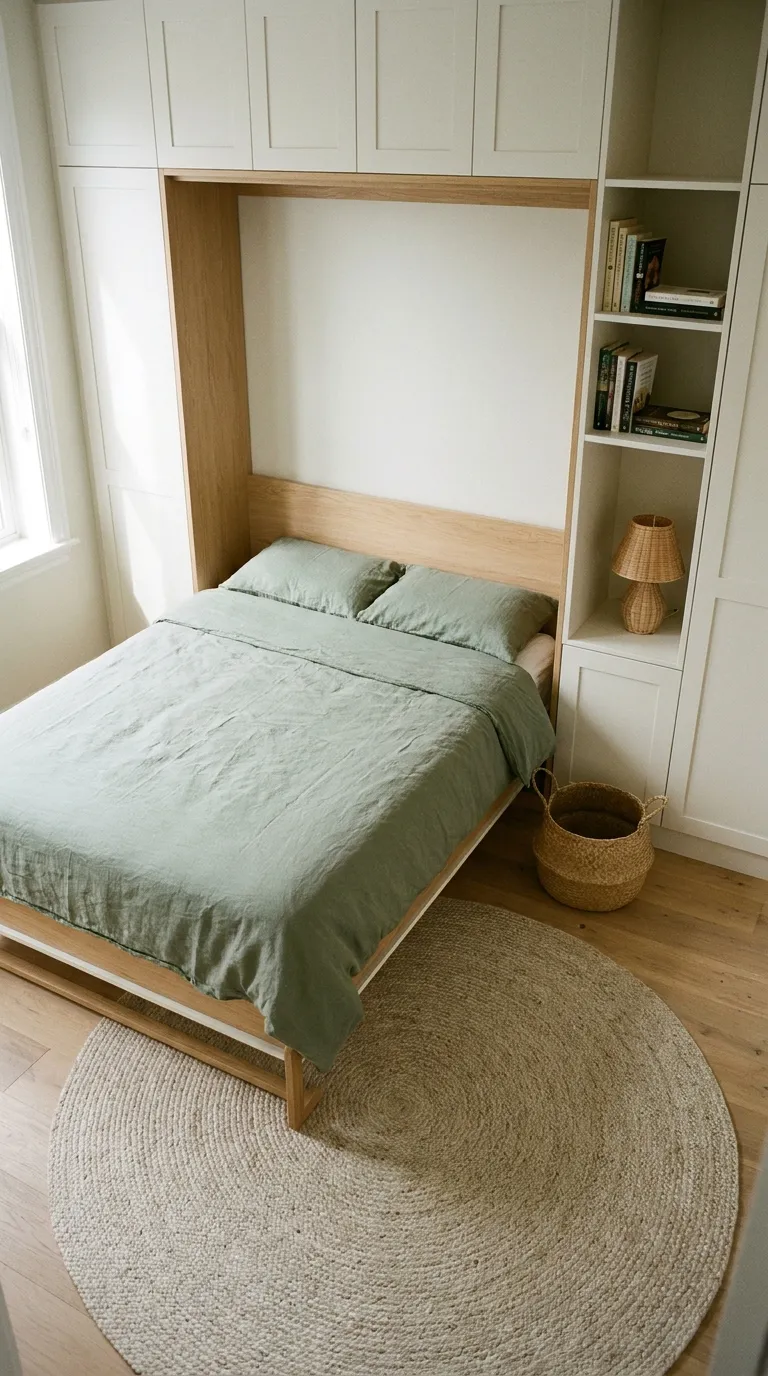
The Formula
- Anchor: wall bed with a fold-up cabinet
- Support: side shelves or a tall cabinet next to it
- Accent: small lamp on one shelf
Why It Works
With the bed folded up, the floor becomes a work corner, a stretching spot, or a place for a chair. The trade-off is that you open and close it every day, and it needs a proper installation.
Space Needed
When open, the bed reaches into the room by about the length of the mattress, so a twin pulls out around 75 inches or a bit more. Leave about 24 inches beside it so you can walk around.
Save or Invest
- Save on: the finish, since a plain painted panel looks clean
- Invest in: the mechanism and the mounting, because they carry the mattress weight
Renter-Friendly Swap
Wall beds usually attach to the wall, so check your lease and ask your landlord first. If drilling is not allowed, look for a freestanding cabinet-style wall bed that stands on the floor, and follow the product’s instructions. For any wall anchors, use ones rated for the weight, and consider hiring a professional installer.
Quick Look Cheat Sheet
Use this table to compare all eight looks at a glance.
| Look | Anchor Piece | Budget Swap |
|---|---|---|
| Drawer Platform Bed | Platform frame with drawers | Low frame plus rolling drawers |
| Lift-Up Storage Bed | Lift-up frame | Simple lift-up frame, plain headboard |
| Storage Headboard Bed | Shelf headboard frame | Plain frame plus freestanding shelf |
| Raised Frame With Under-Bed Bins | Raised frame | Bed risers plus basic lidded bins |
| Daybed With Trundle Drawers | Daybed with trundle | Twin frame plus rolling drawer |
| Loft Bed With Desk Below | Loft frame | Simple frame, basic desk |
| Narrow Twin Corner Frame | Twin storage frame | Twin frame plus slim rolling drawer |
| Wall Bed With Built-In Shelves | Wall bed cabinet | Basic wall bed, separate bookcase |
The Formula Behind These Looks
Every look above follows the same pattern: one anchor, one or two supporting pieces, and one small accent. Here is why that pattern works in a tight room.
Storage Bed Frames Small Bedroom Basics
The bed is the biggest piece you own, so it is also your biggest chance to store things. When the frame holds your extra bedding or clothes, you can skip a dresser or a bulky chest and keep the floor open.
Let the Bed Be the Anchor
One large piece reads calmer than many small ones. Pick the frame first, then add support pieces that stay lower and lighter than the bed.
Repeat One Color or Material
Keep the frame, baskets, and bedding in one palette, such as light oak, warm white, and sage green. Repeating a color makes storage look like part of the design instead of clutter.
Leave Breathing Room Around the Bed
Keep about 24 inches of clear floor on at least one side. A bed with open space around it feels lighter, even in a small room.
Match Scale to the Room
Before you shop, measure your room from wall to wall and mark the bed’s footprint on the floor with painter’s tape. Walk around the taped shape for a minute, and you will know quickly if a style is too big.
Common Storage Bed Mistakes Worth Skipping
Most of these are easy to avoid once you know to look for them.
Buying Before Measuring
Write down the frame’s width, depth, and height, then ask yourself: will it fit through the front door, around the hallway turn, and into the bedroom? One quick check at the start saves a return later.
Forgetting Drawer Clearance
Drawers and lift-up bases need room to open. Leave about 24 inches beside the side that opens, and skip that style if a wall or dresser blocks it.
Choosing Too Many Small Pieces
Several small storage items can crowd a room faster than one large one. Pick a single anchor and let it do most of the work.
Ignoring Walking Space
A frame with great storage is no help if you squeeze past it every morning. Keep a clear path from the door to the bed and from the bed to the closet.
Final Tips for Success
Start With What You Need to Store
List what you own first: bedding, shoes, clothes, or luggage. Then match the frame to the items, not the other way around.
Check Weight Limits and Assembly Notes
Follow the product’s instructions for weight limits and assembly. Larger frames are easier to build with a second person, so ask a friend to help.
Basics Worth Owning
- Tape measure
- Painter’s tape for marking the footprint
- Felt pads for frame feet
- Lidded bins in one color
- Labels for each bin
Conclusion
A small bedroom does not have to feel crowded. The best storage bed frames small bedroom owners can choose give you real space for what you own while keeping the floor open.
Start with one question: what do you need to store, and how often do you reach for it? Drawers suit daily clothes, lift-up bases suit bulky items, and headboards suit what you use at night.
Measure your doorways, mark the bed’s footprint, and leave about 24 inches for opening drawers. Those two steps matter more than any style choice.
Save this guide for the next time you rearrange the room.