
You get home, drop your bag, and glance at the bed. The sheets are clean and everything matches, yet the room still feels like a place to sleep rather than a place to settle in. If you have been hunting for the best bedding sets and every photo starts to look the same, the problem is rarely the set itself. It is how the layers work together.
What most of us actually need is a bed that looks inviting, handles daily use, and fits the room we already have. That means one clear base piece, a couple of supporting layers, and a small detail that adds personality.
I like to treat it as a repeatable formula instead of a shopping list. Below are 12 looks, each built from an anchor, support, and accent, plus where to save and where a little extra spending pays off.
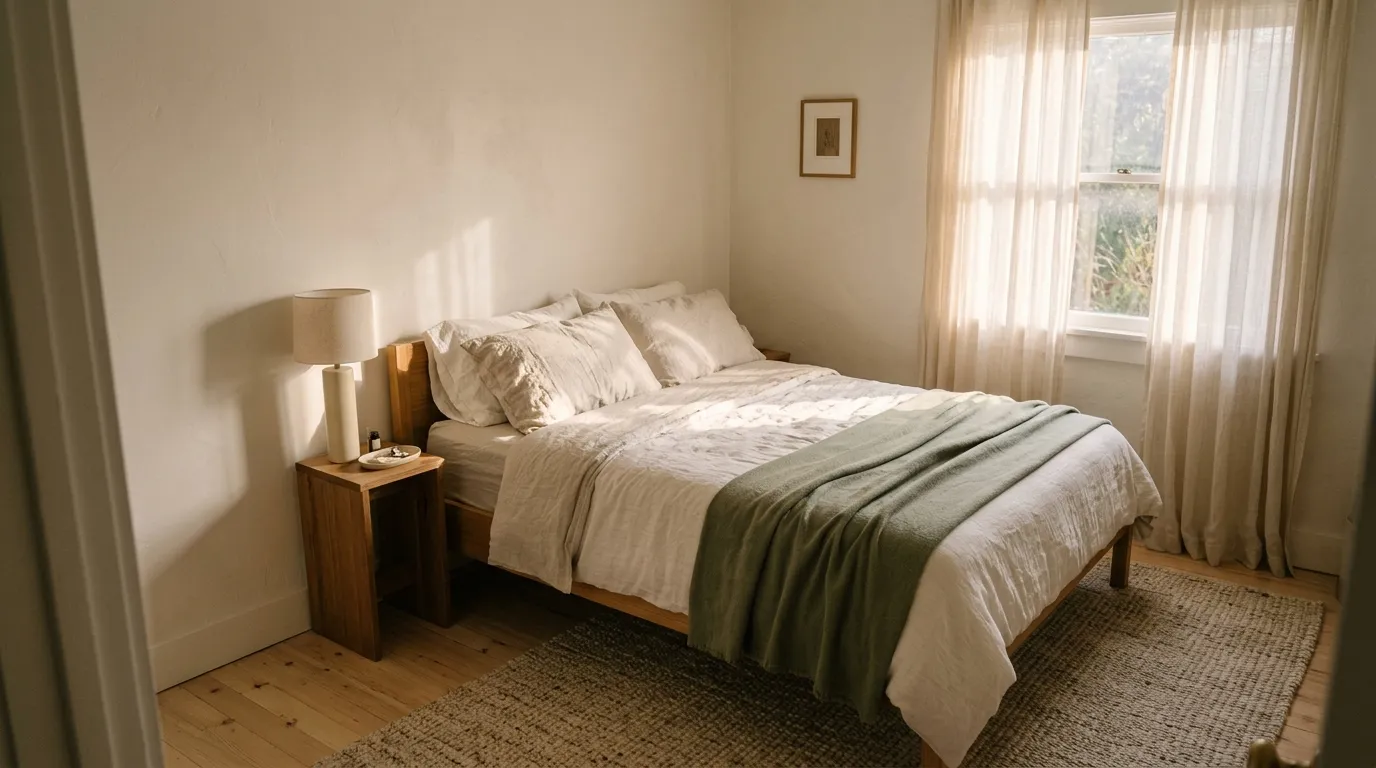
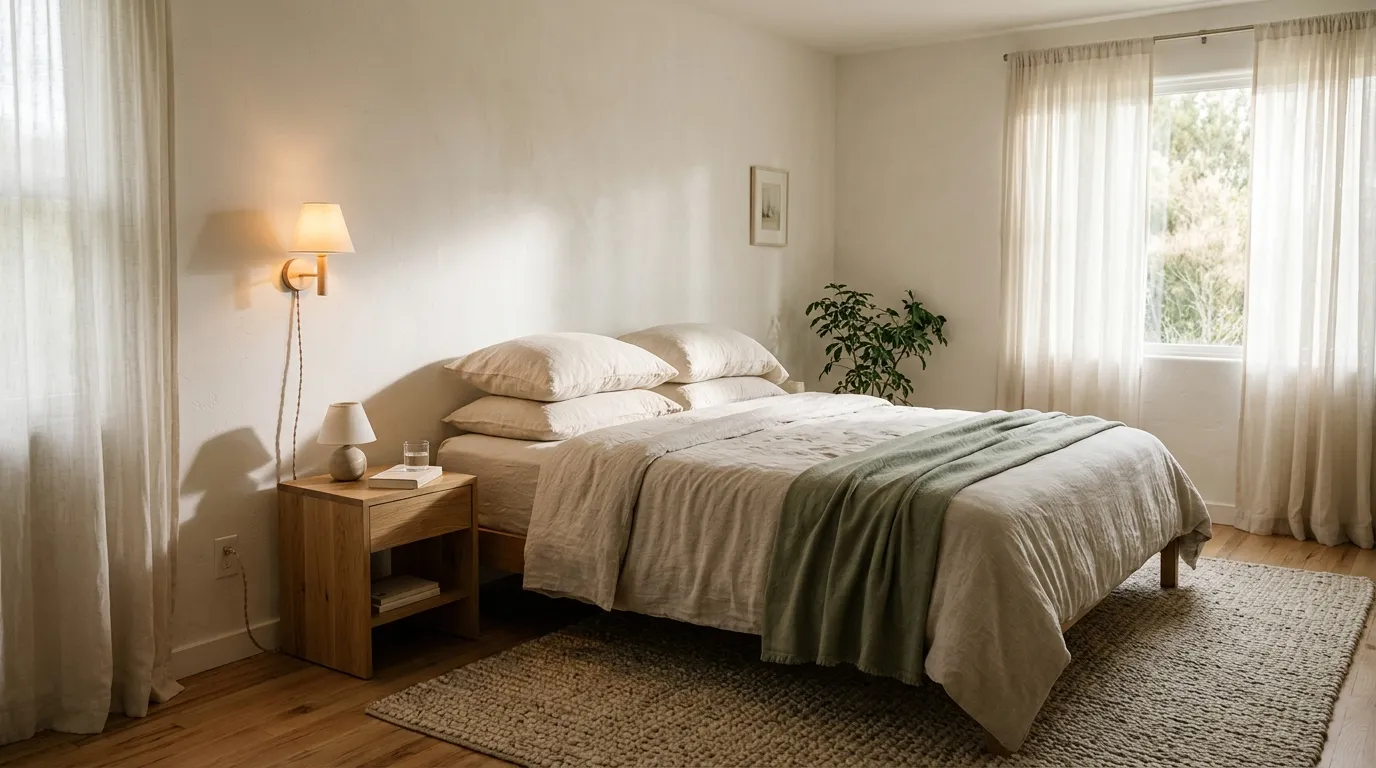
1. Warm White Cloud Bed
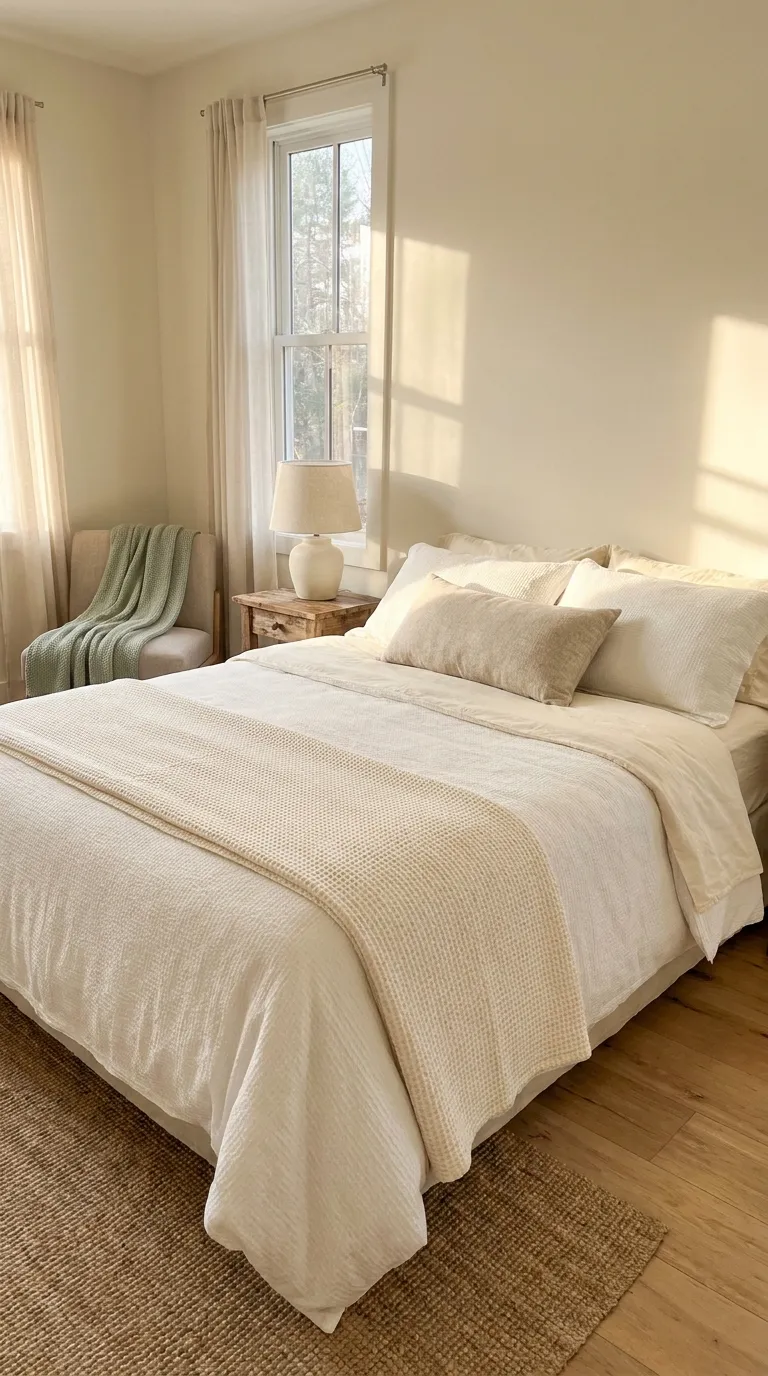
An all-white bed can look cold or flat if every layer has the same finish. The cloud look stays warm by mixing ivory, warm white, and soft textures so the bed reads as plush rather than clinical. It works best in a bedroom with plenty of daylight.
The Formula
- Anchor: a warm white duvet cover with a soft, slightly crinkled texture
- Support: ivory sheets, two matching pillowcases, and a waffle or quilted blanket folded at the foot
- Accent: one oatmeal lumbar pillow for a touch of depth
Why It Works
Staying in one family of colors lets the eye rest, while the mix of textures keeps the bed from looking flat. The trade-off is upkeep: light fabrics show marks sooner, so check the care label and choose pieces you can wash often.
Space Needed
A queen mattress is about 60 inches wide and 80 inches long. Leave at least 24 inches of clear floor on the side you get out of, so the extra layers don’t crowd the room.
Save or Invest
- Save on: the lumbar pillow, because accent pieces are easy to swap and rarely need to last
- Invest in: the duvet cover, because it covers most of the bed and takes the most wear
2. Oatmeal Linen Slouch Bed
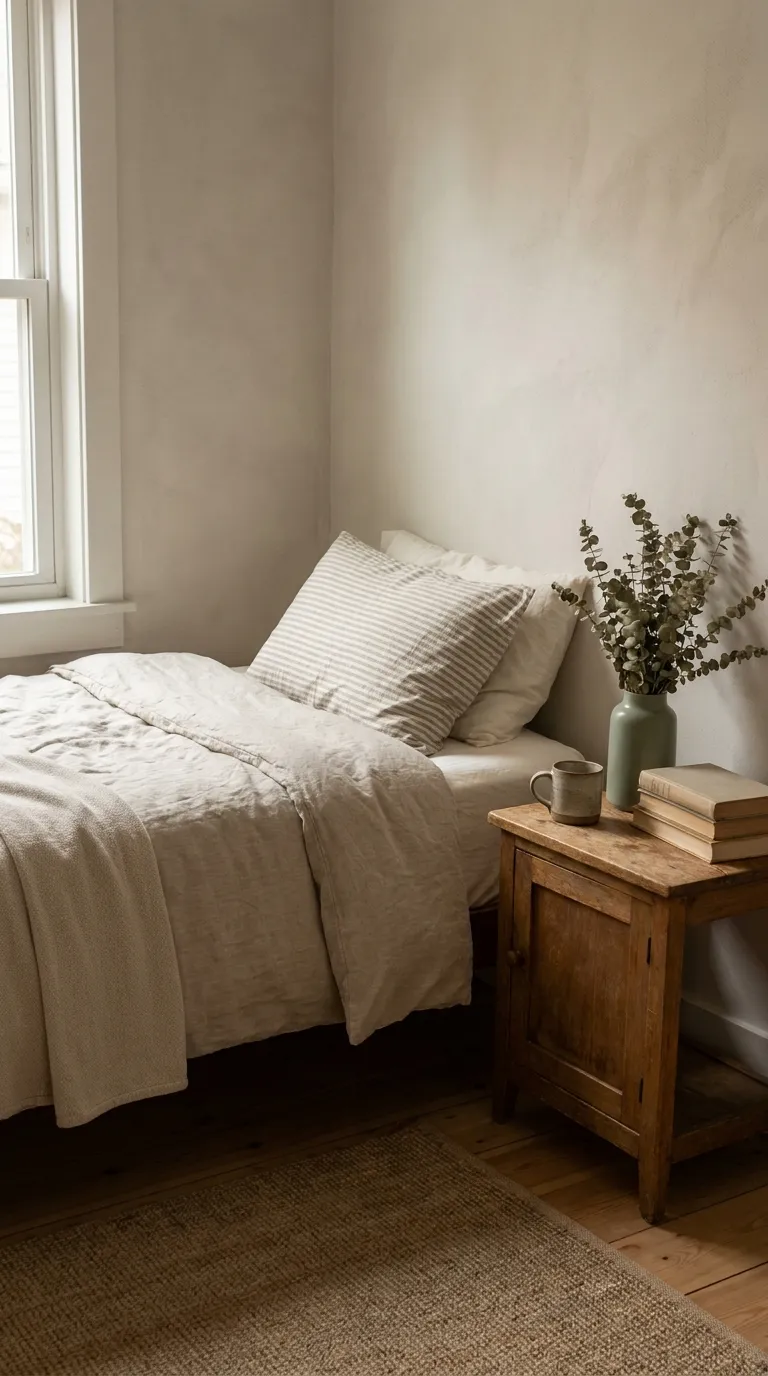
Some people want a bed that looks lived in on purpose. This look leans into soft wrinkles and a relaxed drape, so you never have to smooth the covers into place each morning. It suits a small bedroom with warm wood or white walls.
The Formula
- Anchor: an oatmeal linen or linen-look duvet cover with a washed finish
- Support: warm white sheets and a lightweight blanket one shade deeper than the duvet
- Accent: one pillowcase in a soft stone stripe or a muted sage
Why It Works
Washed fabrics already carry texture, so wrinkles look intentional instead of messy. The trade-off is that natural linen wrinkles a lot and can feel stiff at first, so if you want a crisp, tight bed, this isn’t the look for you.
Space Needed
A full mattress is about 54 inches wide and 75 inches long, which keeps a relaxed, slightly oversized duvet manageable in a small room. Keep at least 24 inches clear on the open side so the loose edges don’t drag across your path.
Save or Invest
- Save on: the striped or sage pillowcase, because a blend works fine for one small accent
- Invest in: the washed duvet cover, because it softens with every wash and carries the whole look
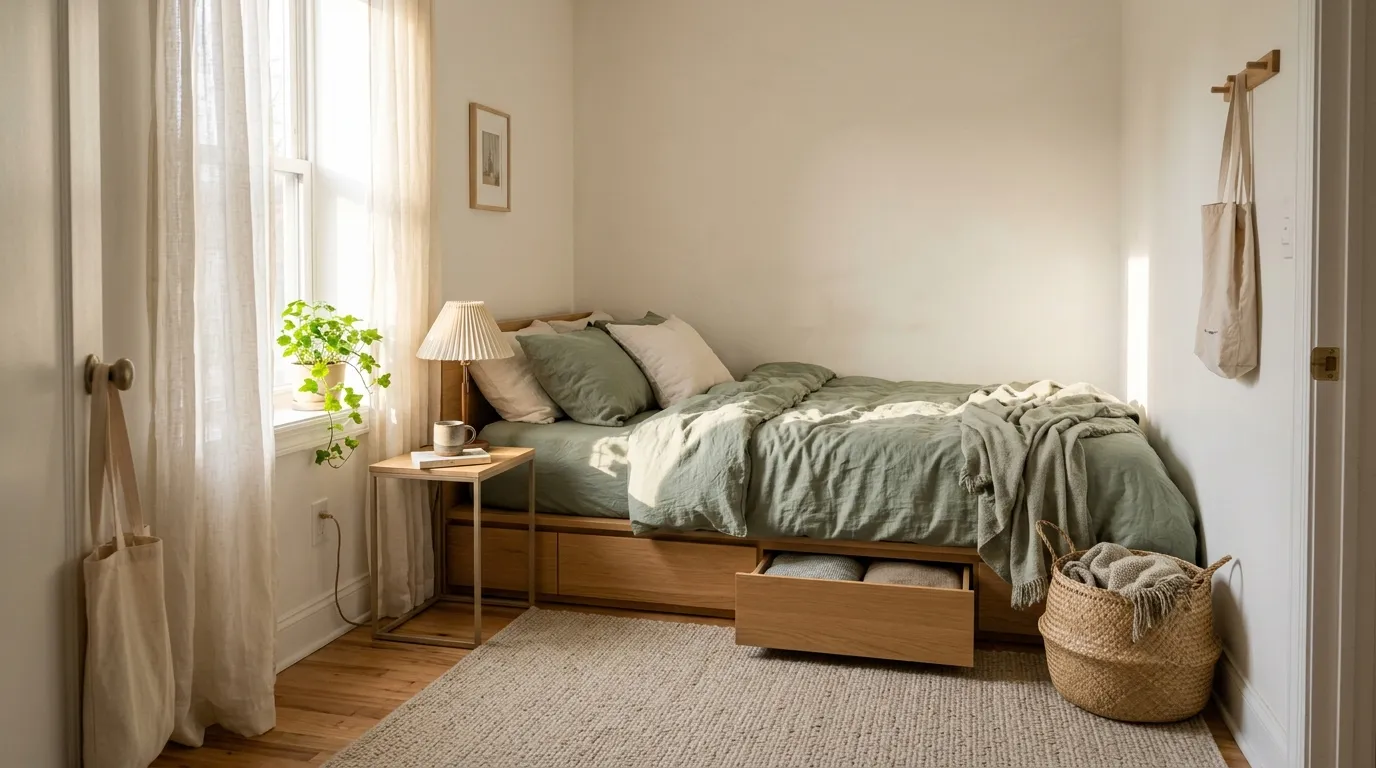
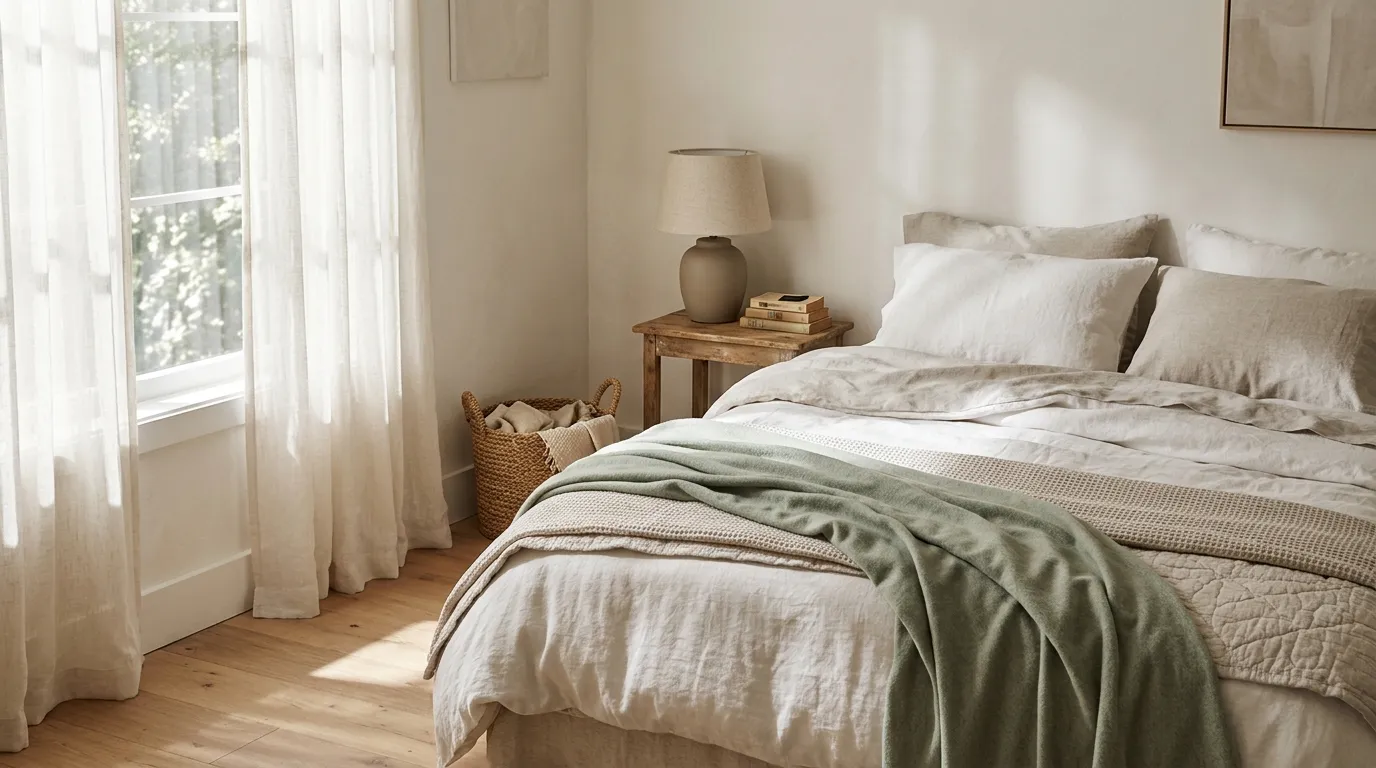
3. Sage Green Quilted Set
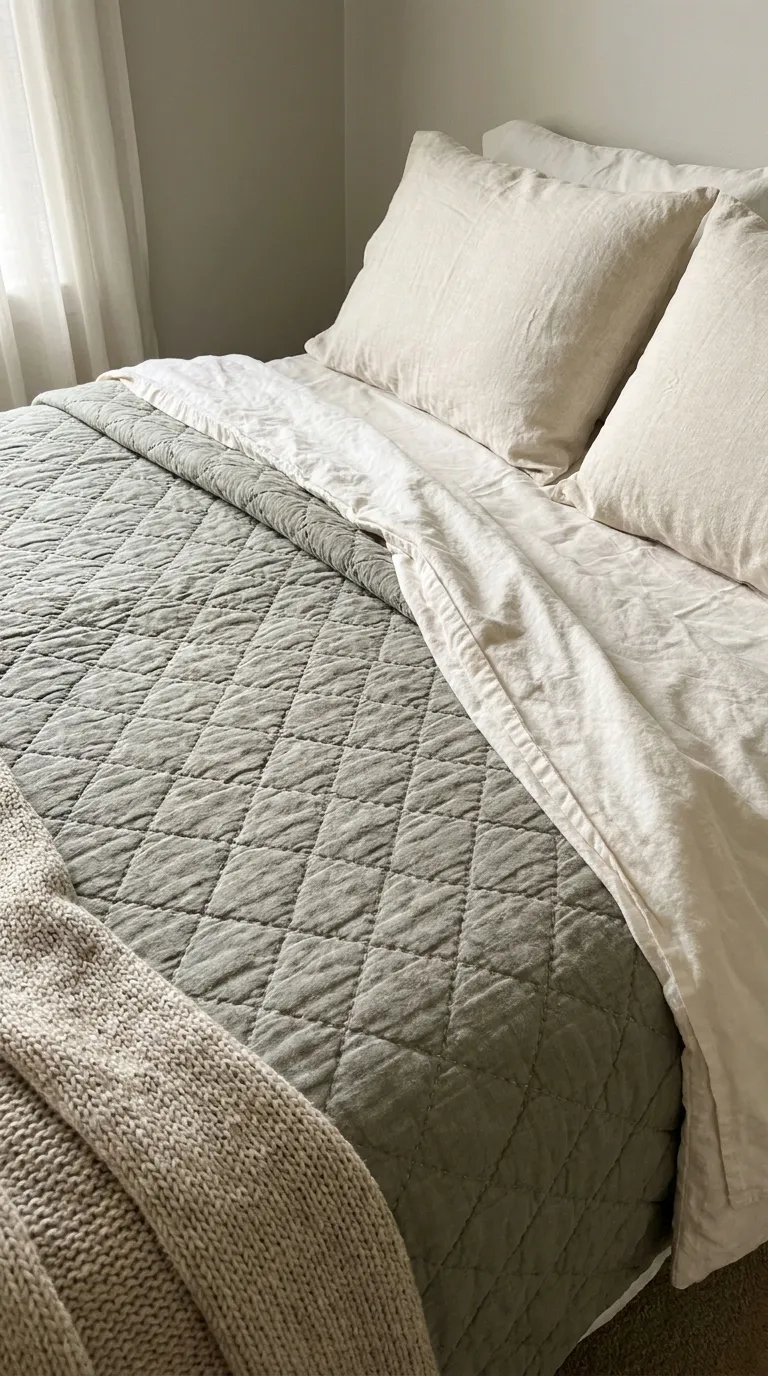
If your walls and furniture are mostly neutral, one muted color can make the bed feel finished. Sage works because it is soft enough to sit beside wood, white, and oatmeal without competing. A quilted set adds pattern through stitching rather than print, which keeps the look calm.
The Formula
- Anchor: a quilted coverlet in a grey-leaning sage green
- Support: warm white sheets and two shams in sage or oatmeal
- Accent: a cream knit throw draped loosely over one corner
Why It Works
The stitched pattern adds depth without introducing a second print, so the bed stays quiet. The trade-off is that bright or yellow-leaning greens look loud, so compare the color with your walls and wood tones in daylight before you commit.
Space Needed
Look for a coverlet that drops about 10 to 12 inches on each side of the mattress, which means roughly 80 to 84 inches wide for a queen. Quilted pieces fold thick, so leave a little extra room at the foot if you stack a throw on top.
Save or Invest
- Save on: the shams, because they sit behind the other pillows and rarely show wear
- Invest in: the coverlet, because tight stitching holds its shape longer (check the care label before washing)
4. Cream and Terracotta Warmth
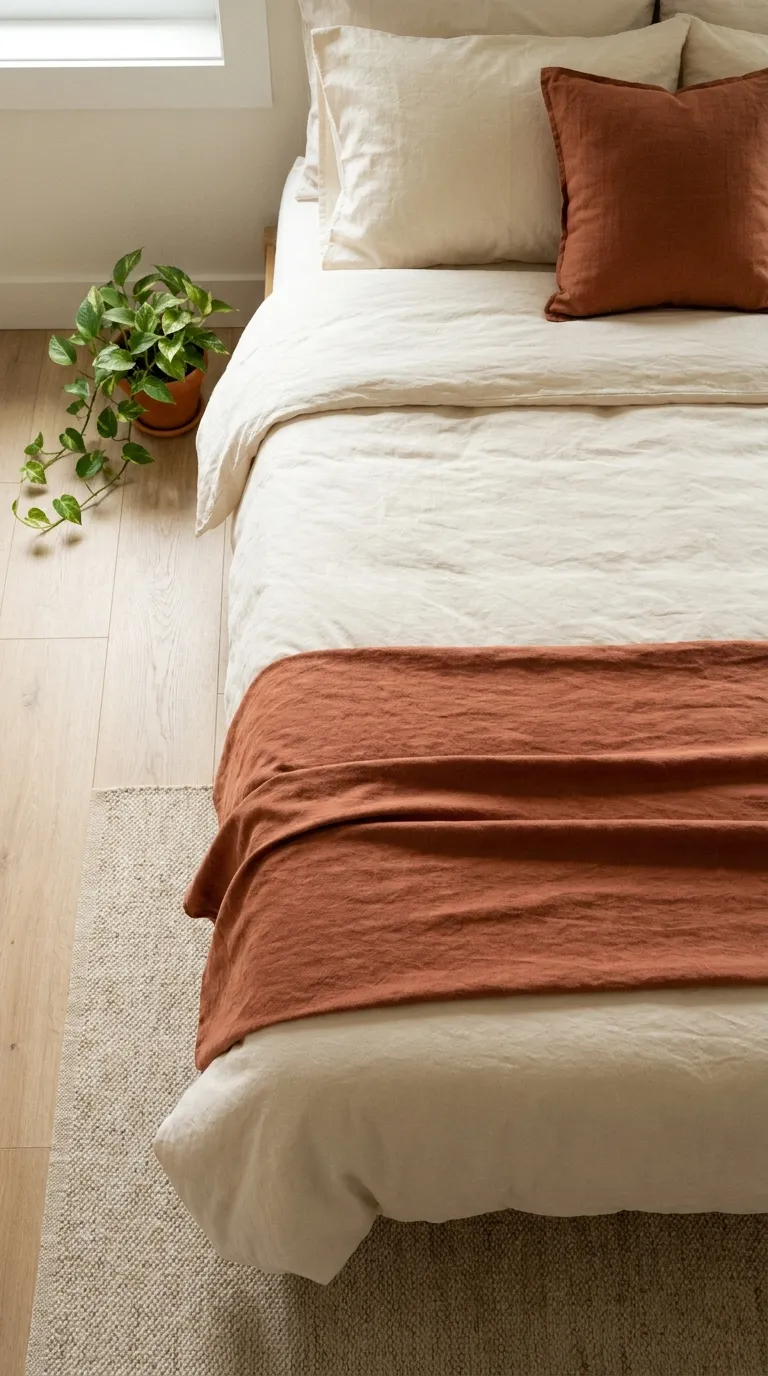
A bedroom with cool or gray light can feel flat even when everything matches. A cream base with one clay-toned layer brings warmth back without making the room busy. It’s a good option if you like a little color but don’t want a patterned set.
The Formula
- Anchor: a cream duvet cover in a matte, soft weave
- Support: a terracotta or clay-toned blanket folded across the bottom third of the bed, plus warm white pillowcases
- Accent: one rust-colored pillow cover
Why It Works
Putting the strong color on only the bottom third keeps the bed balanced instead of busy. The trade-off is that terracotta can clash with cool pink or blue-gray walls, so check it against what is already in the room.
Space Needed
A blanket folded across the bottom third uses about a third of the bed’s 80-inch length, so it won’t crowd the pillows. Allow at least 24 inches of floor at the foot if you walk past that side often.
Save or Invest
- Save on: the rust pillow cover, because accent colors are the easiest to change when your taste shifts
- Invest in: the blanket, because a heavier weave drapes better and works across seasons
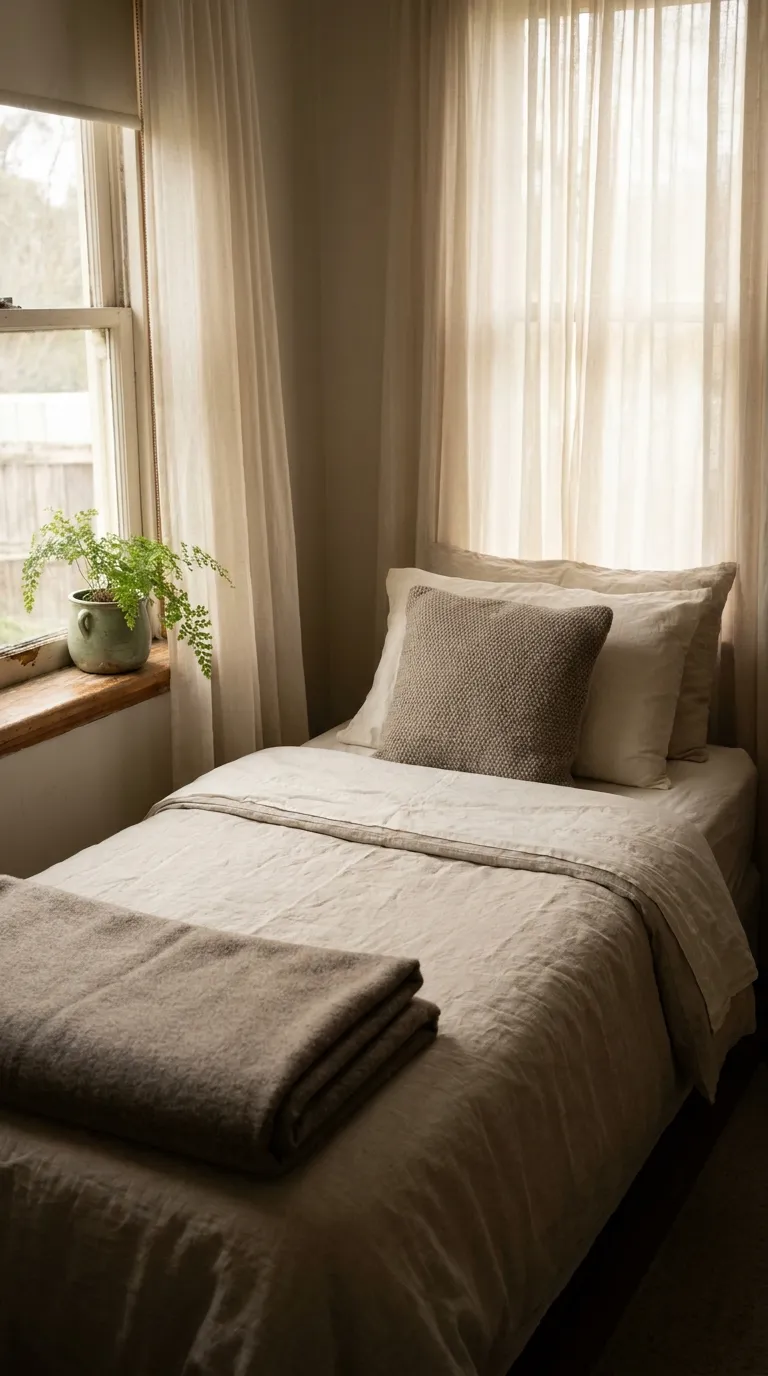
5. Tonal Neutrals in Three Shades
When a bedroom already has a lot going on, a bed built from three shades of one neutral can act like a pause. Ivory, oatmeal, and taupe sit close together, so the bed looks layered and soft without adding a new color. It’s a safe pick if you like to change your decor often.
The Formula
- Anchor: an oatmeal duvet cover in a mid-tone shade
- Support: ivory sheets and pillowcases, plus a taupe blanket folded in thirds
- Accent: one nubby taupe pillow in the darkest shade of the set
Why It Works
Staying in one neutral family makes the layers blend, so the contrast comes from texture instead of color, and a simple guide is 60-30-10: about 60 percent of the bed in a base shade, 30 percent in a second, and 10 percent in an accent. When you work out your color palette, keep at least one shade clearly lighter, because tonal beds can turn muddy in a dim room.
Pick one base color and a style below to see a five-color set with hex codes you can match against your bedding.
Space Needed
A twin mattress is about 38 inches wide and 75 inches long, and three layers still fit if you fold the blanket in thirds. Keep the pillow stack low so the bed doesn’t crowd a nearby window or radiator.
Save or Invest
- Save on: the taupe pillow, because it is a small piece you can swap for another shade later
- Invest in: the ivory sheets, because they are the layer you touch most and they show wear first
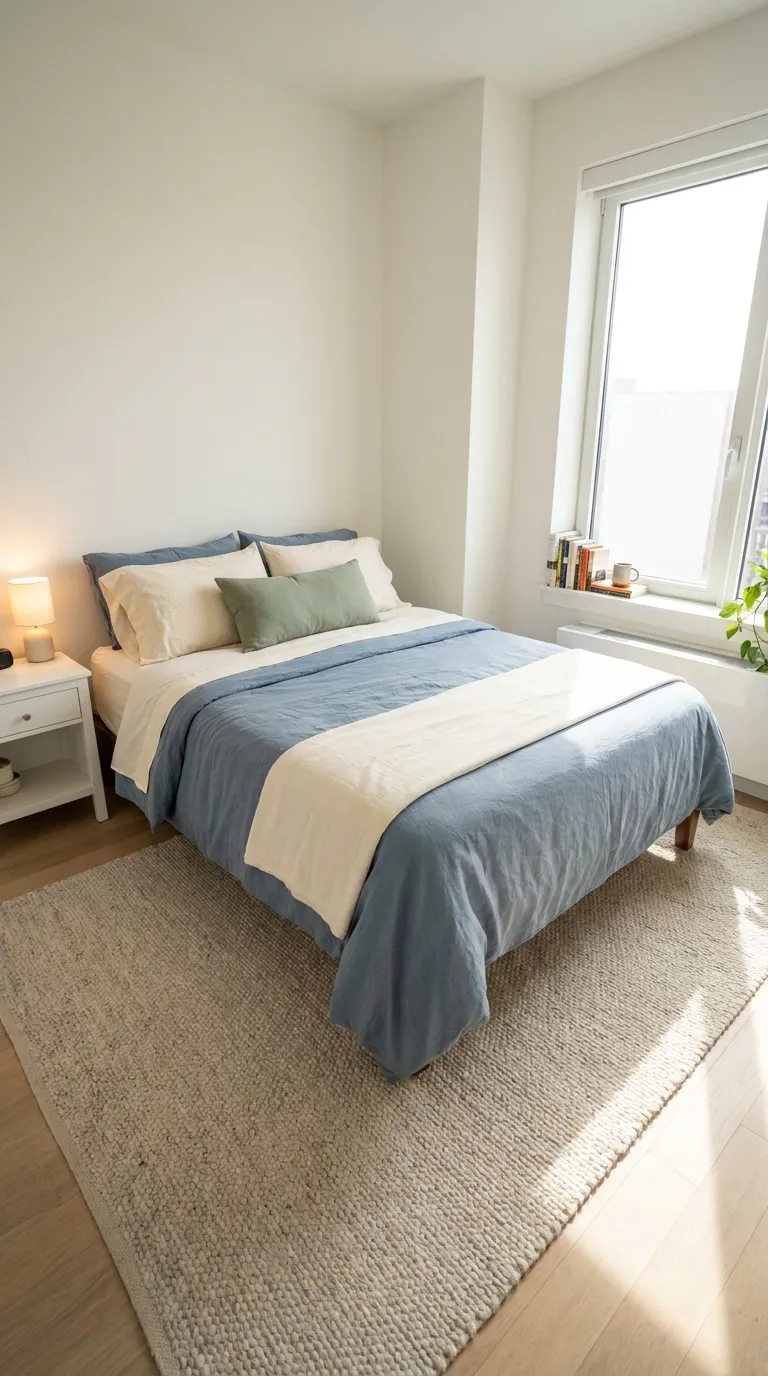
6. Dusty Blue Washed Cotton Bed
Blue bedding can feel crisp and cool, but a dusty, slightly gray blue reads soft and quiet. This look suits a bedroom with white or light wood furniture and plenty of natural light. It pairs easily with cream and oatmeal without clashing.
The Formula
- Anchor: a washed cotton duvet cover in a gray-leaning dusty blue
- Support: warm white sheets, cream pillowcases, and a lightweight cream blanket at the foot
- Accent: one sage or oatmeal lumbar pillow
Why It Works
A gray-leaning blue is calmer than a bright true blue, and the washed finish keeps it from looking stiff. The trade-off is that cool colors can feel chilly in a room with little sun, so the cream and oatmeal layers matter more here.
Space Needed
A queen bed covers about 60 by 80 inches of floor. In a narrow room, pick a duvet cover sized to your mattress so extra fabric doesn’t pool on the floor and block your path.
Save or Invest
- Save on: the cream pillowcases, because a basic set does the job and sits in the background
- Invest in: a good duvet insert, because it controls how full the bed looks under a lightweight cover
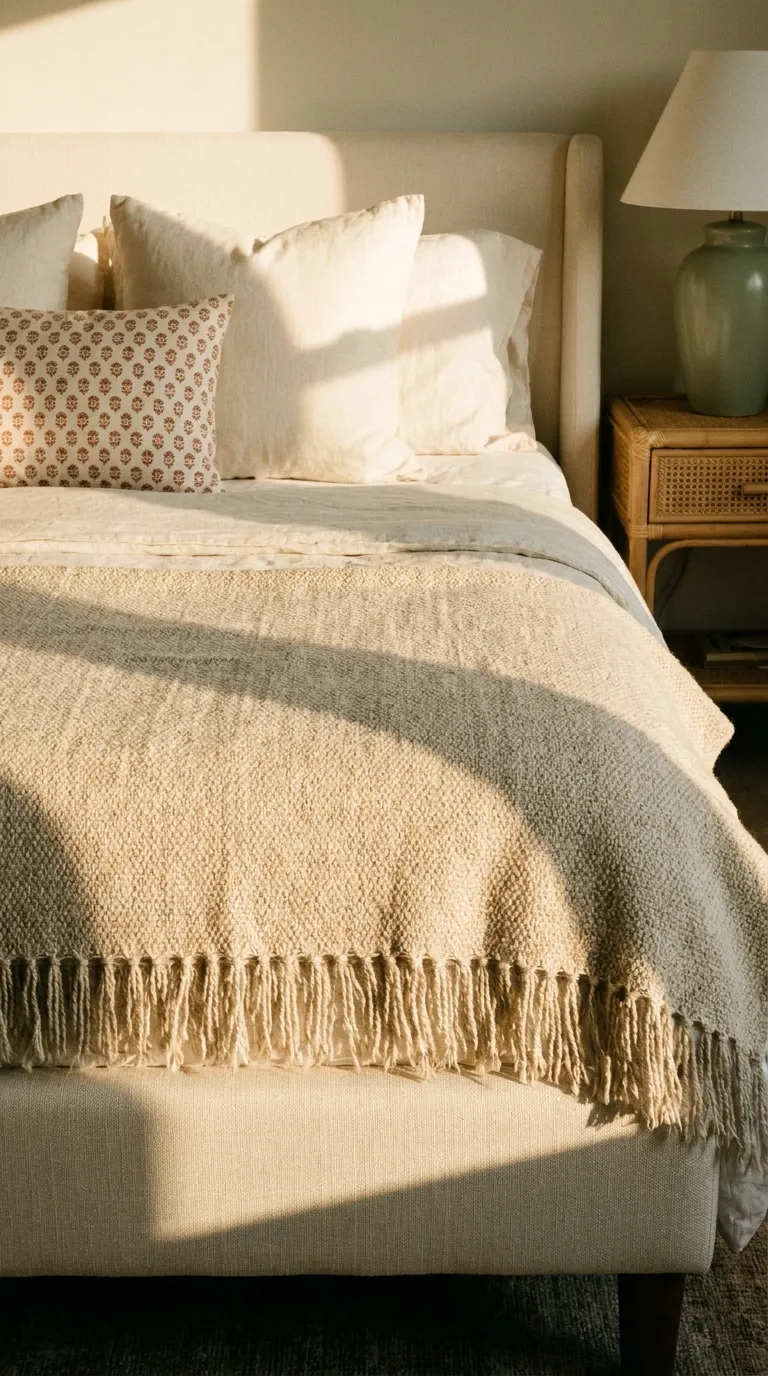
7. Soft Boho Mix Bed
A boho bed doesn’t need ten patterns to feel relaxed. This version keeps the base plain and adds one woven or fringed layer, so the bed has character without feeling cluttered. It suits anyone who likes handmade-looking details but wants a calm room.
The Formula
- Anchor: a cream or oatmeal duvet cover with no pattern
- Support: a woven or fringed throw across the foot, plus two plain warm white pillows
- Accent: one pillow with a small, muted pattern in sage or rust
Why It Works
A plain base lets one textured layer stand out, which is what makes the look feel intentional. The trade-off is that fringe can tangle in the wash and loose weaves can snag, so check the care label and keep the throw away from rough edges.
Space Needed
Boho layers sit on top of the bed, so the footprint stays the same: about 60 by 80 inches for a queen. Check that fringe doesn’t drape into a walkway where it can catch on a foot.
Save or Invest
- Save on: the plain warm white pillows, because they sit behind and take little notice
- Invest in: the woven throw, because it is the piece people notice first and it works on a chair or sofa too
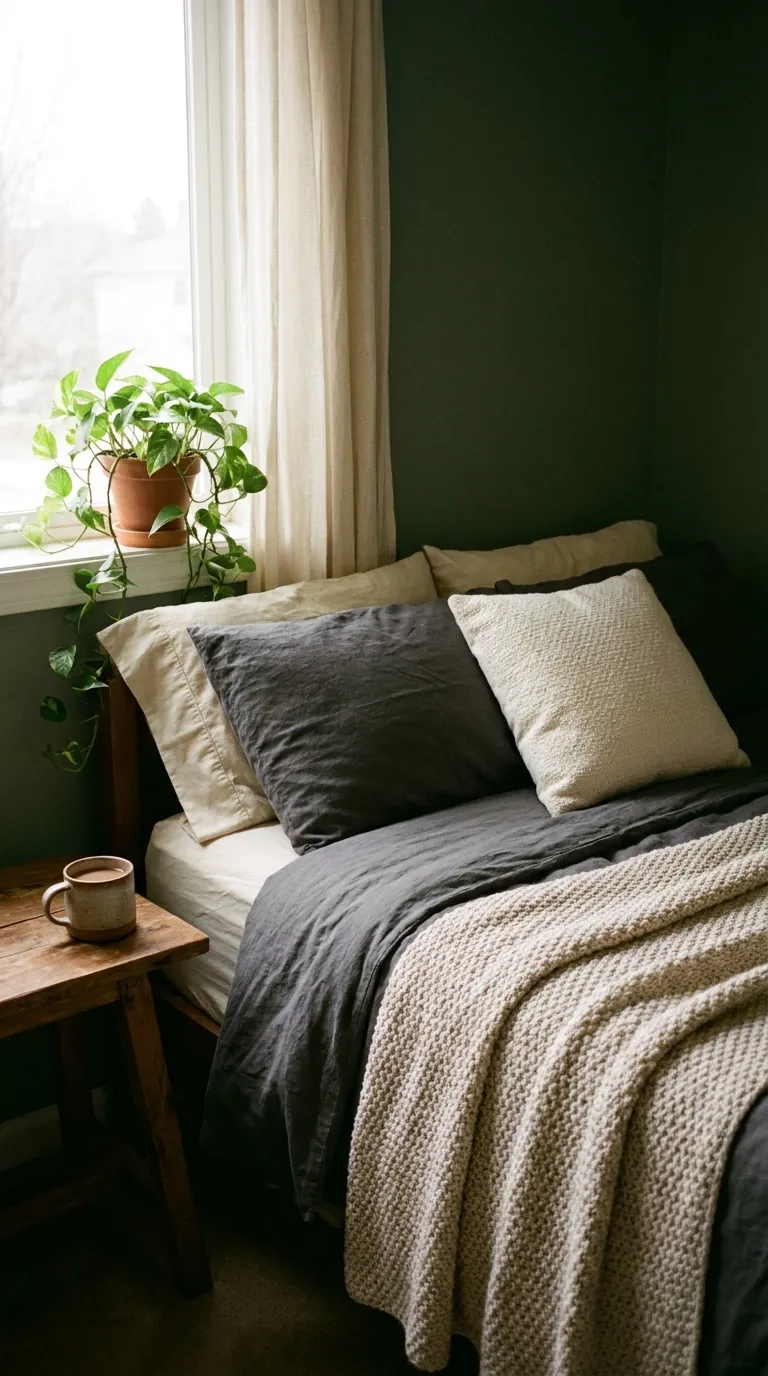
8. Charcoal and Cream Cocoon
Not every cozy bed has to be light. A deeper charcoal paired with cream creates a cocoon effect, especially in a bedroom with dim light or darker walls. It leans moody but stays soft when you keep the textures plush.
The Formula
- Anchor: a charcoal duvet cover with a soft brushed or flannel-type finish
- Support: cream sheets, two cream pillowcases, and a chunky oatmeal knit blanket
- Accent: one warm white pillow with a textured surface
Why It Works
The dark base makes the cream layers stand out, so the bed looks layered even with few pieces. The trade-off is that dark fabric shows lint and dust, and in a small, dim room too much charcoal can feel heavy, so keep the pillows and blanket light.
Space Needed
A dark duvet looks larger than a light one, so on a queen bed (about 60 by 80 inches) let the pillows and blanket carry the light colors to balance it. Leave a clear walkway on the side you use so the bulk doesn’t feel heavy.
Save or Invest
- Save on: the warm white accent pillow, because it is easy to replace if it gets marked
- Invest in: the charcoal duvet cover, because dark colors show fading faster and a better-made cover keeps its depth (check the care label)
Try it: build a bed by picking an anchor, support, and accent and see whether the look works.
9. Blush and Greige Soft Bed
Blush works best when it is muted and paired with greige, a gray-beige that keeps the pink from turning sweet. The result is a soft, quiet bed that suits warm light and wood tones. It’s a good option if you want a hint of color without a strong statement.
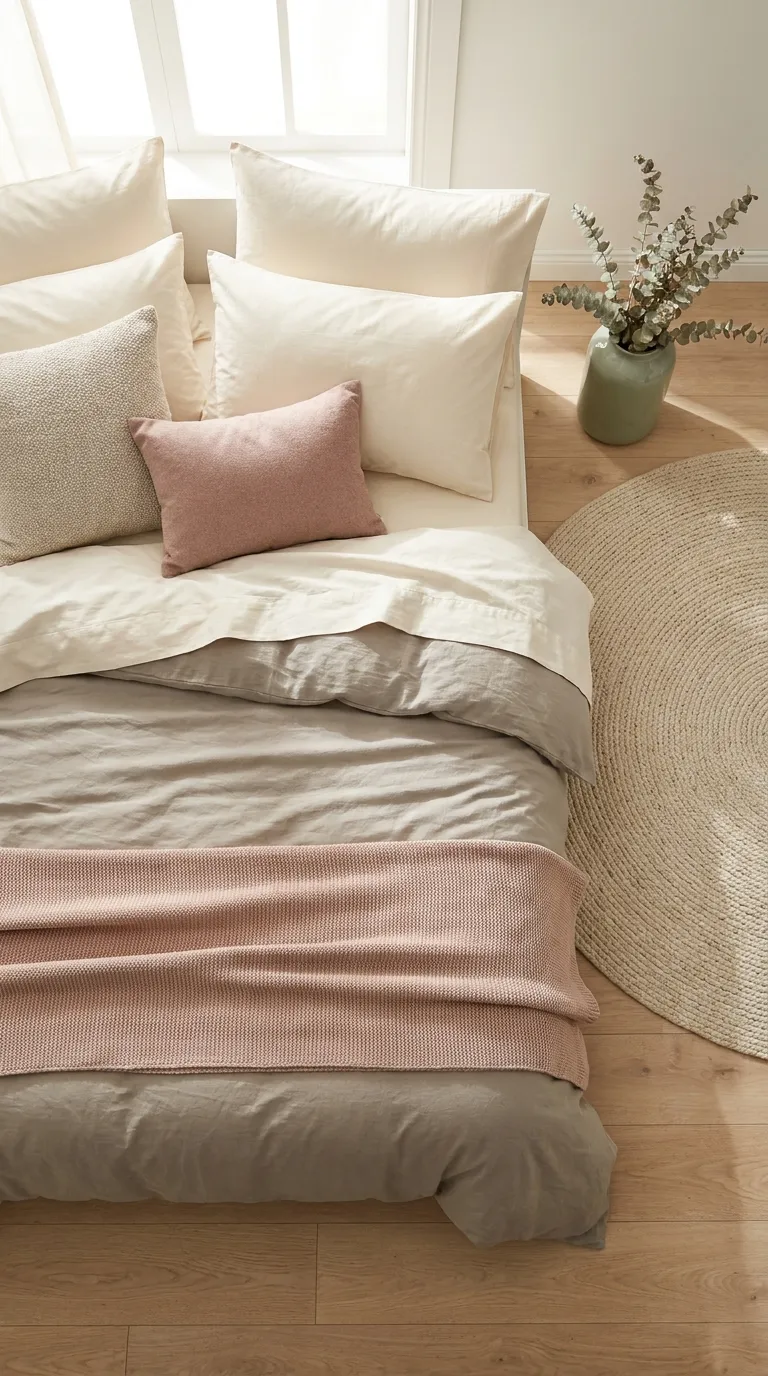
The Formula
- Anchor: a greige duvet cover in a soft cotton or cotton blend
- Support: cream sheets and a muted blush blanket folded across the foot
- Accent: two small pillows, one oatmeal and one in a dusty rose
Why It Works
Greige keeps the blush grounded, so the pink reads as a warm neutral instead of a color statement. The trade-off is that blush can look washed out in cool light, so pick one with a hint of warmth and check it in your room’s daylight.
Space Needed
A queen bed is about 60 by 80 inches, and a blanket across the foot adds visual weight there without taking floor space. Keep the accent pillows to two so the head of the bed doesn’t get crowded.
Save or Invest
- Save on: the blush blanket, because a lighter layer does the job and is easy to replace
- Invest in: the pillow inserts, because they hold their shape and keep the head of the bed looking tidy
10. Quilted Coverlet Cottage Bed
A quilted coverlet with simple stitching gives a bed a cottage feel without needing a full set of matching pieces. It is a layer you can fold back in warm months and pull up when the room cools. It suits a bedroom with white walls and a few wood pieces.
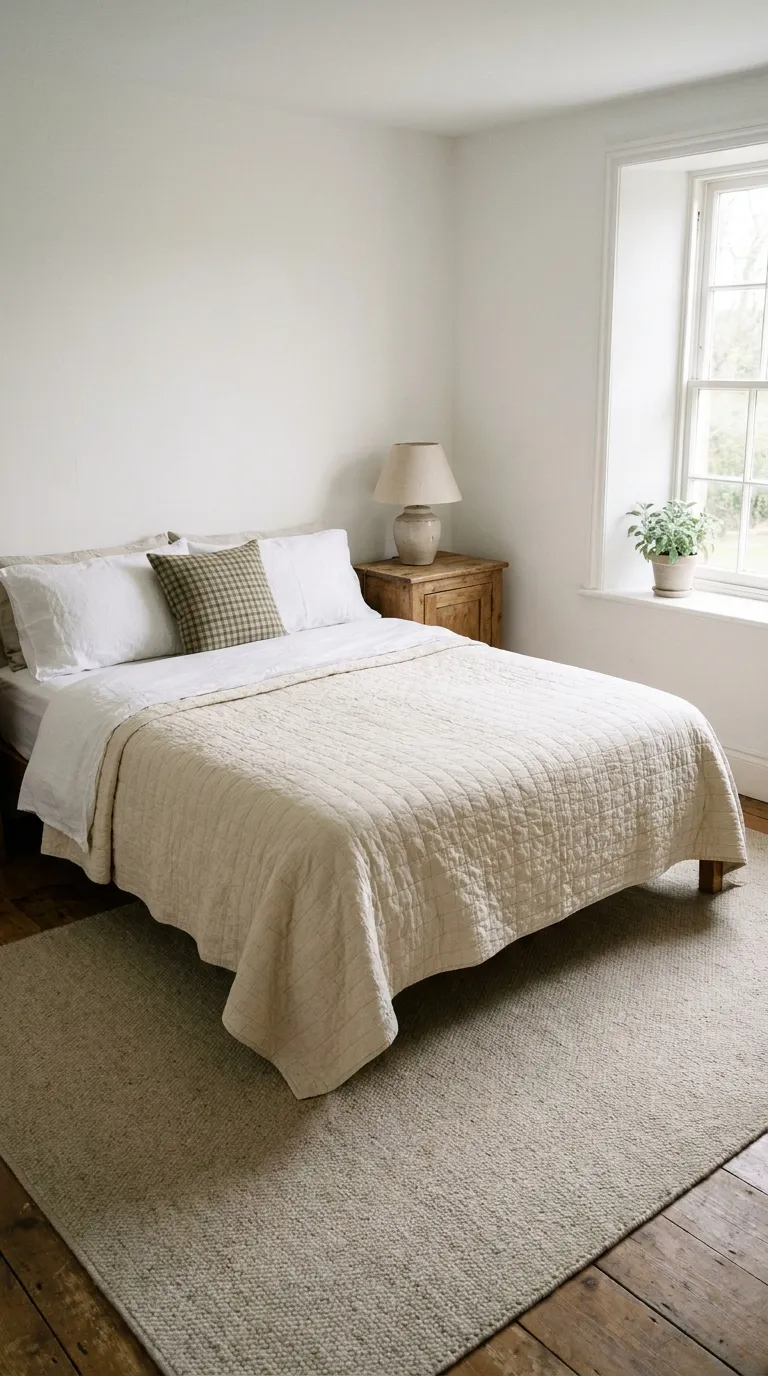
The Formula
- Anchor: a cream quilted coverlet with simple stitching, folded back by about a third
- Support: white or ivory sheets, two plain pillowcases, and one thin cotton blanket for cooler nights
- Accent: one pillow with a small, muted check or floral print
Why It Works
The coverlet works as both a top layer and a decorative layer, so the bed looks finished with fewer pieces. The trade-off is that a coverlet alone is lighter than a duvet, so you may want an extra blanket when the room gets cold.
Space Needed
Fold the coverlet back about a third to show the sheets, and it still drops roughly 10 to 12 inches on each side of a queen mattress (about 60 by 80 inches). Leave a little room beside the bed so a nightstand doesn’t touch the hanging fabric.
Save or Invest
- Save on: the printed pillow, because patterns are the first thing you may want to change
- Invest in: the coverlet, because the whole look depends on its stitching and drape
11. Velvet and Flannel Winter Bed
For colder months, pairing flannel with a touch of velvet makes the bed feel deeper without turning it into a pile. Flannel brings the brushed softness, and velvet adds a little sheen at the edges. It’s a good option when the room runs cooler and you want the bed to feel inviting.

The Formula
- Anchor: a flannel duvet cover or sheet set in oatmeal or cream
- Support: a chunky knit blanket in warm white and two plain pillowcases
- Accent: one velvet pillow in deep sage
Why It Works
Brushed fabric adds softness while a small amount of velvet gives the bed a bit of shine, so it looks rich without feeling heavy. The trade-off is that velvet crushes and shows marks, and flannel can pill with frequent washing, so keep velvet to one or two small pieces and check the care label.
Space Needed
Winter layers add height more than width, so a queen bed is still about 60 by 80 inches, but the pile of pillows and blankets sits higher. Check that the stack still clears a low window sill or a shelf above the headboard.
Save or Invest
- Save on: the velvet pillow, because one small piece gives you the sheen without a big commitment
- Invest in: the flannel, because a denser weave tends to hold up better through repeated washing
12. Small Room Full-Size Bed
In a small bedroom, the goal is a bed that feels cozy without taking over. A full-size bed with light, tonal layers keeps the room open and still gives you somewhere inviting to land. It suits studios, guest rooms, and anyone who shares the space with a desk.
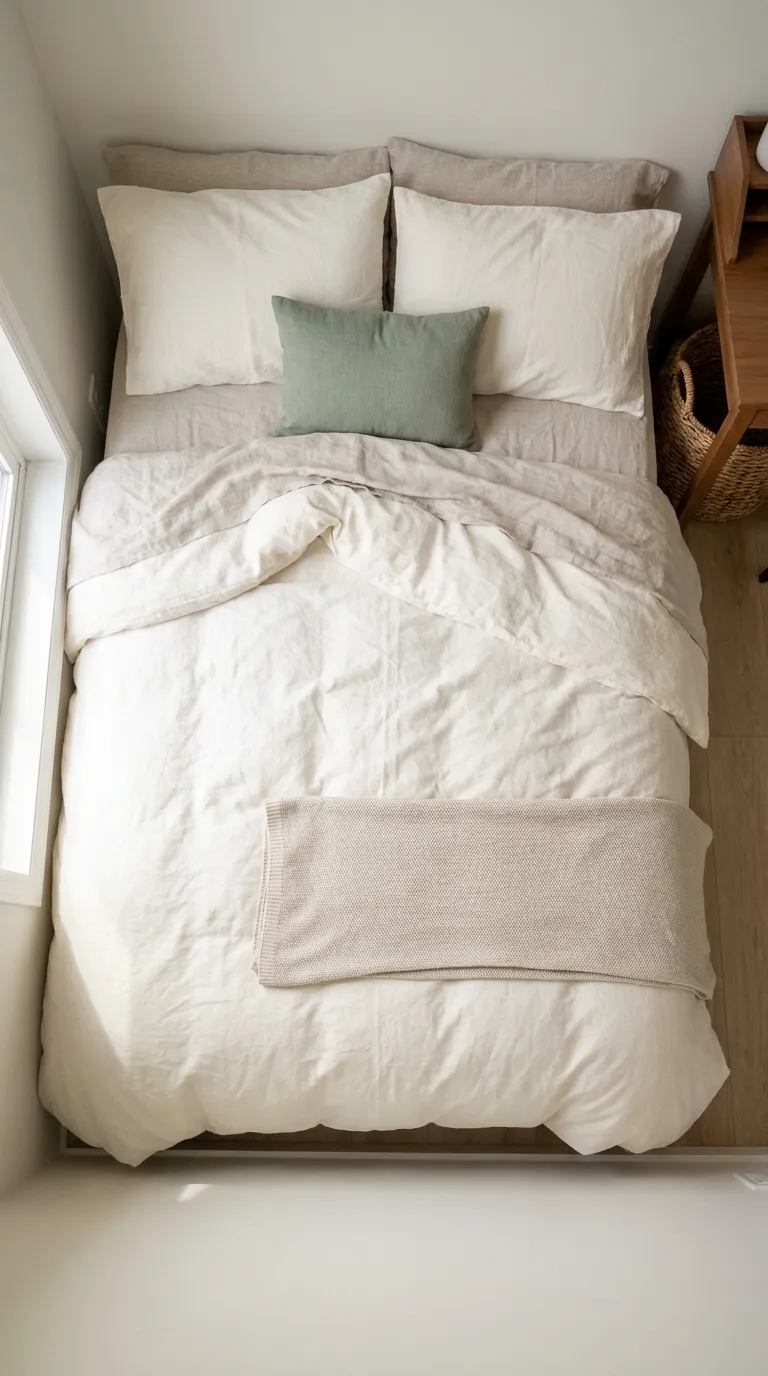
The Formula
- Anchor: a warm white duvet cover sized to fit a full mattress
- Support: oatmeal sheets, two pillows in matching cases, and a thin oatmeal blanket folded in half
- Accent: one small sage pillow
Why It Works
Light, tonal layers keep the bed from dominating the room, and fewer pieces mean less to move when you make the bed each day. The trade-off is less drama, so you rely on texture to keep the look from feeling flat.
Space Needed
A full mattress is about 54 inches wide and 75 inches long, which leaves more floor than a queen in the same room. Aim for at least 24 inches of clear space on one side, and skip bulky bed skirts or oversized pillows that eat into it.
Save or Invest
- Save on: the thin blanket, because a simple layer is easy to swap for another color
- Invest in: a duvet cover that fits the mattress closely, because a loose cover bunches up and makes a small room look messier
Quick Look Cheat Sheet
Use this table to compare all 12 looks at a glance and spot a cheaper way to start each one.
| Look | Anchor Piece | Budget Swap |
|---|---|---|
| Warm White Cloud Bed | Textured warm white duvet cover | Plain white cover, waffle throw |
| Oatmeal Linen Slouch Bed | Washed linen duvet cover | Linen-look cotton blend cover |
| Sage Green Quilted Set | Quilted sage coverlet | Plain sage coverlet, cream throw |
| Cream and Terracotta Warmth | Cream duvet cover | Clay-toned throw instead of blanket |
| Tonal Neutrals in Three Shades | Oatmeal duvet cover | Mix neutral sheets you already own |
| Dusty Blue Washed Cotton Bed | Dusty blue cotton cover | Plain cotton cover, cream blanket |
| Soft Boho Mix Bed | Plain cream duvet cover | One woven throw on basic bedding |
| Charcoal and Cream Cocoon | Charcoal brushed duvet cover | Charcoal cover, cream knit throw |
| Blush and Greige Soft Bed | Greige duvet cover | Greige cover, one blush blanket |
| Quilted Coverlet Cottage Bed | Cream quilted coverlet | Light quilt, one printed pillow |
| Velvet and Flannel Winter Bed | Flannel duvet cover or sheet set | Flannel sheets, one velvet pillow |
| Small Room Full-Size Bed | Warm white full-size cover | Two pillows, one thin blanket |
The Formula Behind These Looks
Every bed above follows the same pattern: one anchor, a couple of supporting layers, and one accent. Here is why it keeps working.
Why One Anchor Beats Five Competing Pieces
When one piece, usually the duvet cover or coverlet, takes the lead, the eye knows where to land. Five pieces of equal weight make the bed feel busy even if every color matches.
Why the Best Bedding Sets Repeat a Color or Material
The best bedding sets usually repeat one shade or one fabric in two places, such as oatmeal on the duvet and again on a small pillow. That repetition makes the bed look planned rather than pieced together.
Mix Textures Before You Mix Patterns
Waffle, quilting, linen, velvet, and knit all add interest without a printed pattern. If you want a pattern, limit it to one small piece, like a single striped pillowcase, so the textures stay in charge.
Match Scale to the Bed and the Room
A big, heavy duvet on a twin bed looks oversized, and a thin throw on a queen can look lost. Choose pieces sized to your mattress, and keep the number of layers in proportion to the room.
Common Bedding Mistakes Worth Skipping
Most of these are easy to fix, and almost everyone makes at least one of them.
Buying Before Measuring the Mattress
A cover that’s too small bunches, and one that’s too large pools on the floor. Measure width, length, and depth first, then match the size on the product label.
Too Many Small Pillows
A pile of small pillows takes time to move every day and can hide the look you worked on. Aim for two sleeping pillows plus no more than two accent pieces.
Blocking Walking Space
Thick layers and a bulky bench at the foot can quietly eat into your path to the door. Before you add pieces, sketch your furniture layout and keep at least 24 inches of clear floor on the side you use.
Skipping the Care Label
Pretty bedding can shrink or fade if it’s washed the wrong way. Read the care label before the first wash and follow it.
Final Tips for Success
Start with the Anchor Piece
Choose the duvet cover or coverlet first, then build the rest around it. It’s much easier to add a throw and a pillow to a finished base than to fix a mismatched bed with extras.
Basics Worth Owning
- Two sets of sheets so one is always clean
- A duvet insert or comforter that suits your climate
- One duvet cover or coverlet in a neutral shade
- Two sleeping pillows
- A mattress protector
- One throw in a calm color
Rotate Sets by Season
Keep a lighter layer for warmer months and bring in flannel, velvet, or knit as it gets colder. Swapping just the anchor or the throw is often enough to refresh the whole room.
Wash and Care the Smart Way
Wash new sets before first use unless the label says otherwise, and follow the temperature guidance. Rotating two sets of sheets helps each one last longer.
Conclusion
A bed that looks cozy is usually not about owning more. It’s about choosing one clear anchor, adding a couple of layers that make sense with it, and finishing with a small detail you enjoy.
If you’re still deciding, start with the best bedding sets look that matches the colors you already have. A simple swap, like a new throw or a different pillowcase, can change how the whole bedroom feels.
Pick one look, measure your mattress, and build it layer by layer. You don’t have to do it all at once.
Save this guide for the next time you rearrange the room or want to refresh your bed.