
You step onto your balcony with a coffee and it still feels like a leftover strip of concrete. Everyone says to cover the floor, but the artificial grass vs outdoor rug question is exactly where most people get stuck.
You don’t need a big budget or a big balcony to get this right. You need a floor that suits your weather, your daily habits, and your lease.
I’ve broken the choice into six everyday factors, and I’ll tell you plainly where each option wins and where it falls short.
At a Glance
Here is the quick version before we go factor by factor.
| Factor | Artificial Grass | Outdoor Rug |
|---|---|---|
| Size | Covers the whole floor, cut to fit | Covers a zone or most of the floor |
| Upkeep | Rinse, brush, and clear debris | Shake out, rinse, dry fully |
| Flexibility | Semi-permanent once cut and laid | Roll it up and swap anytime |
| Best for | Sunny balconies with good drainage | Renters, tiny balconies, frequent movers |
In general, grass suits a balcony you plan to keep for a while, and a rug suits a flexible, rented, or changing space. The right answer still depends on your own floor, so keep your measurements handy.
1. Look and Feel Underfoot
When you live alone, the balcony is often your only outdoor spot, so how it feels under bare feet decides whether you actually use it. Texture and color set the mood before you add a single chair.
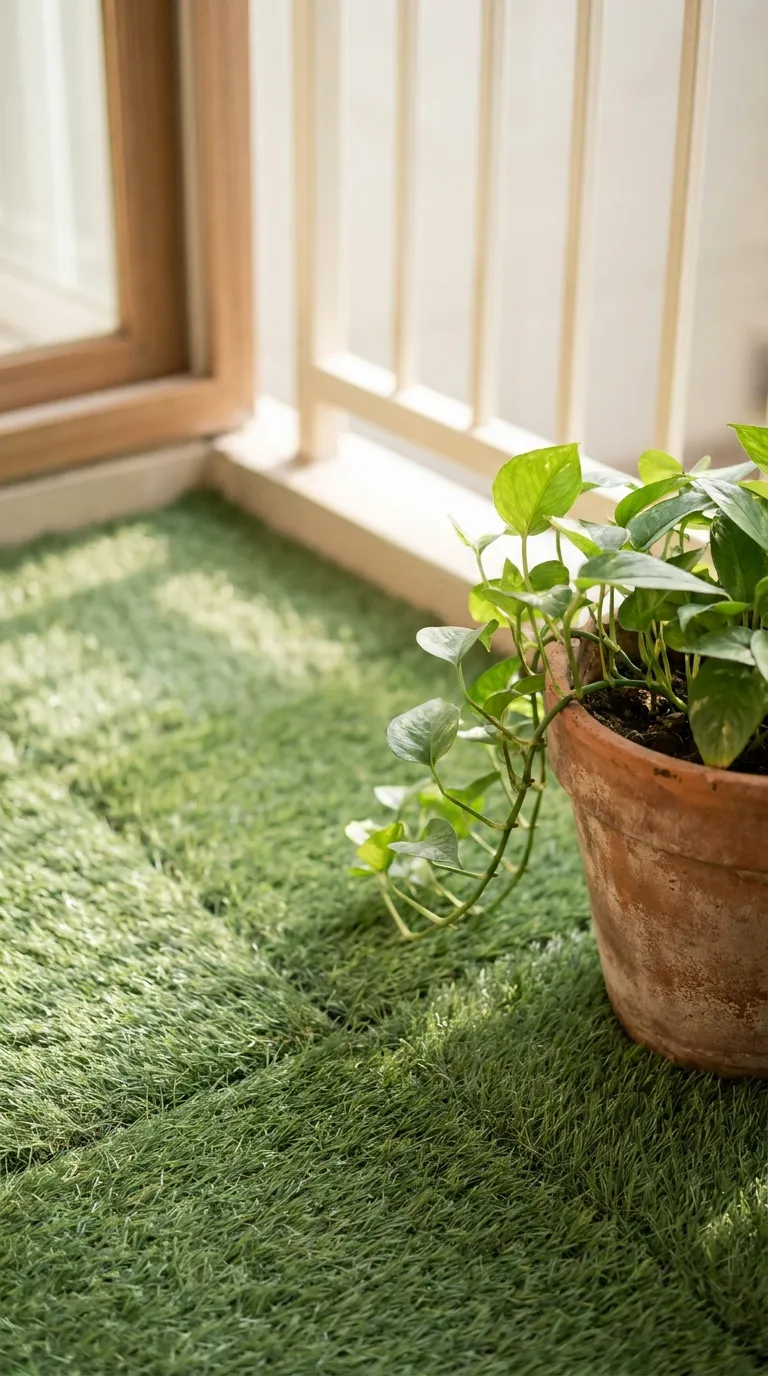
Artificial Grass
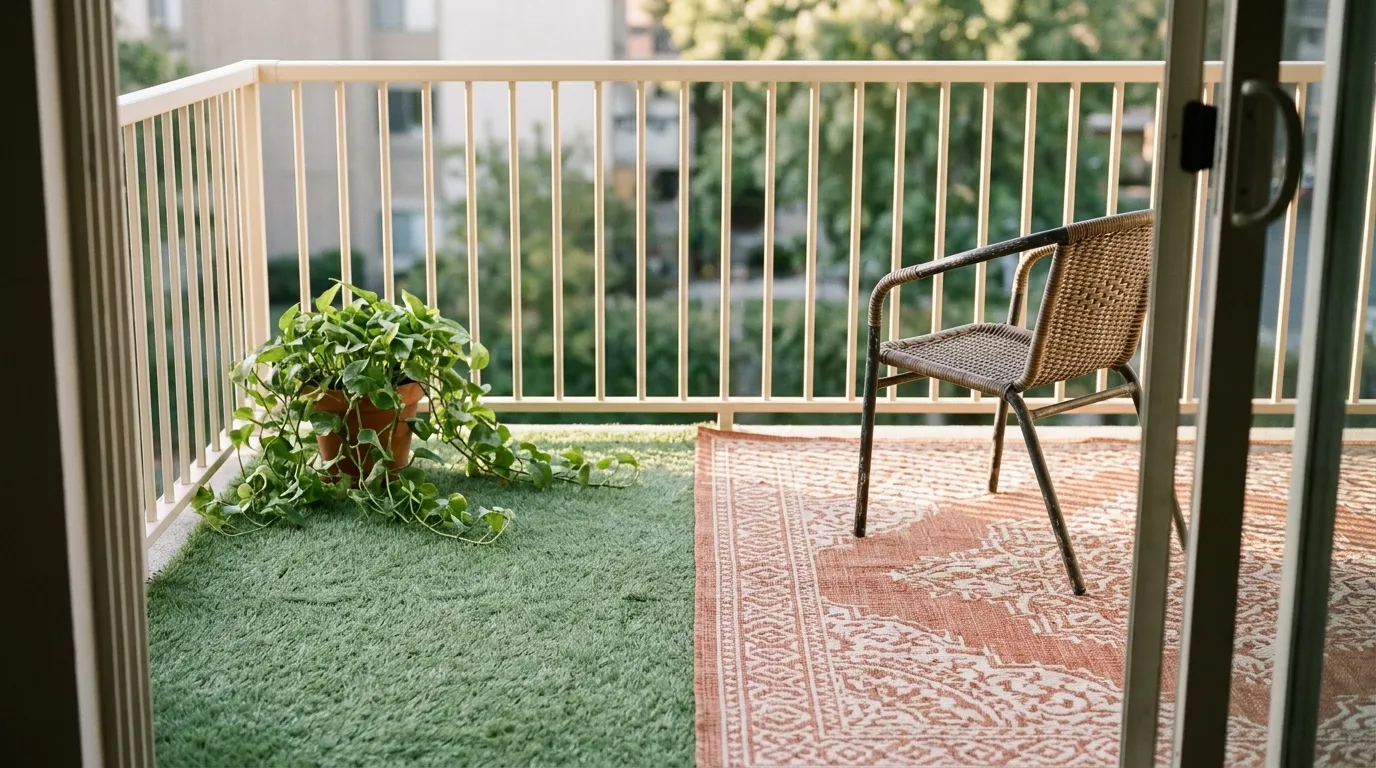
Grass gives you a green, lawn-like look that makes a bare concrete floor feel like a tiny garden, even when you view it from indoors. The texture is uniform and a little firmer than real turf, and some surfaces warm up in direct sun, so test a sample barefoot before you commit.
Outdoor Rug
A rug adds a soft, woven layer and lets you match colors and patterns to your indoor style, which helps the balcony read as an extension of your room. The trade-off is that a rug rarely covers every corner, so some bare floor usually shows around the edges.
Which Wins
It depends: choose grass if you want a green, garden feel, and choose a rug if you want a cozy, indoor-style look.
2. Coverage and Sizing
Balcony floors are often narrow or oddly shaped, so how much each option covers changes how big the space feels. Measure the length and width of the floor first, because every answer in this section depends on those two numbers.
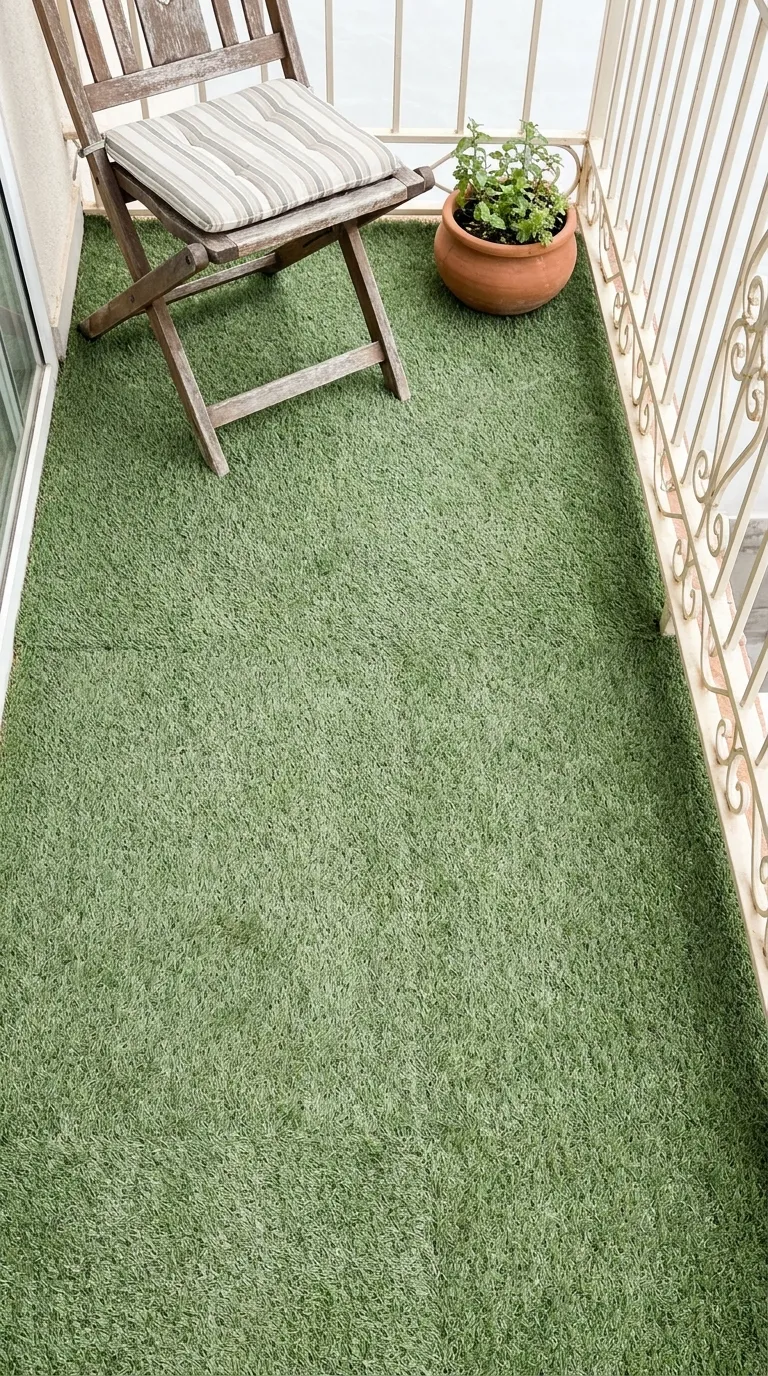
Artificial Grass
Grass is cut to fit, so it can run edge to edge and make even a narrow balcony read as one continuous surface. That full coverage also tidies awkward corners, but you need accurate measurements before you cut anything, and a mistake is hard to undo.
Outdoor Rug
A rug covers a zone rather than the whole floor, which suits a small chair-and-table setup. If you’re wondering what size rug to buy, measure the floor and leave a strip of bare floor around the edges so the rug looks planned instead of cramped.
Which Wins
Artificial grass wins for full, edge-to-edge coverage, and a rug wins when you only need to anchor one seating spot.
Pick a room type and enter your length and width to see a standard rug size, then compare it with your balcony floor.
3. Cleaning and Upkeep
Upkeep decides whether the balcony stays a favorite spot or turns into another chore. Think about how often you really want to sweep, rinse, or shake things out after a busy week.
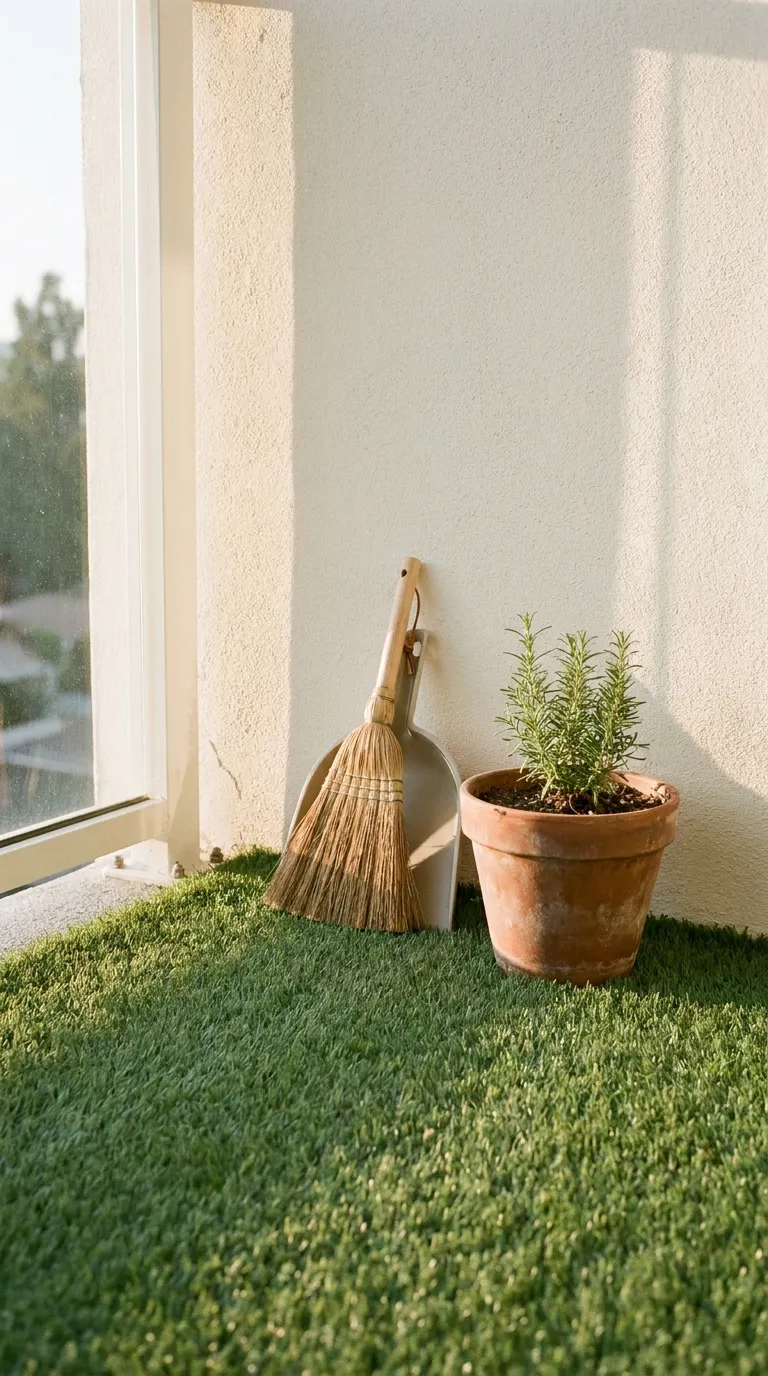
Artificial Grass
Grass is usually cleaned with a quick sweep or a gentle rinse, and the blades are easy to brush when leaves or dust settle on top. It works best on a floor that drains, because standing water and trapped debris can leave it damp and musty, so check the product’s care instructions.
Outdoor Rug
A rug needs to be shaken out, swept, or rinsed, and then it has to dry fully before you put furniture back. Dirt works its way into the weave, and a rug that stays damp can smell, so check the care label before you hose it down.
Which Wins
Artificial grass wins for quick rinsing on a floor that drains, and a rug wins only if you like lifting it to sweep underneath.
4. Drainage and Weather
Balconies get sun, rain, wind, and sometimes snow, so your floor has to cope with whatever the sky sends. Look at how water leaves your balcony before you choose, because drainage matters more than looks here.
Artificial Grass
Many grass products have drainage holes in the backing, so rain can pass through, but that only helps if your balcony floor lets the water run off. Debris and standing water can collect underneath, so lift a corner now and then and follow the product’s instructions.
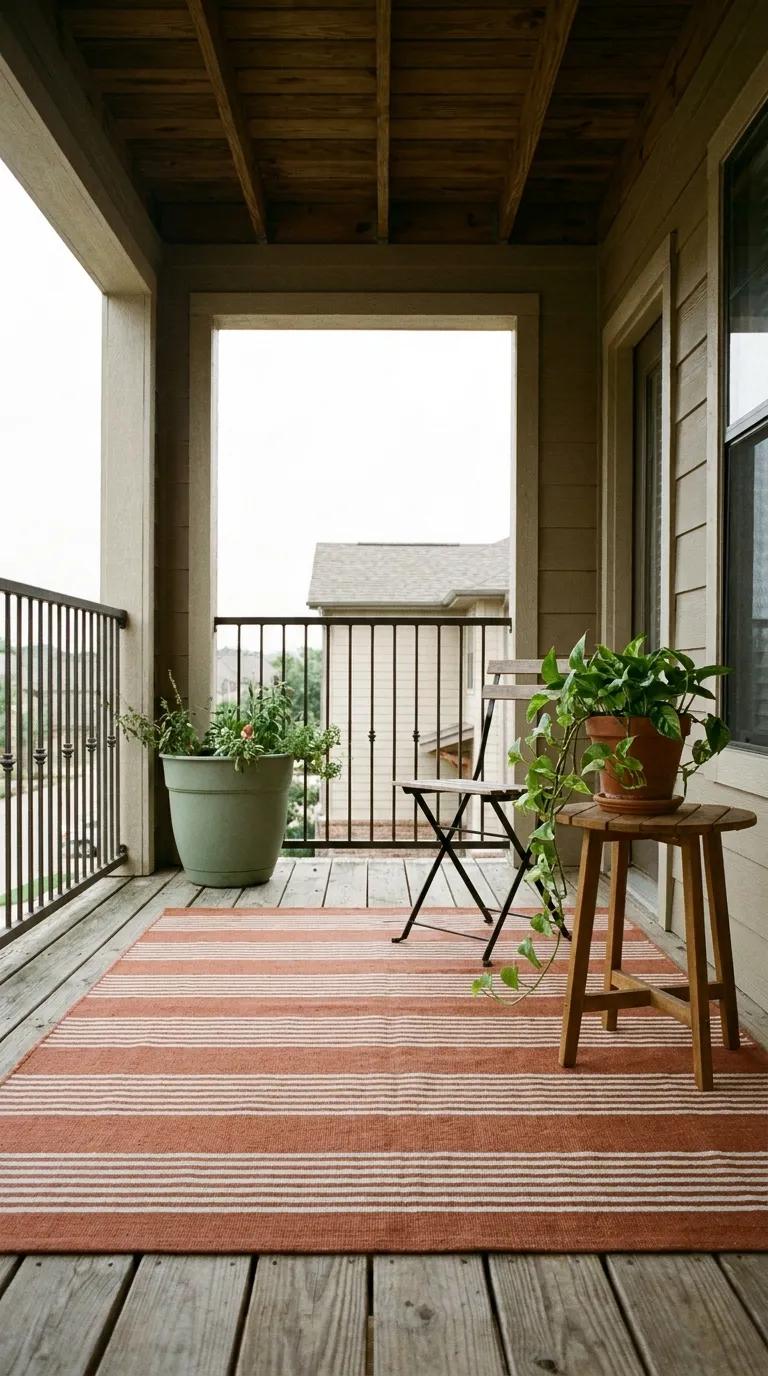
Outdoor Rug
A rug soaks up water and stays wet longer, especially in shade, so it suits a covered balcony or one where you can lift it out when rain is coming. Choose a rug made for outdoor use, and check the care label before you leave it out in the weather.
Which Wins
It depends: choose grass on an open balcony with free-flowing drainage, and choose a rug on a covered or sheltered balcony where you can lift it out.
Renter Note
Never cover or block the floor drain, and check your lease or building rules for anything that changes how water leaves the balcony.
Try it: answer each question about your balcony and see whether grass or a rug fits better.
5. Installing Without Drilling
If you rent, or you simply don’t own tools, you want a floor that goes down without drilling into anything. How you install each option shows how permanent it really is.
Artificial Grass
Grass can be laid loose or as interlocking tiles that sit on the floor, but cutting it to fit needs a sharp blade and careful measuring. If you use adhesive or tape, it can leave residue, so follow the product’s instructions and test a small hidden patch first.
Outdoor Rug
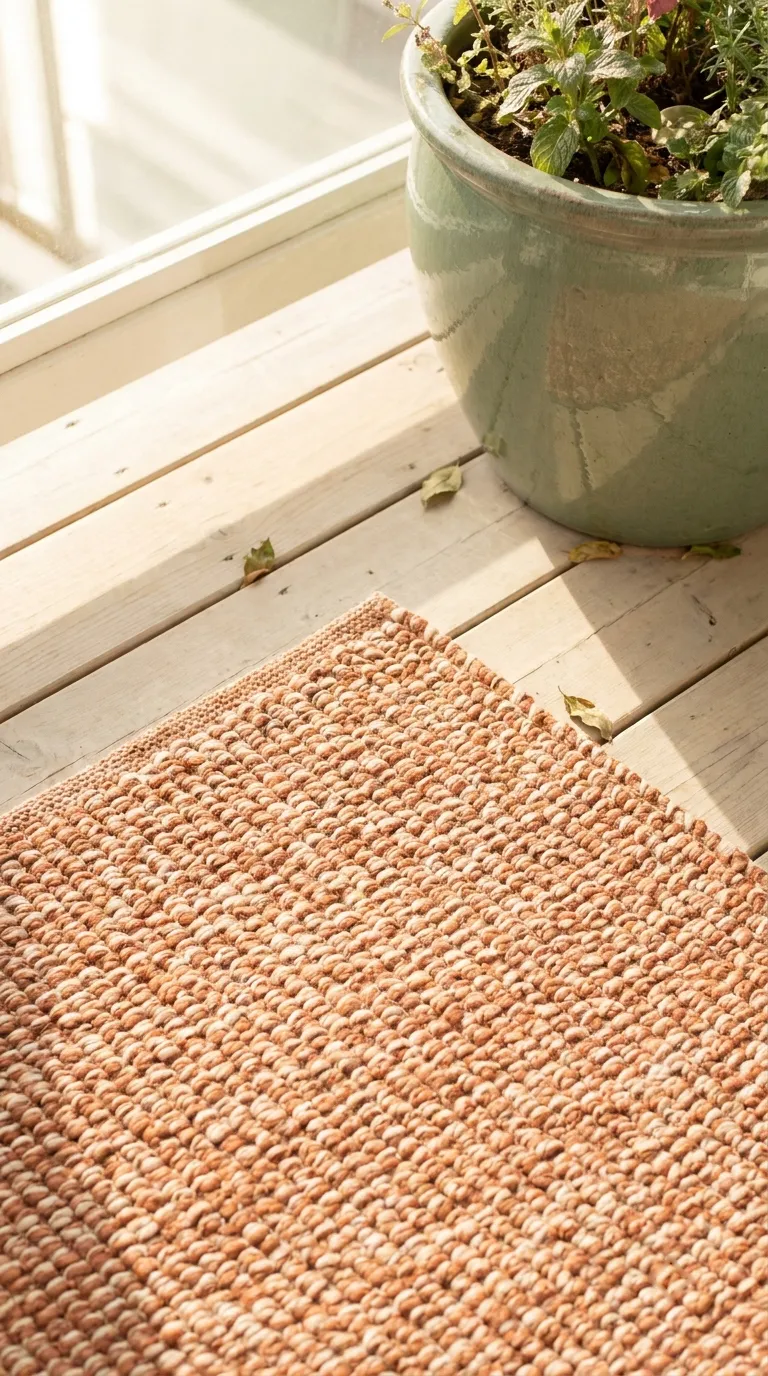
A rug unrolls and sits on the floor with no tools at all. A non-slip pad underneath keeps the edges from curling or sliding, and a chair or planter on a corner helps in a breezy spot.
Which Wins
Outdoor rug wins for a no-tools, no-residue setup that you can change in a minute.
Renter Note
Check your lease before you use adhesive, tape, or anything that bonds to the balcony floor, and ask your landlord if the rules aren’t clear.
6. Moving Out Later
A balcony floor you can’t take with you is effort left behind. Think about your next move now so you aren’t stuck with something that only works in one place.
Artificial Grass
Loose or tiled grass can be lifted and rolled or stacked, but a piece cut to your balcony’s shape may not suit the next one. It makes the most sense as a keeper if you plan to stay put for a good while.
Outdoor Rug
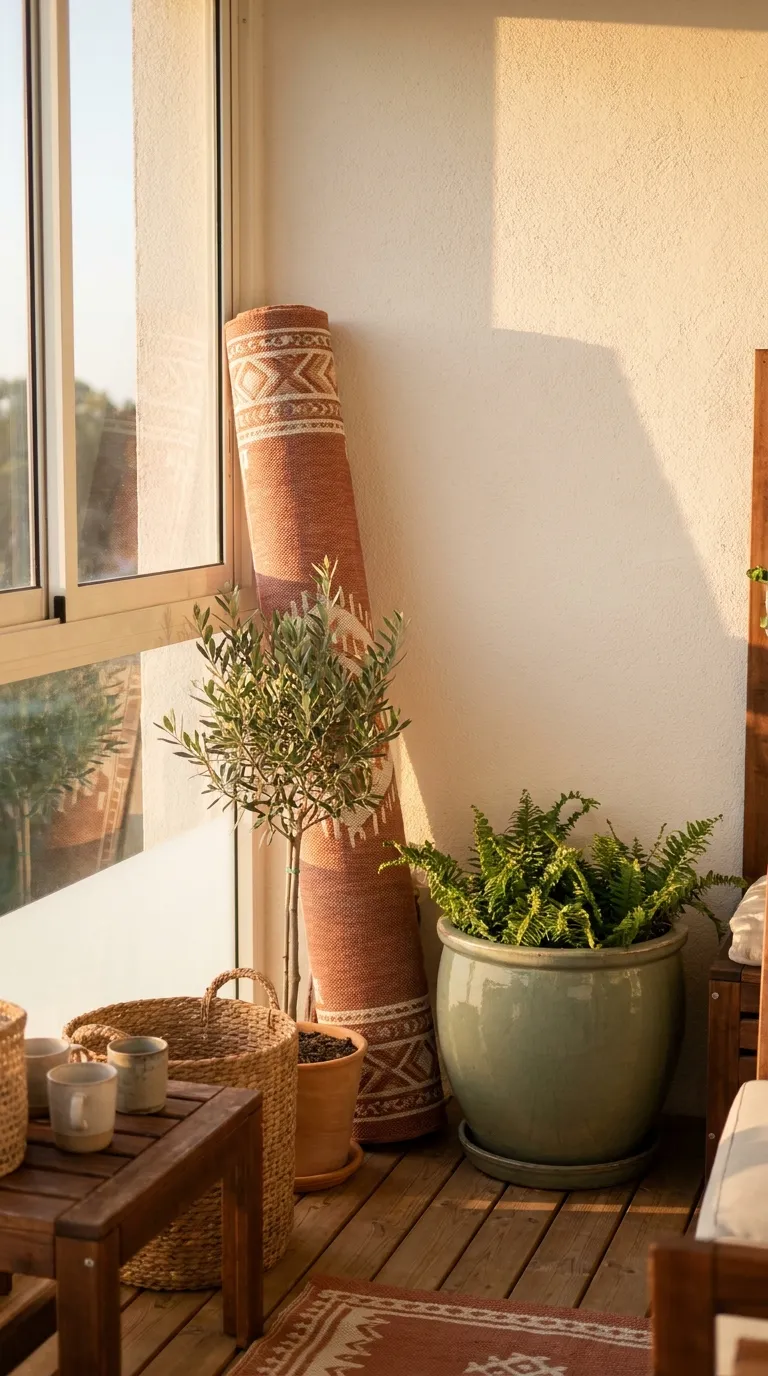
A rug rolls up, travels with you, and can find a new spot in your next place, even a smaller one. Before you buy, measure your door and stairwell and check if it fits when rolled, since long rolls can be awkward to carry.
Which Wins
Outdoor rug wins for anyone who might move, because it travels without any fuss.
Renter Note
Take photos of your balcony floor before you install anything, and check your lease for rules about restoring the floor when you move out.
Quick Decision Cheat Sheet
Here is every factor side by side, so you can scan for the ones that matter most to you.
| Criterion | Artificial Grass | Outdoor Rug | Better For |
|---|---|---|---|
| Look and Feel Underfoot | Green, lawn-like, uniform | Soft, woven, patterned | Depends on your style |
| Coverage and Sizing | Edge to edge, cut to fit | Covers a zone | Grass for full floors |
| Cleaning and Upkeep | Quick rinse if floor drains | Shake out, dry fully | Grass for low effort |
| Drainage and Weather | Needs a freely draining floor | Lift out when it rains | Depends on shelter |
| Installing Without Drilling | Loose or tiles, possible residue | Unroll and lay flat | Rug for renters |
| Moving Out Later | Cut shape may not reuse | Rolls up and travels | Rug for movers |
How to Decide in Five Minutes
Run these three quick tests, and the answer usually becomes clear.
Measure the Floor
Measure the length and width of your balcony and note any corners or drains. A full, even floor suits grass, while a narrow or cluttered floor often suits a rug that anchors one spot.
Think About Your Next Move
Ask yourself if you’ll live here for a long time or might move soon. If a move is possible, pick the option that rolls up and goes with you.
Picture Your Daily Use
Imagine how you’ll use the balcony on a normal day, whether it’s a morning coffee, a few plants, or a spot to read. If you’d rather not rinse and brush, a rug you can shake out may suit you better.
Who Should Choose What
Your situation matters more than any rule, so find the one that sounds like yours.
If You Rent
Choose an outdoor rug. It goes down without drilling or adhesive, it leaves the floor as you found it, and it comes with you when your lease ends.
If Your Balcony Is Open and Drains Well
Choose artificial grass if you plan to stay for a good while and your floor lets water run off. It gives full coverage and a garden feel, and you should still check your lease first.
If You Move Often
Choose an outdoor rug. A cut piece of grass is shaped for one floor, and a rug can be reused in a new spot.
Final Tips for Success
Artificial Grass vs Outdoor Rug: One Last Check
Before you buy, picture the worst weather your balcony gets and ask which option you’d be happy to deal with then. If the answer is “neither,” add a small, easy-to-lift rug and keep the rest of the floor bare.
Test Before You Commit
If you can, try a small sample of grass or a small rug before you cover the whole floor. Stand on it barefoot, leave it out for a few days, and see how it handles light and rain.
Basics Worth Owning for a Small Balcony
A few simple tools make either option easier to live with:
- Tape measure
- Hand broom and dustpan
- Non-slip rug pad
- Lightweight folding chair
- Small potted plant
If pets could matter, check that a plant is safe for pets before buying.
Keep the Layout Simple
Leave a clear path to the door and keep furniture light enough to move when you clean. A simple layout makes either floor feel bigger.
Conclusion
The artificial grass vs outdoor rug choice is really a question about your lease, your drainage, and how often you want to clean.
For most people living alone in a small or rented space, an outdoor rug is the safer pick. It goes down without tools, it lifts out for cleaning, and it moves with you.
The exception is an open balcony that drains well and that you plan to keep for a while. There, artificial grass gives you full coverage and a green, garden look.
Save this guide for the next time you rearrange the balcony.