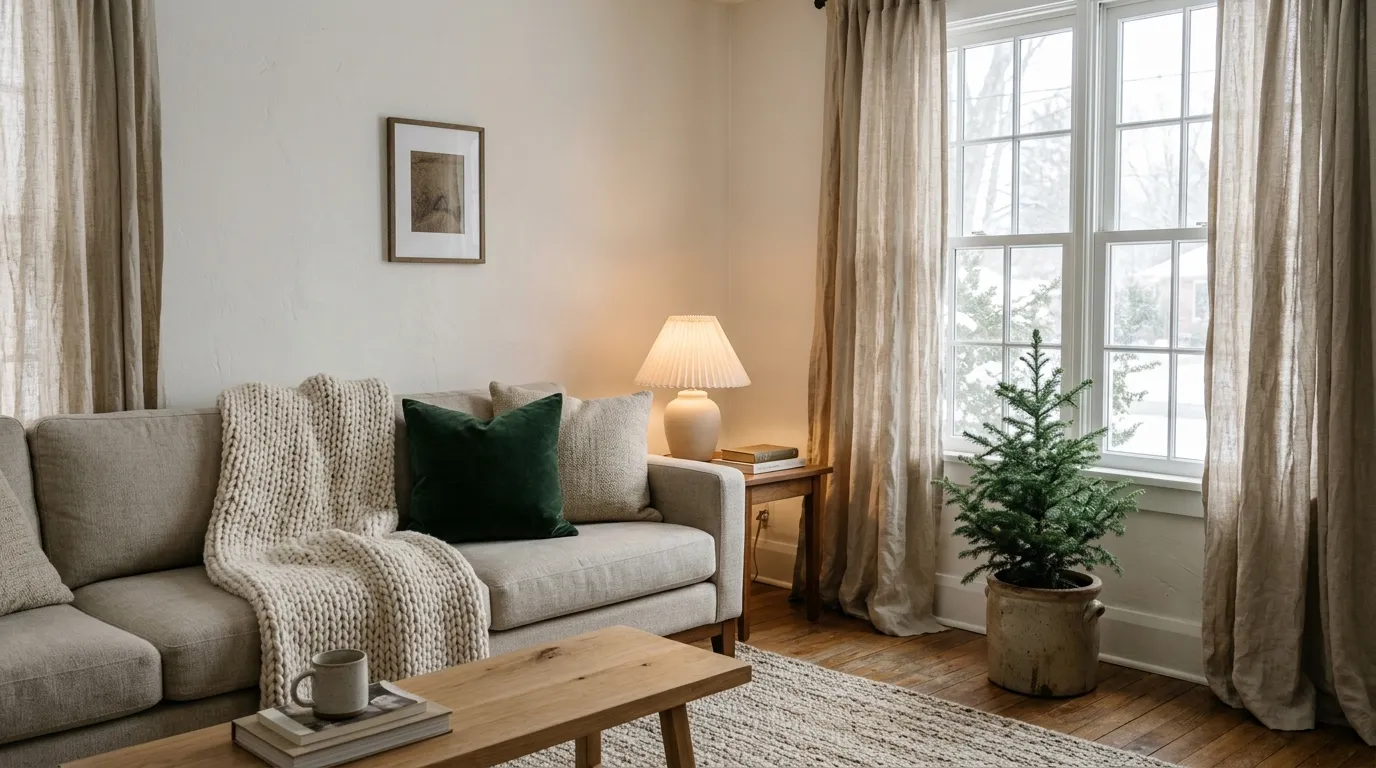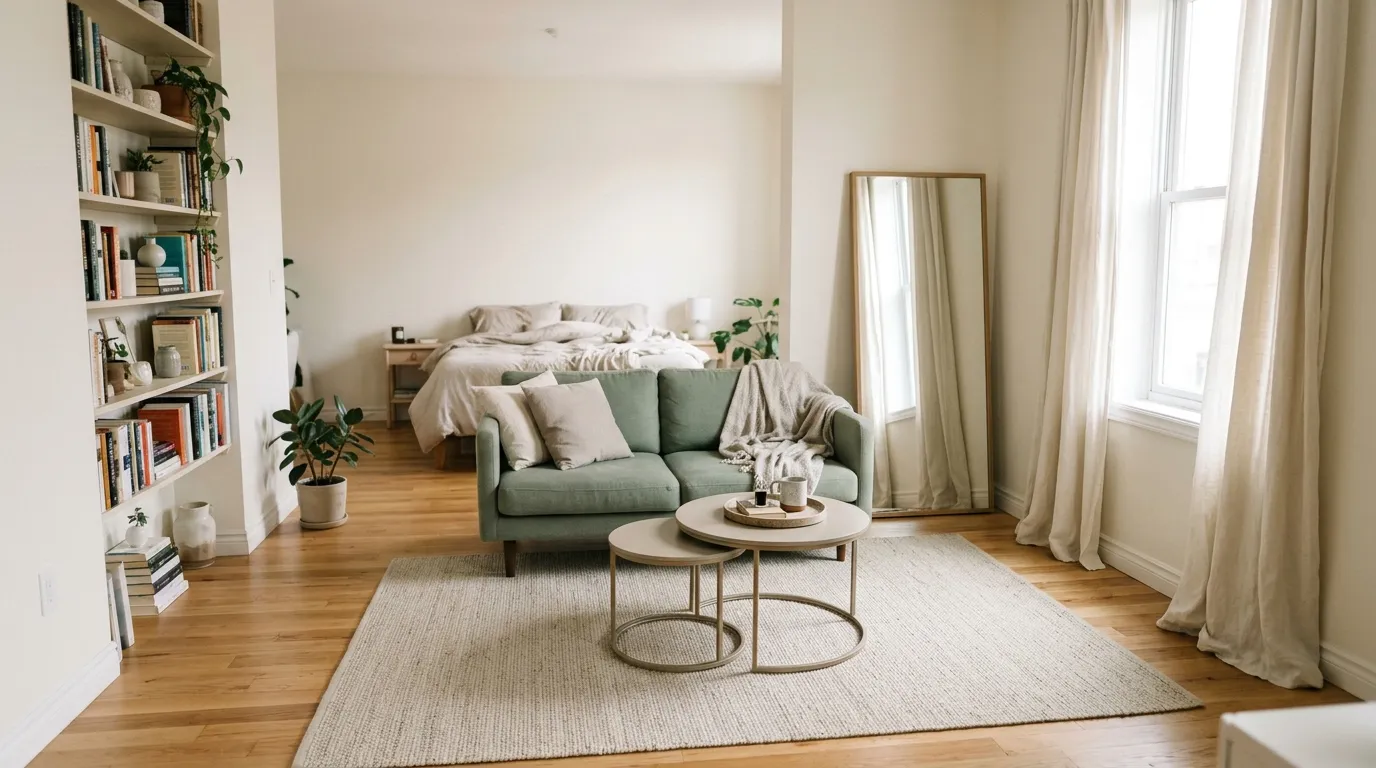

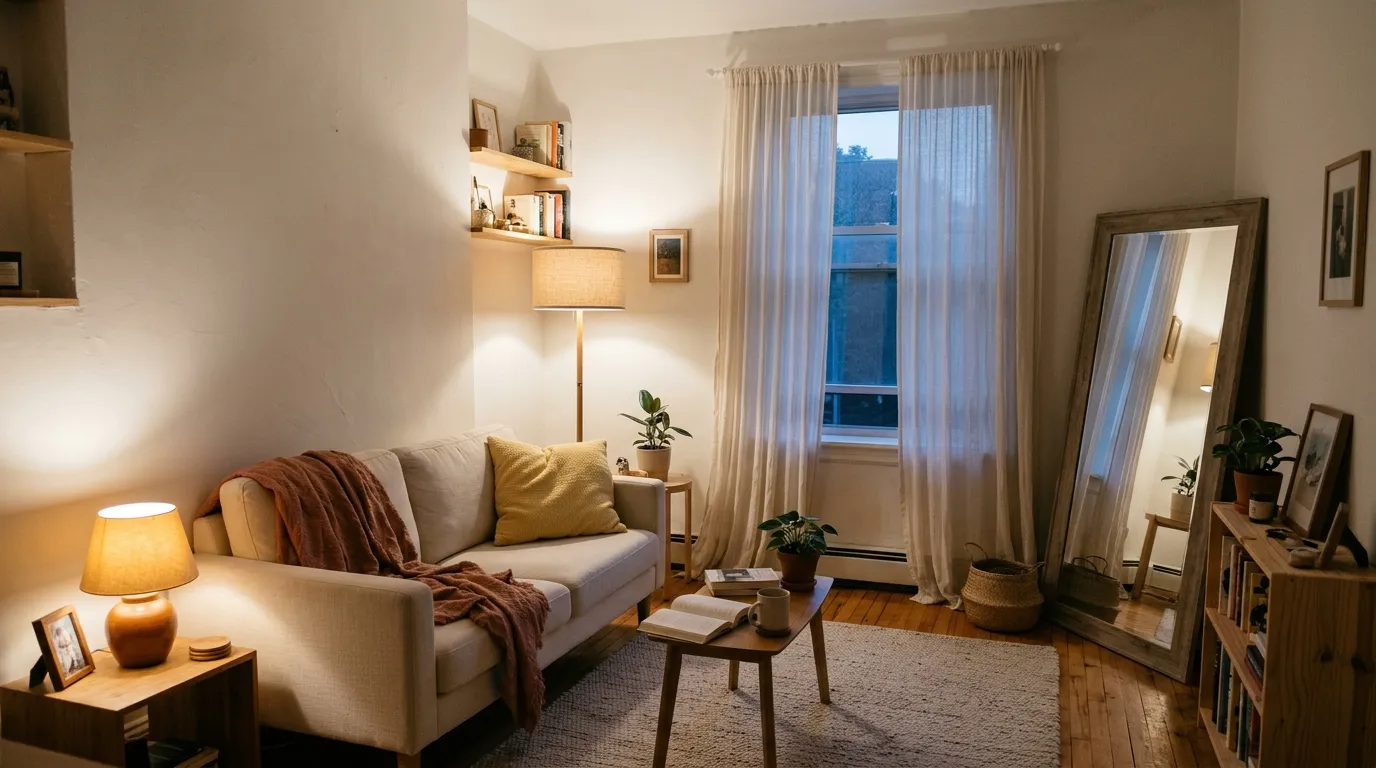
You get home in the late afternoon and the living room already looks gloomy, even with the ceiling light on. If your goal is to decorate dark apartment spaces, the fix is rarely just a brighter bulb.
What you actually need is a simple plan: find the dark spots, add light in layers, and use color, mirrors, and fabric to carry that light around the room. None of it requires a renovation.
I’d start by learning how light moves through your space, then build up from there in six easy steps.
Before You Start: Materials and Time
- Time: about one weekend, or a few short evenings
- Difficulty: easy
- Budget level: budget-friendly
- Renter-friendly: yes, with a lease check before painting or drilling
What You’ll Need
- Painter’s tape and a notepad
- Plug-in lamps in two or three heights
- Warm white bulbs
- A leaning mirror
- Sheer curtains
- A light rug or throw
- Paper paint swatches
1. Check How Light Moves Through the Room
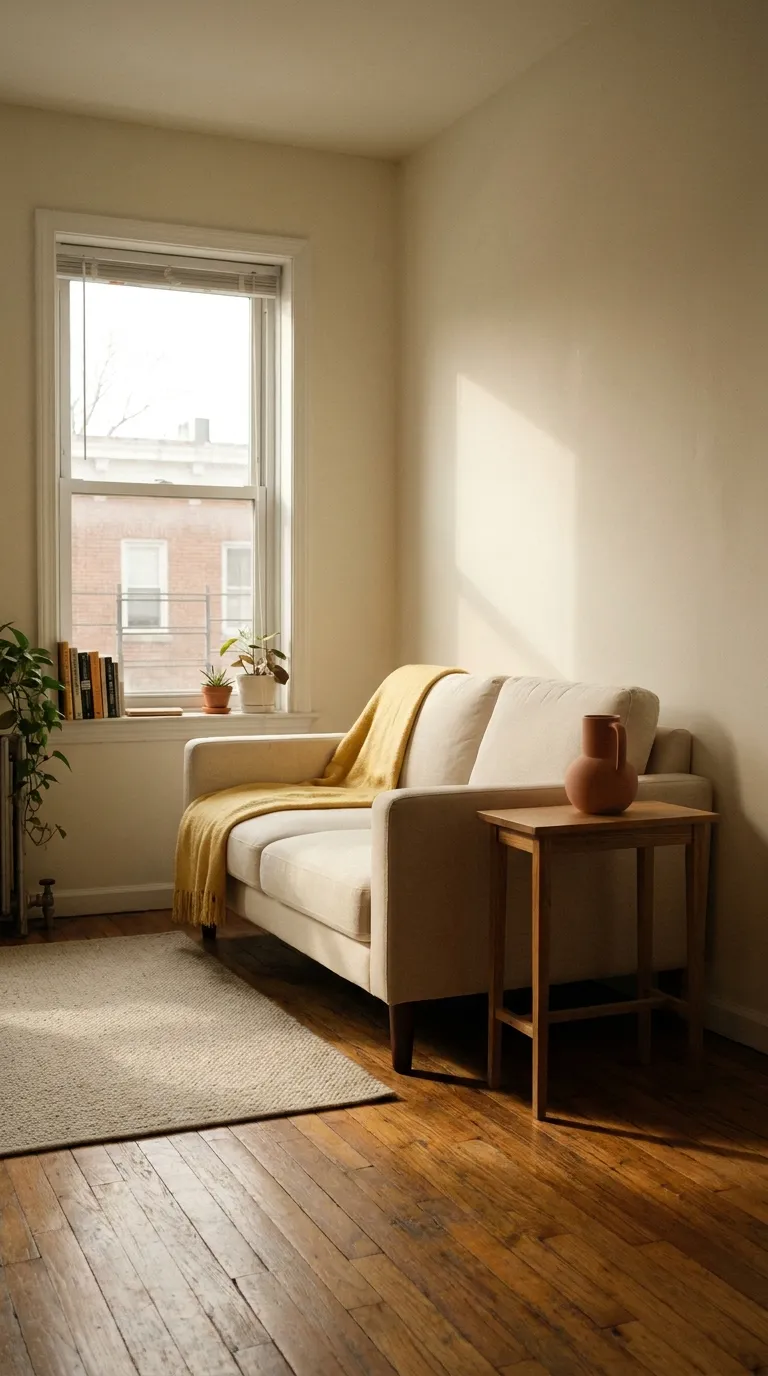
Before you buy a single lamp, find out where your room is actually dark. Most rooms have one bright patch and one stubborn corner, and decorating the wrong spot wastes time and money.
Skipping this step is how a mirror ends up facing a blank wall and a new lamp lands in the one corner that already gets daylight.
How to Do It
- Stand in the room at three times of day: morning, midday, and evening.
- Note which wall or corner stays darkest each time.
- Note where the window light lands on the floor and walls.
- Sketch a rough floor plan with the window, the door, and the dark zones marked.
- Switch on your current lights and mark the zones that still look dim.
Why It Works
A quick map shows you where light is missing, so every later step goes exactly where it helps most.
Common Mistakes to Avoid
- Checking the room only once, at its brightest hour
- Judging the room with the ceiling light on
- Treating the whole room as dark when only one corner is
A Simple Rule to Remember
Fix the darkest zone first, then work outward.
2. Layer Warm Lamp Light
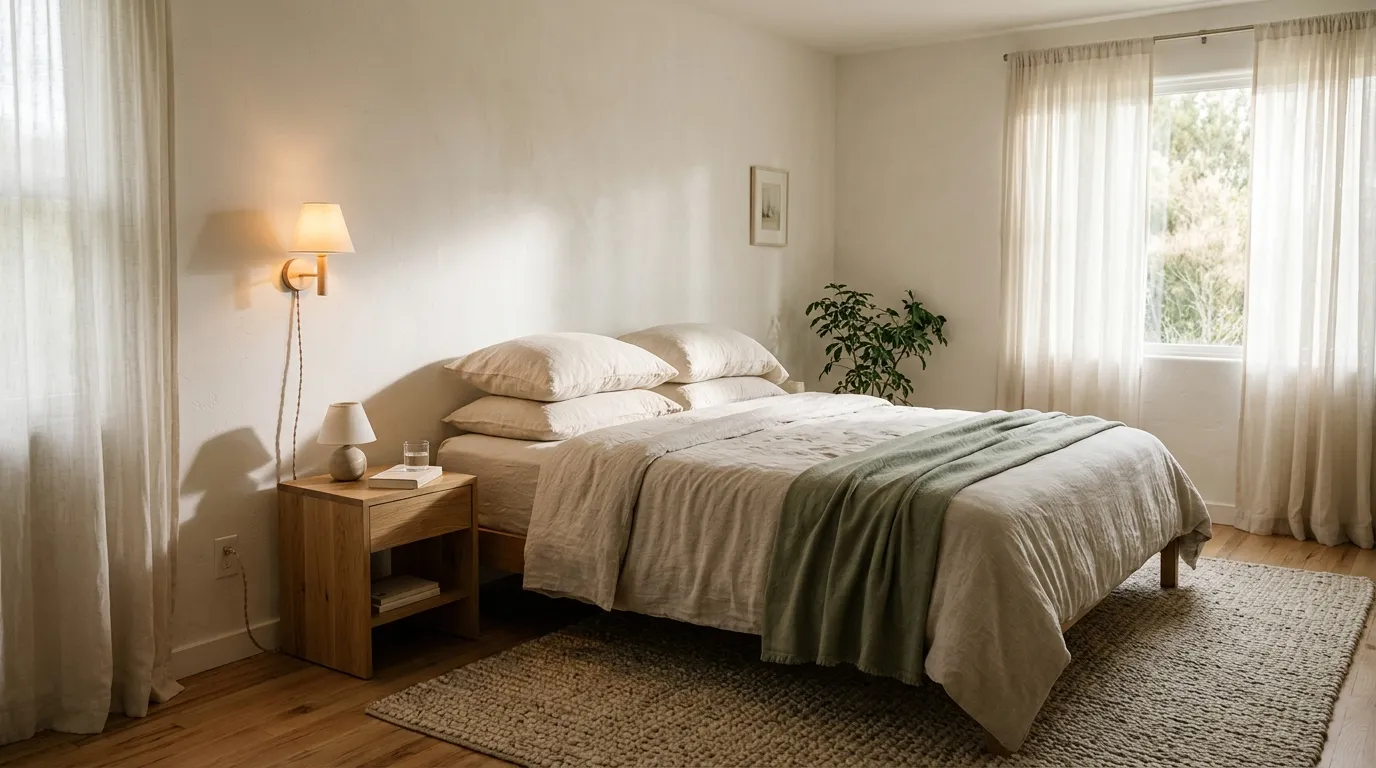
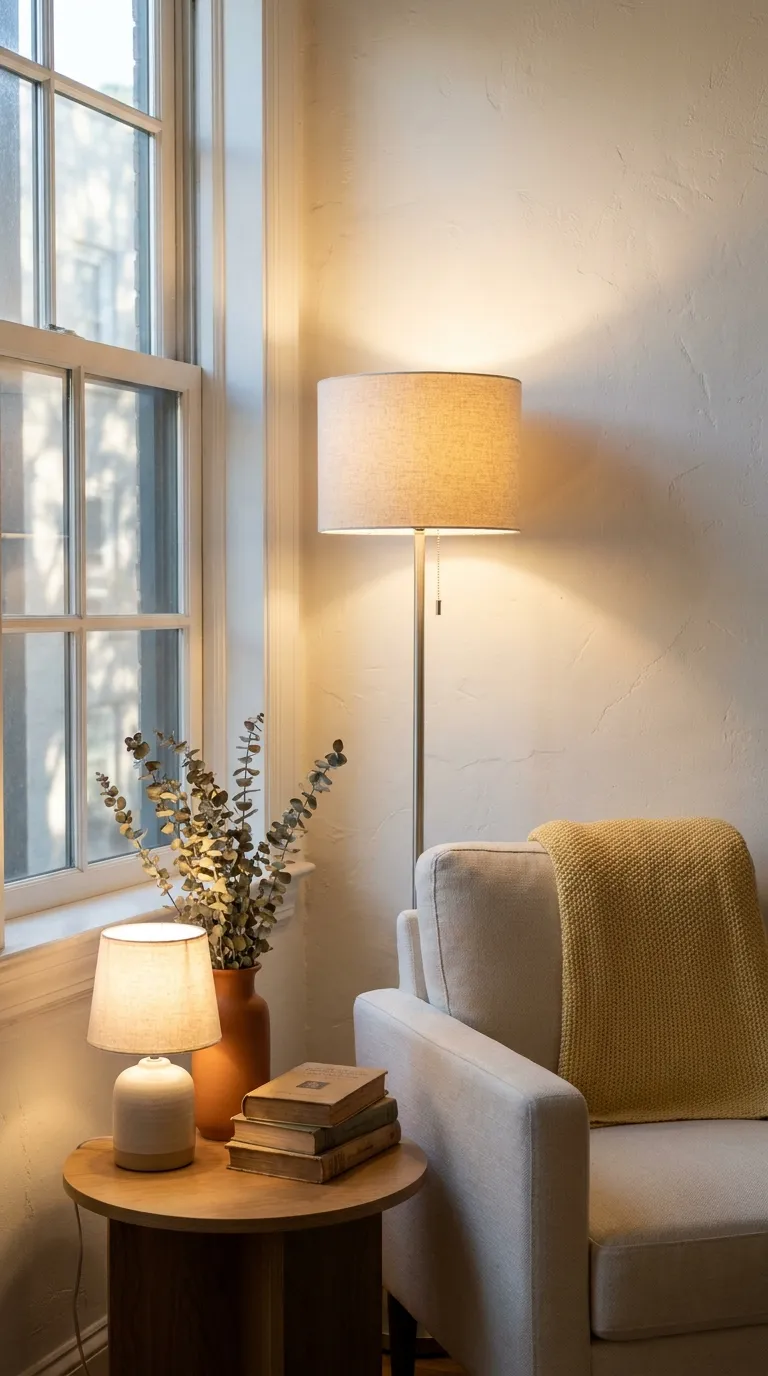
One ceiling fixture flattens a dark room and leaves the corners dim. Several lamps at different heights spread the light around and make the room feel softer in the evening.
Aim for three layers: ambient light for the whole room, task light where you read or prep food, and accent light for a shelf or corner. To plan it, work out how many lumens your room needs based on its size, ceiling height, and wall color, since darker walls take in more light.
How to Do It
- Place one lamp beside your seating area for ambient light.
- Add a task lamp where you read, work, or cook.
- Put a small accent lamp on a shelf or in the darkest corner.
- Choose warm white bulbs so the room feels cozy instead of clinical.
- Set the lamps at different heights so light reaches up, across, and down.
Why It Works
Light from several heights fills the shadows that a single ceiling fixture leaves behind, so the room feels deeper and more welcoming.
Common Mistakes to Avoid
- Relying on the overhead light alone
- Mixing very different bulb colors in one room
- Thick, dark lampshades that block the glow
Renter Note
Plug-in lamps need no drilling, so they are the easiest choice for a rental. For a wall-mounted fixture, check your lease first and hire a licensed electrician for any wiring.
Type in your room’s length, width, ceiling height, room type, and wall color to see a light target for the space.
3. Choose Light-Reflecting Wall Colors
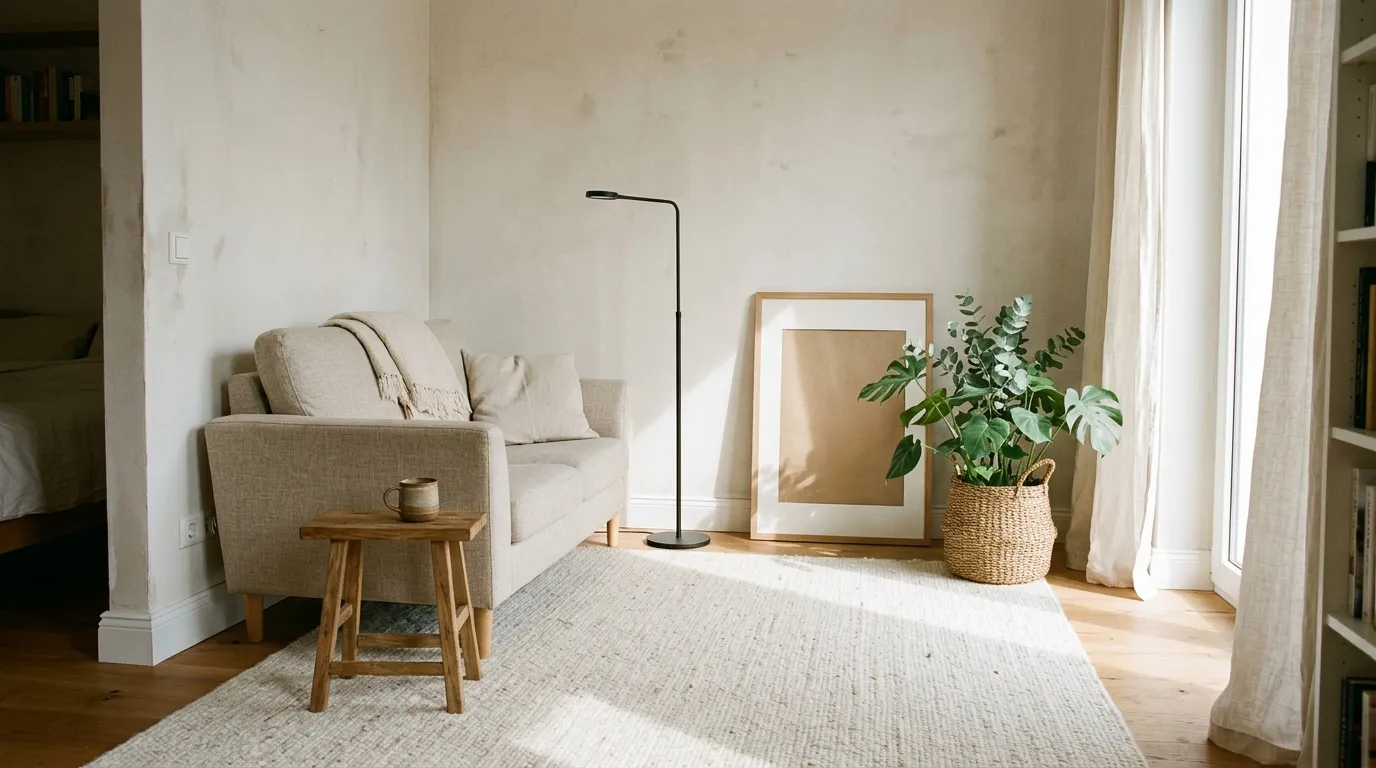
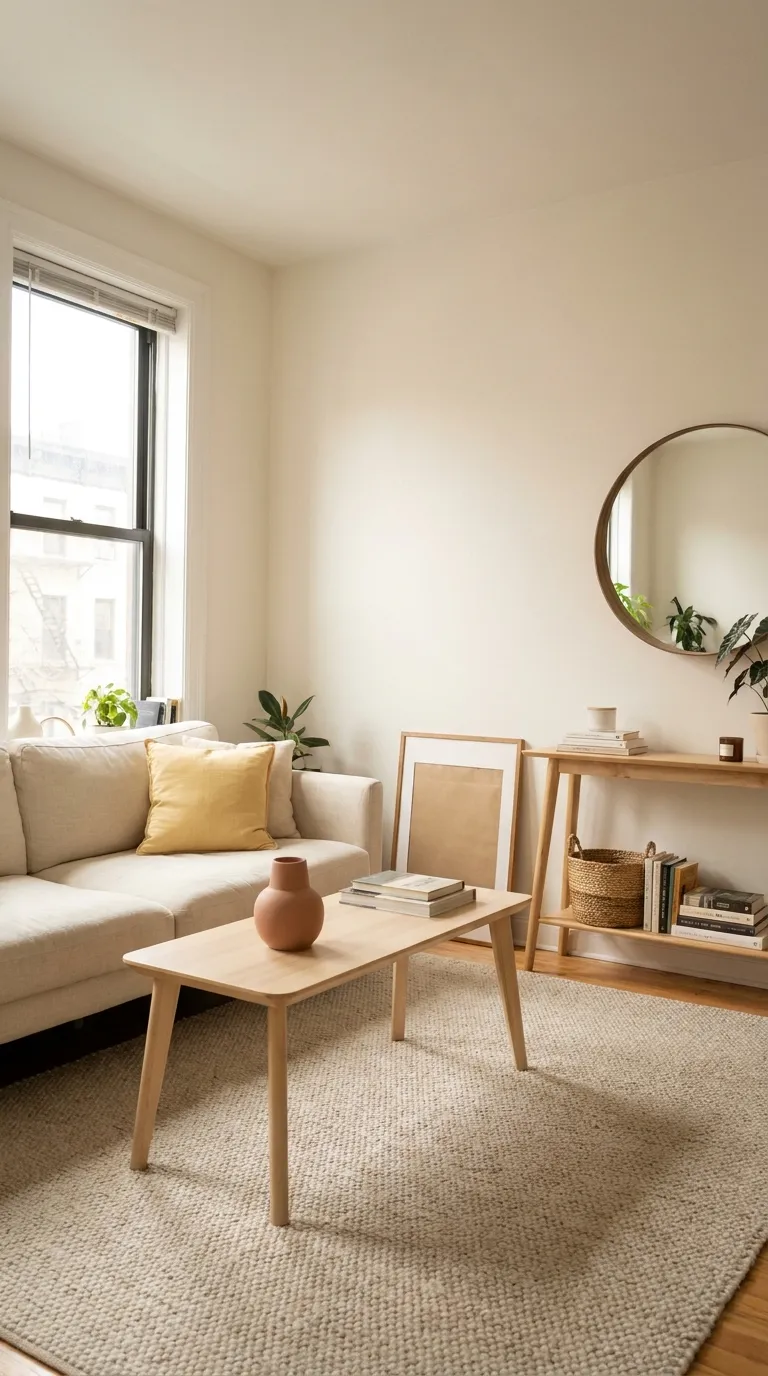
Pale, warm colors bounce more light around a room than deep, cool ones. Warm white, soft cream, and light greige keep walls from swallowing the little daylight you have.
You don’t have to repaint to get the effect. Deep colors can still work, but the room will need more lamps to balance them.
How to Do It
- Tape paper swatches to the darkest wall.
- Look at them in the morning and again in the evening before you decide.
- Choose a warm light shade in a soft finish such as eggshell or satin.
- Keep the trim and ceiling in a similar light tone so the room feels open.
How to Decorate Dark Apartment Walls Without Painting
If painting isn’t allowed, bring the light color in with large pieces:
- A light-colored rug
- Pale curtains hung wide of the window
- A large piece of art in soft, light tones
- A cream throw over a dark sofa
Why It Works
Light colors send more of the daylight and lamp light back into the room, so your walls help instead of soaking it up.
Common Mistakes to Avoid
- Choosing a color from the store lighting alone
- Cool grays that feel flat in dim rooms
- Skipping a sample on your own wall
Renter Note
Check your lease before painting. Many leases ask you to return walls to their original color, so ask first or stick with removable options. If you do paint, follow the product label and ventilate the room.
4. Use Mirrors to Bounce Light
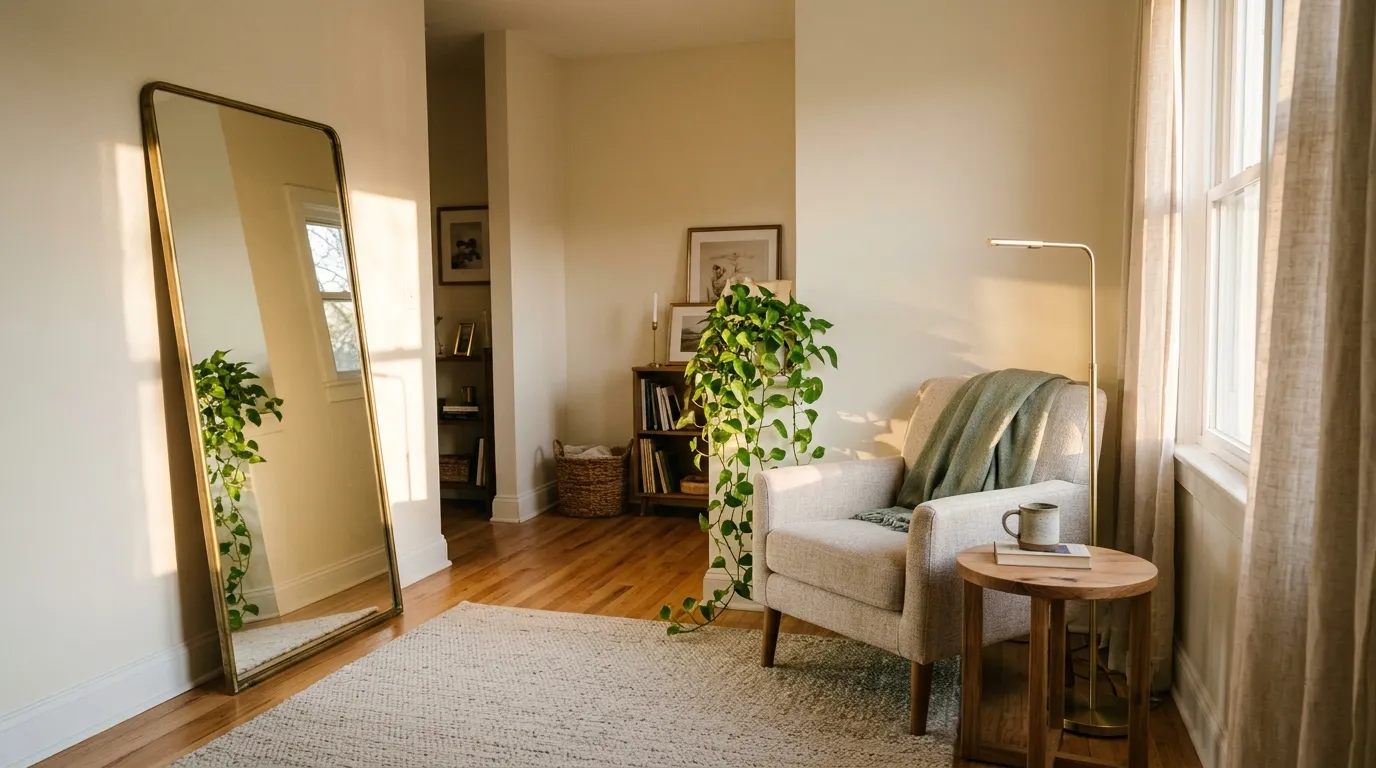
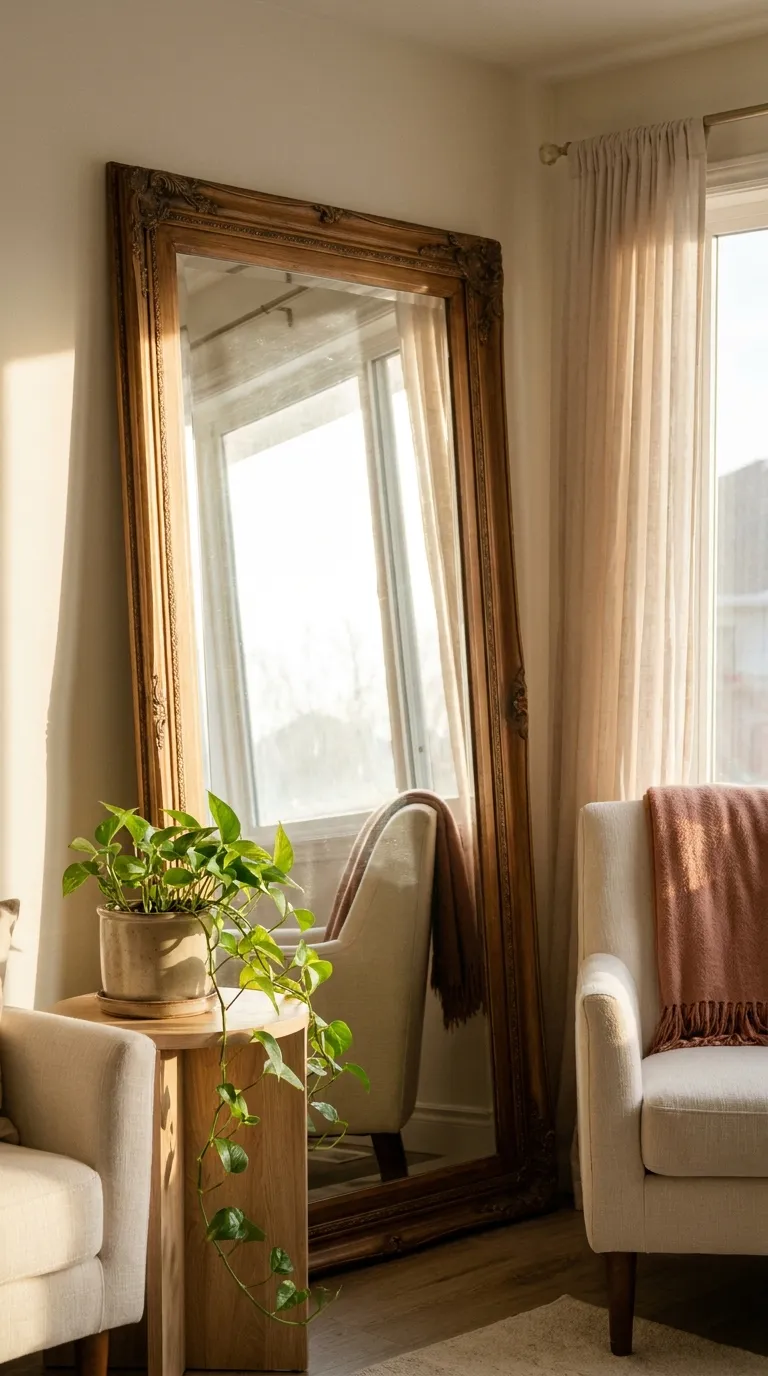
A mirror works like a second window when it faces the right thing. It catches daylight or lamp light and sends it back across the room.
The spot matters more than the size. A mirror that reflects a blank wall or a cluttered corner adds almost nothing.
How to Do It
- Sit where you usually sit and look for the brightest thing in view, such as a window or a lit lamp.
- Hold the mirror in place and check that it reflects that light.
- Lean a large mirror against the wall, or hang a lightweight one with hardware rated for its weight.
- Step back and check the reflection from the doorway and from your seat.
- Adjust the angle until the glow reaches the dark zone you marked in step 1.
Why It Works
A mirror redirects the light that’s already in the room, so a well-placed one lets a dim corner share the brightness of a window.
Common Mistakes to Avoid
- Hanging a mirror across from a blank wall
- Pointing it at a cluttered corner
- Choosing a mirror too small to catch much light
A Simple Rule to Remember
A mirror only brightens a room if it faces light.
Renter Note
A leaning floor mirror needs no drilling, but secure it so it can’t tip. For hanging, check your lease, use anchors rated for the mirror’s weight, and follow the product’s instructions.
Try it: tap the spot that brings light into the dark corner.
5. Pick Airy Furniture and Fabrics
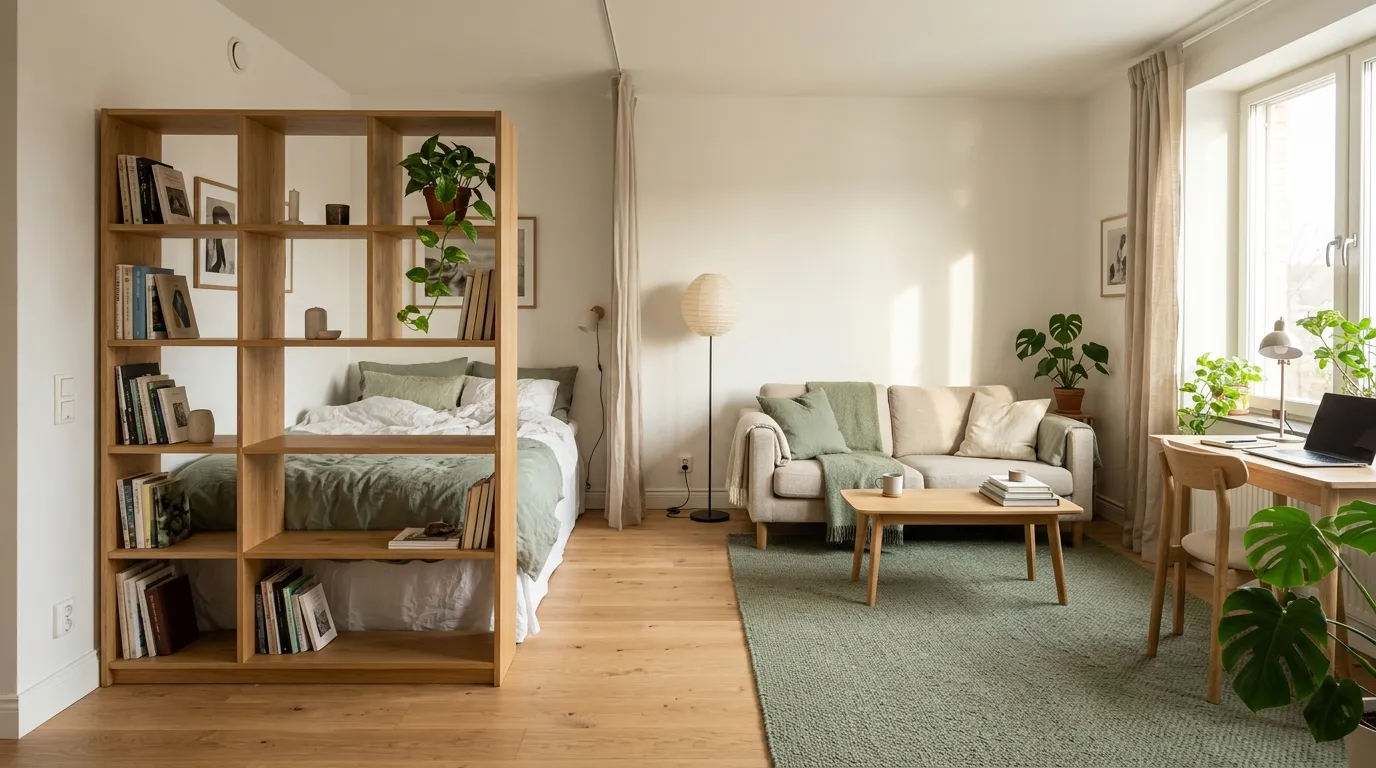
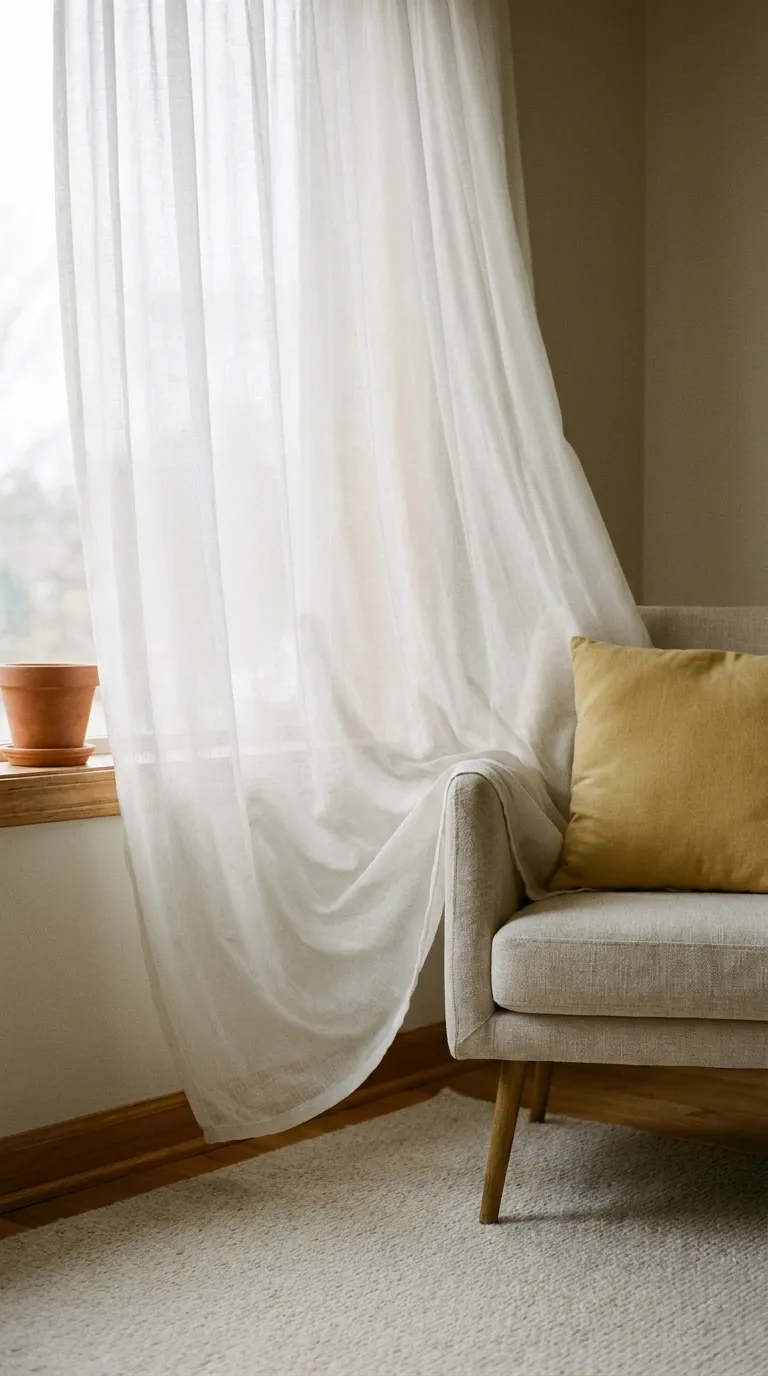
Heavy, boxy furniture blocks light and makes a dim room feel smaller. Pieces with visible legs, light upholstery, and open shapes let light travel under and around them.
Pair them with sheer curtains hung wide so the whole window stays clear. Measure the doorway and the floor space before you buy: will it fit through the door and into the spot you picked?
How to Do It
- Swap heavy, dark curtains for sheer or light-colored ones.
- Mount the curtain rod wider than the window frame so the glass stays uncovered.
- Choose seating with visible legs so the floor shows underneath.
- Pick light upholstery or a pale slipcover for your largest piece.
- Lay a light rug under the seating area to bounce light up from the floor.
- Keep the surfaces nearest the window clear.
Why It Works
Open shapes and pale fabrics let light travel across the room instead of getting stuck behind bulky pieces.
Common Mistakes to Avoid
- Heavy drapes that cover the glass
- Large dark pieces pushed against the window
- Buying before measuring
A Simple Rule to Remember
Keep the window clear and the furniture low near it.
Renter Note
A tension rod, or a rod on existing brackets, avoids new holes. Check your lease before drilling anything new.
6. Add Warm Accents and Texture
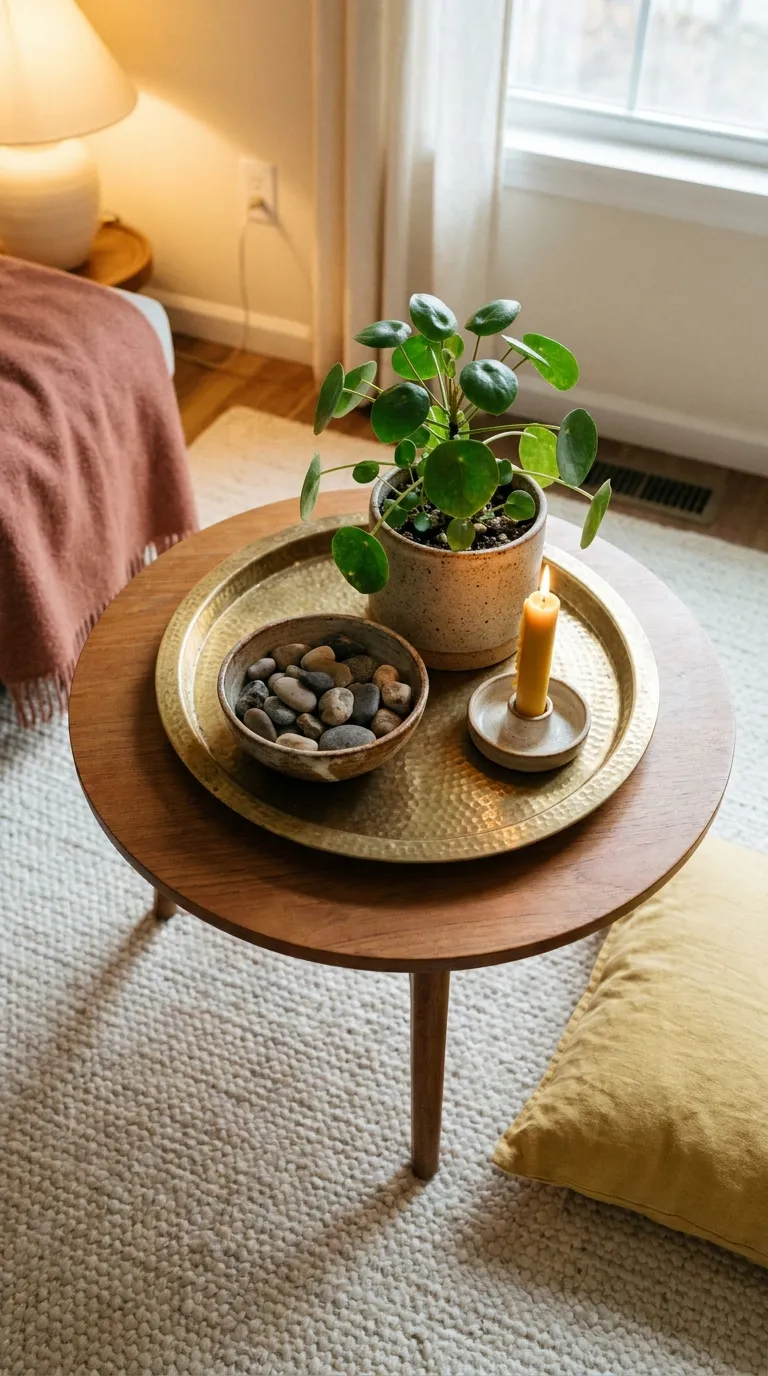
Once the light is in place, texture keeps a dim room from feeling flat. Warm tones, soft fabrics, and a few shiny surfaces give the eye something to catch.
Keep it small and deliberate. A few well-placed accents beat a crowded shelf, because clutter creates more shadows.
How to Do It
- Add a throw or pillow in butter yellow or terracotta to bring in warmth.
- Set a brass or glass tray on the coffee table to catch the lamp light.
- Choose a plant that tolerates low light, and check the care tag before buying.
- Group small accents in odd numbers, such as three candles or three books.
- Leave one surface completely clear so the eye can rest.
Why It Works
Texture and warm tones add depth, and shiny surfaces pick up lamp light so corners look less flat.
Common Mistakes to Avoid
- Filling every shelf
- Using only cool, flat colors
- Plants that need bright direct sun
A Simple Rule to Remember
Add warmth after the light, never instead of it.
Renter Note
If you share your space with a pet, check that a plant is safe for pets before buying. Candles and trays sit on surfaces, so they need no drilling.
Quick Step Cheat Sheet
Use this table when you want a fast reminder of each step.
| Step | Why It Works | Quick Fix |
|---|---|---|
| Check the light | Shows where the darkest zones are | Map the room at three times of day |
| Layer lamps | Fills shadows from several heights | Add one lamp for each layer |
| Light wall colors | Reflects more light back into the room | Use light textiles if you can’t paint |
| Mirrors | Redirect light already in the room | Face the mirror toward a window |
| Airy furniture | Lets light travel under and around | Swap dark curtains for sheer ones |
| Warm accents | Adds depth and catches lamp light | Add one throw and one tray |
The Principles Behind These Steps
Observe Before You Buy
Your room’s light changes through the day, so a quick look first saves you from guessing. Notes and a rough sketch are enough.
Layer Light Instead of Relying on One Source
Several soft sources fill shadows better than one bright one. The room also feels easier to move around in at night.
Reflect, Don’t Just Add
Mirrors, pale walls, and glossy surfaces make the light you already have work harder. That is often cheaper than adding more fixtures.
Test in One Corner First
Try one lamp, one mirror, or one swatch in the darkest corner before you commit to the whole room. Small tests are easy to undo if you rent.
Common Low-Light Decorating Mistakes Worth Skipping
Relying on One Ceiling Light
It happens to almost everyone, and it’s an easy fix: add two lamps at different heights.
Choosing Dark, Heavy Curtains
They feel cozy in the store but can swallow the window. Swap them for sheer or light-colored panels.
Buying Furniture Without Measuring
A great piece isn’t great if it blocks the window or won’t come through the door. Measure the doorway and the spot first.
Final Tips for Success
Start With the Lamps
If you only do one thing, add plug-in lamps at two different heights. It’s the fastest change, and it works for renters.
Swap One Heavy Fabric
Replace one dark curtain or throw with a lighter one and see how the room reads before you change anything else.
Basics Worth Owning
- Two plug-in lamps
- Warm white bulbs
- A leaning mirror
- Sheer curtains
- A light rug
Revisit the Room at Different Times
Check the room again in the evening and on a gray day. Small adjustments to lamp and mirror placement often make the biggest difference.
Conclusion
A room with little daylight isn’t a flaw you have to fix; it’s a space that needs the right layers. Start by mapping where the light falls, then add lamps, light colors, mirrors, airy pieces, and warm texture one step at a time.
You don’t need to repaint or renovate to decorate dark apartment spaces well. Each step here works with a small budget and most rental rules.
Pick the darkest corner and try one change this weekend. Save this guide for the next time you rearrange the room.